
Sometimes, a simple “thank you” does not quite express how much someone’s help meant to you. Whether a colleague solved a problem, a customer-service representative handled an issue, or a friend stepped in when you needed support, the right words can make your appreciation feel more genuine.
“Thank you for your assistance in this matter” is polite and professional, but it can sound formal when used repeatedly. Fortunately, there are many natural alternatives that can make your message warmer, clearer, or more polished.
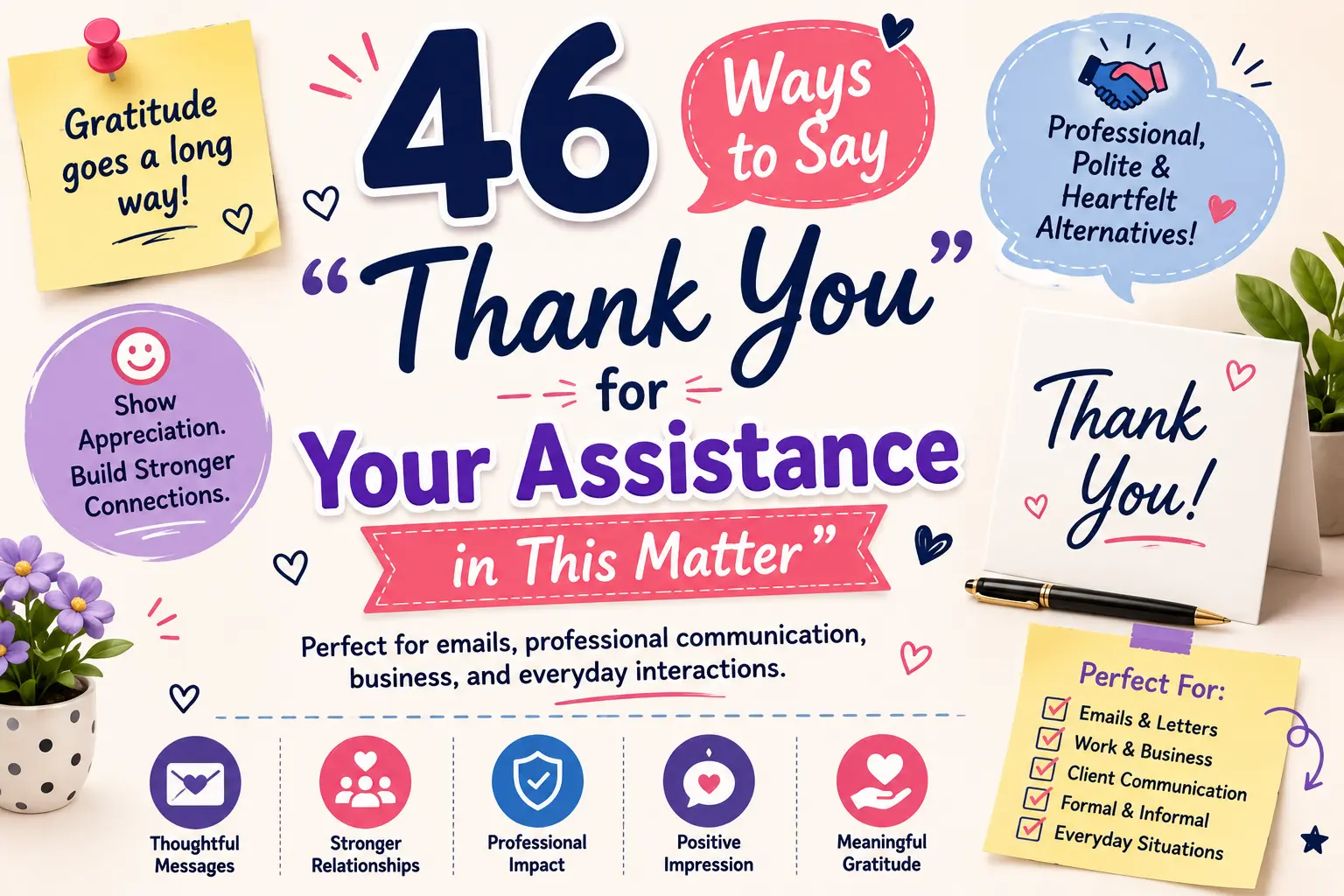
In this guide, you will find 46 thoughtful ways to express appreciation, from professional email closings to friendly everyday responses. Each option includes a realistic example so you can choose wording that fits your situation instead of forcing the same phrase into every conversation.
What Does “Thank You for Your Assistance in This Matter” Mean?
“Thank you for your assistance in this matter” is a formal way of expressing gratitude for someone’s help with a particular issue, task, request, or situation.
For example:
“Thank you for your assistance in this matter. Your guidance helped us resolve the issue quickly.”
The phrase is especially common in professional emails, customer-service correspondence, official letters, and workplace communication.
While it is perfectly polite, it can sound somewhat formal or impersonal in casual conversations. Choosing an alternative allows you to match your message to the relationship and situation.
Polite and Appreciative Alternatives
These phrases are ideal for professional emails, workplace communication, customer service, and formal correspondence.
1. “Thank you for your help with this.”
Reply: “Thank you for your help with this.”
Example: A colleague helps you resolve an issue with a project.
Why use it: Simple, natural, and professional without sounding overly formal.
2. “I sincerely appreciate your assistance.”
Reply: “I sincerely appreciate your assistance with this request.”
Example: Someone spends time helping you handle an important matter.
Why use it: A polished choice when you want your gratitude to sound especially genuine.
3. “Thank you for your support.”
Reply: “Thank you for your support throughout this process.”
Example: A coworker supports you while you complete a challenging task.
Why use it: Warm and versatile enough for many professional situations.
4. “I greatly appreciate your help.”
Reply: “I greatly appreciate your help in resolving this issue.”
Example: A customer-service representative helps you solve a complicated problem.
Why use it: Communicates strong appreciation while remaining professional.
5. “Thank you for assisting me with this matter.”
Reply: “Thank you for assisting me with this matter.”
Example: You are responding to someone who helped with an official request.
Why use it: Keeps the original meaning while making the sentence slightly more direct.
6. “I appreciate your assistance.”
Reply: “I appreciate your assistance with this request.”
Example: A colleague provides information you needed for a report.
Why use it: Concise, professional, and suitable for formal emails.
7. “Thank you for your valuable assistance.”
Reply: “Thank you for your valuable assistance during this process.”
Example: An experienced coworker helps you navigate an unfamiliar procedure.
Why use it: Highlights the importance of the person’s contribution.
8. “Your assistance is greatly appreciated.”
Reply: “Your assistance is greatly appreciated as we work toward resolving this issue.”
Example: You are writing a formal business email.
Why use it: Formal and appropriate for official correspondence.
9. “Thank you for taking the time to help.”
Reply: “Thank you for taking the time to help me with this.”
Example: Someone gives you detailed advice despite having a busy schedule.
Why use it: Shows appreciation not only for the help but also for their time.
Professional and Confident Alternatives
These options work especially well in workplace emails, business communication, and formal requests.
10. “Thank you for your prompt assistance.”
Reply: “Thank you for your prompt assistance with this issue.”
Example: A support team responds quickly to your request.
Why use it: Perfect when speed or responsiveness deserves recognition.
11. “I appreciate your prompt response.”
Reply: “I appreciate your prompt response and assistance.”
Example: Someone replies quickly to an important email.
Why use it: Professional and efficient.
12. “Thank you for addressing this matter.”
Reply: “Thank you for addressing this matter so promptly.”
Example: A manager takes action after you report a workplace issue.
Why use it: Focuses on the action they took.
13. “Thank you for helping resolve this issue.”
Reply: “Thank you for helping resolve this issue so efficiently.”
Example: A colleague works with you to fix a problem.
Why use it: Specific and appreciative.
14. “I appreciate your attention to this matter.”
Reply: “I appreciate your attention to this matter and your continued support.”
Example: You are communicating with someone handling an important request.
Why use it: Formal and particularly suitable for business correspondence.
15. “Thank you for your cooperation and assistance.”
Reply: “Thank you for your cooperation and assistance throughout the process.”
Example: Several people work together to complete an administrative task.
Why use it: Recognizes both collaboration and practical help.
16. “I’m grateful for your support.”
Reply: “I’m grateful for your support during this process.”
Example: A colleague helps you through a demanding project.
Why use it: More personal and sincere than a standard corporate closing.
17. “Thank you for your guidance.”
Reply: “Thank you for your guidance and support.”
Example: A supervisor explains how to handle an unfamiliar responsibility.
Why use it: Best when the person provided advice or direction.
18. “Your help made a real difference.”
Reply: “Your help made a real difference in getting this resolved.”
Example: Someone provides a solution that saves you considerable time.
Why use it: Adds personality while remaining professional.
19. “I’m grateful for your prompt attention.”
Reply: “I’m grateful for your prompt attention to this request.”
Example: Someone responds quickly to a time-sensitive matter.
Why use it: Formal, respectful, and specific.
Friendly and Personal Alternatives
When the situation is less formal, these expressions can make your appreciation feel more natural.
20. “Thanks so much for your help.”
Reply: “Thanks so much for your help with everything.”
Example: A friend helps you organize something important.
Why use it: Warm, simple, and conversational.
21. “I really appreciate your help.”
Reply: “I really appreciate your help with this.”
Example: A friend spends time helping you solve a problem.
Why use it: Genuine without sounding exaggerated.
22. “Thanks for stepping in.”
Reply: “Thanks for stepping in when I needed help.”
Example: A teammate takes over part of a task when you become overwhelmed.
Why use it: Recognizes someone for actively supporting you.
23. “I can’t thank you enough.”
Reply: “I can’t thank you enough for helping me through this.”
Example: Someone gives you significant support during a difficult situation.
Why use it: Best when the person’s help had a meaningful impact.
24. “You really helped me out.”
Reply: “You really helped me out today. Thank you.”
Example: A friend helps you solve a last-minute problem.
Why use it: Casual and sincere.
25. “Thanks for being there.”
Reply: “Thanks for being there when I needed someone.”
Example: A friend listens and helps you work through a problem.
Why use it: More emotional and personal than a standard thank-you.
26. “I’m really grateful for what you did.”
Reply: “I’m really grateful for what you did to help me.”
Example: Someone goes out of their way to support you.
Why use it: Communicates heartfelt appreciation.
27. “Thanks for making this easier.”
Reply: “Thanks for making this whole process so much easier.”
Example: A colleague simplifies a complicated task.
Why use it: Specific and natural.
28. “I truly appreciate everything you did.”
Reply: “I truly appreciate everything you did to help.”
Example: Someone provides support throughout an entire project.
Why use it: Suitable when their help involved several actions.
Funny and Lighthearted Alternatives
These should be reserved for friends, close colleagues, or situations where humor is appropriate.
29. “You saved me today.”
Reply: “You honestly saved me today. Thank you.”
Example: A friend helps you fix a problem just before an important deadline.
Why use it: Playful and appreciative.
30. “You came through for me.”
Reply: “You really came through for me. Thanks.”
Example: A friend helps when everyone else is unavailable.
Why use it: Casual and confident.
31. “You’re officially my hero.”
Reply: “You’re officially my hero after that.”
Example: A friend solves a frustrating problem for you.
Why use it: Adds humor to your appreciation.
32. “I owe you one.”
Reply: “I owe you one for helping me with this.”
Example: A friend does you a favor.
Why use it: Friendly and informal.
33. “You deserve a medal for this.”
Reply: “You deserve a medal for putting up with all of that.”
Example: A colleague patiently helps you through a complicated task.
Why use it: Works well when you want to make your gratitude playful.
34. “You made my life a whole lot easier.”
Reply: “You made my life a whole lot easier today. Thanks.”
Example: Someone takes care of a task that was causing you stress.
Why use it: Casual, expressive, and specific.
Thoughtful and Mature Alternatives
These phrases are useful when you want your appreciation to feel sincere, meaningful, and considerate.
35. “I’m truly thankful for your support.”
Reply: “I’m truly thankful for your support throughout this situation.”
Example: Someone remains supportive during a challenging period.
Why use it: Sincere and emotionally thoughtful.
36. “Your support means a lot to me.”
Reply: “Your support means a lot to me. Thank you for being there.”
Example: A close friend helps you during a stressful time.
Why use it: Personal and heartfelt.
37. “I’m grateful you took the time to help.”
Reply: “I’m grateful you took the time to help me work through this.”
Example: Someone patiently explains something you did not understand.
Why use it: Recognizes both their effort and time.
38. “I truly value your assistance.”
Reply: “I truly value your assistance and thoughtful guidance.”
Example: A mentor helps you make an important decision.
Why use it: Mature and respectful.
39. “Your help has been incredibly valuable.”
Reply: “Your help has been incredibly valuable throughout this process.”
Example: A professional provides useful guidance over several weeks.
Why use it: Clearly communicates the impact of their support.
40. “I’m thankful for your time and effort.”
Reply: “I’m thankful for your time and effort in helping me resolve this.”
Example: A colleague spends extra time helping you complete a task.
Why use it: Recognizes the work behind the assistance.
41. “I appreciate everything you’ve done.”
Reply: “I appreciate everything you’ve done to help us move forward.”
Example: A team member contributes repeatedly to an important project.
Why use it: Broad enough to acknowledge ongoing support.
42. “Thank you for going above and beyond.”
Reply: “Thank you for going above and beyond to help with this.”
Example: Someone does more than was expected to solve an issue.
Why use it: Excellent when someone makes an exceptional effort.
43. “Your support has been invaluable.”
Reply: “Your support has been invaluable throughout this process.”
Example: A mentor provides essential guidance during an important project.
Why use it: Strong and polished, especially for formal appreciation.
44. “I’m sincerely grateful for your help.”
Reply: “I’m sincerely grateful for your help and guidance.”
Example: Someone provides meaningful support during a difficult decision.
Why use it: Warm, mature, and sincere.
45. “Thank you for making a difference.”
Reply: “Thank you for making such a positive difference with your support.”
Example: A colleague’s contribution significantly improves the outcome of a project.
Why use it: Focuses on the positive impact of their assistance.
46. “I genuinely appreciate everything you’ve done.”
Reply: “I genuinely appreciate everything you’ve done to help bring this matter to a close.”
Example: You are thanking someone after a long process has finally been resolved.
Why use it: A thoughtful way to close a professional or personal conversation.
Real-Life Situations: Choosing the Best Phrase
When a Coworker Helps With a Project
Keep it professional but natural.
Best choice:
“Thank you for your help with this. I really appreciate it.”
When a Customer-Service Representative Solves Your Problem
A specific expression works well.
Best choice:
“Thank you for your prompt assistance. I really appreciate your help.”
When a Friend Helps You
There is no need for formal language.
Best choice:
“Thanks so much for helping me out. I really appreciate it.”
When Someone Goes Above and Beyond
Make the extra effort clear.
Best choice:
“Thank you for going above and beyond. Your help made a real difference.”
When a Mentor Gives You Valuable Guidance
Choose something thoughtful and respectful.
Best choice:
“I truly appreciate your guidance and support. It has been incredibly valuable.”
Common Mistakes to Avoid
1. Using Overly Formal Language in Casual Conversations
A phrase such as “Your assistance is greatly appreciated” can sound distant when texting a close friend.
2. Repeating the Same Phrase
Using “thank you for your assistance” in every email can make your writing feel mechanical. Vary your language naturally.
3. Making Your Appreciation Too Vague
Instead of simply saying “Thanks,” mention what you appreciate when possible.
4. Overdoing the Gratitude
You do not need several sentences to thank someone for a small favor. Keep the message proportional to the situation.
5. Choosing Humor at the Wrong Time
Funny expressions can work with friends but may feel inappropriate in serious professional communication.
6. Forgetting the Person’s Effort
When someone has invested significant time or energy, acknowledge that specifically.
Pro Tips for Better Thank-You Messages
1. Be Specific
Instead of saying, “Thanks for your help,” try, “Thank you for helping me resolve the scheduling issue.” Specific appreciation feels more genuine.
2. Match the Tone
Use polished language for clients and formal emails. Choose warmer language for friends and familiar colleagues.
3. Mention the Impact
If someone’s assistance saved time, solved a problem, or made a process easier, say so. That small detail can make your appreciation much more meaningful.
Bonus: Quick One-Liners
- “I really appreciate your help.”
- “Thank you for your support.”
- “Thanks for stepping in.”
- “I’m grateful for your assistance.”
- “Thanks for making this easier.”
- “I truly appreciate your guidance.”
- “Thank you for going above and beyond.”
- “Your help made a real difference.”
- “I’m sincerely grateful for your support.”
- “Thank you for taking the time to help.”
Conclusion
Finding the right way to say “thank you for your assistance in this matter” can make your communication feel more personal and intentional. A professional email may call for a polished phrase such as “I appreciate your assistance,” while a friend may respond better to something as simple as “Thanks for helping me out.”
The goal is not to use the most complicated expression. It is to choose words that genuinely match the situation and show that you noticed the other person’s effort.
A thoughtful thank-you does more than close a conversation; it shows people that their help mattered.
Discover more