
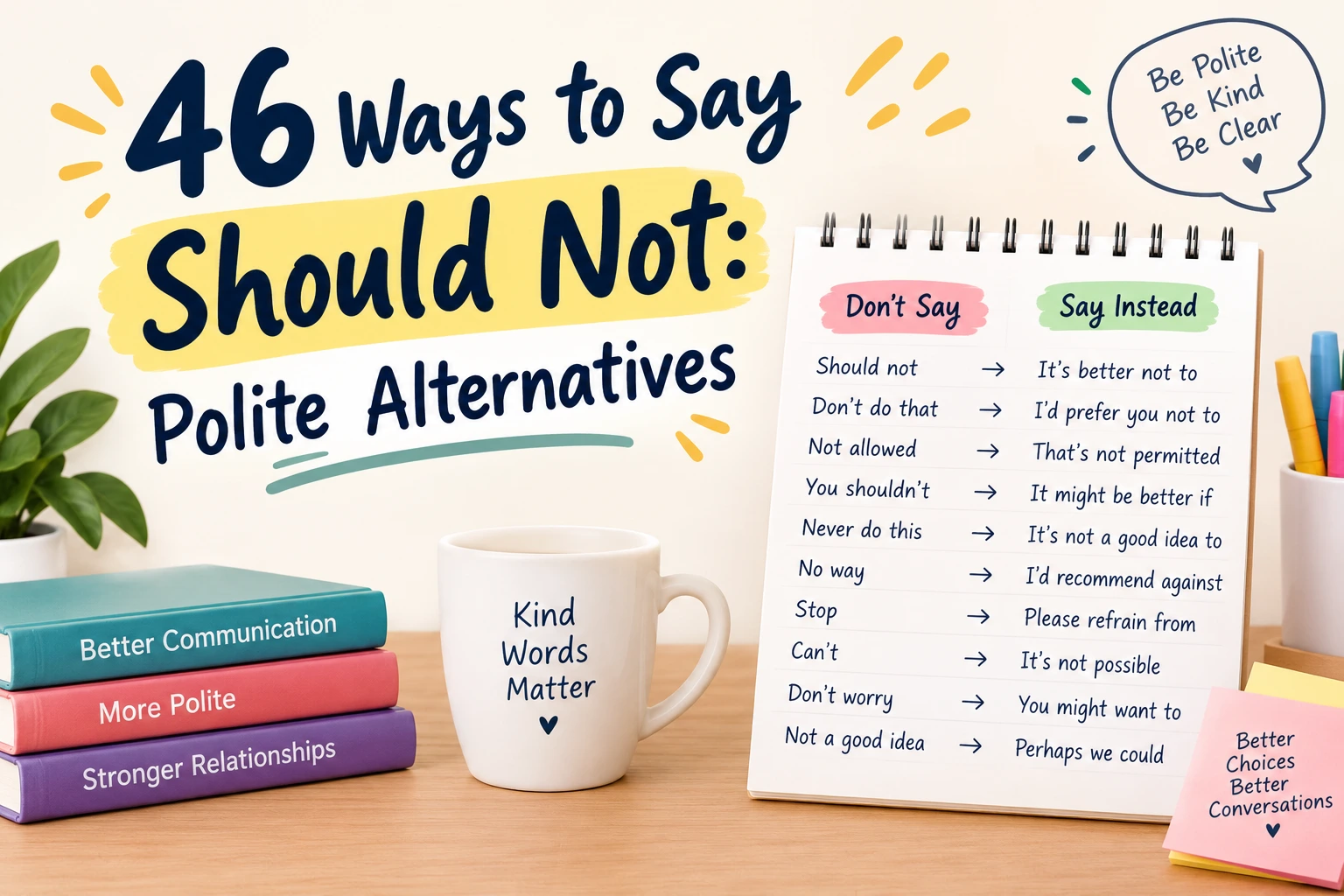
Sometimes, saying “should not” feels a little too direct. You might want to advise a friend, warn a coworker, disagree with someone’s decision, or explain why an idea isn’t a good one. The challenge is finding the right words without sounding rude, bossy, or overly formal. After all, there’s a big difference between telling someone, “You should not do that,” and saying, “It might be better to avoid that.”
Learning different ways to express the same idea can make your conversations smoother and your writing more effective. It also helps you adjust your tone depending on whether you’re speaking to a friend, a colleague, a teacher, or someone you care about. In this guide, you’ll discover 46 alternatives to “should not,” complete with natural examples, practical situations, and tips for choosing the right expression. Whether you want to sound polite, professional, playful, or firm, there’s an option for you.
2. What Does “Should Not” Mean?
“Should not” is used to advise someone against doing something, express disapproval, or explain that an action is unwise, inappropriate, or unnecessary.
For example, if your friend is about to send an angry message, you might say, “You should not send that while you’re upset.” You’re recommending that they avoid an action because it could lead to an unwanted result.
However, “should not” can sometimes sound too direct, especially when you’re speaking to someone you don’t know well. That’s why alternatives such as “It might be best to avoid that,” “I wouldn’t recommend it,” or “You may want to reconsider” can be useful.
The best alternative depends on your intention. Are you giving friendly advice, setting a boundary, making a professional recommendation, or simply expressing concern?
Understanding the situation helps you choose words that communicate your message clearly without creating unnecessary tension.
These alternatives are divided into five categories so you can easily find an expression that matches your situation and personality.
Category 1: Polite and Appreciative Alternatives
Use these phrases when you want to give advice gently, make a suggestion, or discourage an action without sounding judgmental. They’re especially useful in professional conversations and when you want to protect someone’s feelings.
1. It Might Be Better Not To
This is a gentle way to recommend avoiding an action without making the other person feel criticized.
Reply: “It might be better not to do that.”
Example: Your friend wants to confront someone while they’re angry. You say, “It might be better not to message them right now. Give yourself a little time to cool down.”
2. I Wouldn’t Recommend It
This phrase expresses disagreement while leaving room for the other person to make their own decision.
Reply: “I wouldn’t recommend it.”
Example: Your coworker wants to skip proofreading an important report. You respond, “I wouldn’t recommend it. A quick review could help us catch mistakes before submitting it.”
3. You May Want to Avoid That
This is a considerate way to warn someone about a potentially negative outcome.
Reply: “You may want to avoid that.”
Example: Your friend asks whether they should post a personal argument online. You say, “You may want to avoid that. It could make the situation harder to resolve privately.”
4. Perhaps You Should Reconsider
Use this when you want someone to think carefully about a decision before moving forward.
Reply: “Perhaps you should reconsider.”
Example: Your classmate plans to submit an assignment without checking the instructions. You tell them, “Perhaps you should reconsider and review the requirements first.”
5. It May Be Best to Refrain
This expression is more formal and works well in professional or serious situations.
Reply: “It may be best to refrain from doing that.”
Example: During a team meeting, a colleague suggests sharing confidential information. You respond, “It may be best to refrain from discussing those details outside the team.”
6. I’d Suggest Against It
This phrase communicates advice in a polite, conversational way.
Reply: “I’d suggest against it.”
Example: Your friend wants to buy an expensive item without checking their budget. You say, “I’d suggest against it until you’ve looked at your other expenses.”
7. It Would Be Wise to Avoid That
Use this when you want to emphasize that avoiding an action is a sensible choice.
Reply: “It would be wise to avoid that.”
Example: Your coworker wants to share an unverified claim in the office group chat. You advise, “It would be wise to avoid that until we know whether the information is accurate.”
8. I Think You’d Be Better Off Not Doing That
This phrase sounds personal and supportive rather than commanding.
Reply: “I think you’d be better off not doing that.”
Example: Your sibling wants to spend their savings on something they barely need. You say, “I think you’d be better off not doing that until you’ve covered your essential expenses.”
9. I’d Encourage You to Think Twice
This expression invites reflection without immediately rejecting the other person’s idea.
Reply: “I’d encourage you to think twice before proceeding.”
Example: Your friend is considering quitting a job without another source of income. You respond, “I’d encourage you to think twice and explore your options before making such a big decision.”
10. You Might Want to Hold Off
This is a natural way to suggest delaying an action until the timing is better.
Reply: “You might want to hold off for now.”
Example: Your teammate wants to announce a project before the details are finalized. You tell them, “You might want to hold off until we’ve confirmed the deadline and budget.”
Category 2: Flirty and Playful Alternatives
These expressions are useful in lighthearted conversations with friends, partners, or people who appreciate playful teasing. They communicate the idea of “should not” without making the conversation feel serious or confrontational.
11. Maybe Don’t Do That Just Yet
A casual expression that sounds friendly and slightly teasing.
Reply: “Maybe don’t do that just yet.”
Example: Your friend is about to reveal a surprise party in the group chat. You laugh and say, “Maybe don’t do that just yet. Let us keep the birthday person guessing!”
12. Let’s Not Go There
Use this when you want to steer a conversation away from an uncomfortable or unhelpful direction.
Reply: “Let’s not go there.”
Example: Your partner brings up an old argument during a perfectly good evening. You smile and say, “Let’s not go there tonight. I’d rather enjoy our time together.”
13. I’d Say That’s a Bad Idea
This is a playful but clear way to express disagreement.
Reply: “I’d say that’s a bad idea.”
Example: Your friend suggests sending a dramatic text to their crush at 3 a.m. You reply, “I’d say that’s a bad idea. Let’s protect your dignity until morning.”
14. Let’s Maybe Not
A short, casual expression that works well when the situation calls for a little humor.
Reply: “Let’s maybe not.”
Example: Your sibling suggests cutting their own hair five minutes before an event. You look at them and say, “Let’s maybe not. We still have time to find a professional.”
15. I Wouldn’t Go Down That Road
This phrase playfully suggests that a particular decision could lead to trouble.
Reply: “I wouldn’t go down that road.”
Example: Your friend wants to argue with someone who enjoys creating drama. You say, “I wouldn’t go down that road. You know how much energy that person takes.”
16. Let’s Not Make This Complicated
Use this when someone is considering an unnecessary action that could create more problems.
Reply: “Let’s not make this complicated.”
Example: Your partner wants to turn a simple dinner plan into a complicated scheduling debate. You laugh and say, “Let’s not make this complicated. We can just pick a place and enjoy ourselves.”
17. Maybe Save Yourself the Trouble
This phrase suggests that avoiding an action could save time, effort, or frustration.
Reply: “Maybe save yourself the trouble.”
Example: Your friend wants to argue with a stranger in the comments section. You respond, “Maybe save yourself the trouble. You have better things to do than fight with someone online.”
18. I Wouldn’t Test Your Luck
A playful warning that works when someone is considering taking an unnecessary risk.
Reply: “I wouldn’t test your luck.”
Example: Your friend wants to submit an assignment seconds before the deadline without checking the file. You tell them, “I wouldn’t test your luck. Open it once and make sure everything works.”
19. Let’s Not Give Trouble an Invitation
This creative expression suggests avoiding an action that could create unnecessary problems.
Reply: “Let’s not give trouble an invitation.”
Example: Your friend wants to join an argument between two people they barely know. You say, “Let’s not give trouble an invitation. We can enjoy our evening without getting involved.”
Category 3: Confident and Self-Respecting Alternatives
Sometimes, being polite isn’t enough. You may need to communicate a firm boundary, make your position clear, or express strong disagreement. These alternatives are direct without necessarily being rude.
20. I Strongly Advise Against It
Use this when you believe an action could have serious or avoidable consequences.
Reply: “I strongly advise against it.”
Example: Your teammate wants to submit work that contains information they haven’t verified. You say, “I strongly advise against it. We need to make sure the facts are correct before submitting the report.”
21. That’s Not a Good Idea
A straightforward expression that communicates disagreement clearly.
Reply: “That’s not a good idea.”
Example: Your friend suggests driving while exhausted. You respond, “That’s not a good idea. You need to rest before getting behind the wheel.”
22. I Wouldn’t Do That If I Were You
This phrase offers advice based on how you would approach the situation.
Reply: “I wouldn’t do that if I were you.”
Example: Your classmate wants to ignore an important message from their professor. You tell them, “I wouldn’t do that if I were you. It would be better to respond and ask for clarification.”
23. You Need to Think This Through
Use this when someone appears to be making a decision without considering the consequences.
Reply: “You need to think this through.”
Example: Your sibling wants to commit to several activities despite already having a packed schedule. You say, “You need to think this through. You don’t want to exhaust yourself before your exams.”
24. I Don’t Think You Should Proceed
This is a firm but respectful way to recommend stopping before taking the next step.
Reply: “I don’t think you should proceed.”
Example: Your coworker wants to send a proposal before the client has approved the figures. You respond, “I don’t think you should proceed until we’ve confirmed the numbers.”
25. That’s a Line You Shouldn’t Cross
Use this when the issue involves respect, privacy, or personal boundaries.
Reply: “That’s a line you shouldn’t cross.”
Example: Someone suggests reading another person’s private messages without permission. You say, “That’s a line you shouldn’t cross. Everyone deserves privacy.”
26. I Won’t Support That Decision
This phrase makes your position clear without insulting the other person.
Reply: “I won’t support that decision.”
Example: Your friend wants you to help spread a rumor about a classmate. You respond, “I won’t support that decision. If there’s a problem, let’s deal with it honestly.”
27. You’d Be Making a Mistake
This is a direct expression for situations where you believe a decision is likely to go wrong.
Reply: “You’d be making a mistake.”
Example: Your teammate wants to leave an important project until the last minute. You tell them, “You’d be making a mistake. We have several parts to finish, and waiting will only make things harder.”
28. I Can’t Recommend That
Use this when you want to make your disagreement clear, especially in professional or practical discussions.
Reply: “I can’t recommend that.”
Example: A colleague asks whether they should use an untested method for an important presentation. You say, “I can’t recommend that. We should test it before relying on it.”
29. Don’t Put Yourself in That Position
This phrase encourages someone to avoid a situation that could cause unnecessary trouble or discomfort.
Reply: “Don’t put yourself in that position.”
Example: Your friend is considering lending money they cannot afford to lose. You tell them, “Don’t put yourself in that position. It’s okay to say no when lending money would affect your own needs.”
30. Know Where to Draw the Line
Use this when someone needs to recognize their limits or establish a boundary.
Reply: “You need to know where to draw the line.”
Example: Your coworker keeps accepting extra tasks even though they’re overwhelmed. You say, “You need to know where to draw the line. Helping others shouldn’t mean sacrificing all your time.”
Category 4: Funny and Savage Alternatives
These phrases are more sarcastic and dramatic. They’re best used with people who understand your humor and won’t mistake playful teasing for genuine hostility.
31. Absolutely Not
Short, dramatic, and effective when you want to reject an idea immediately.
Reply: “Absolutely not.”
Example: Your friend suggests studying for an entire exam the night before without taking a break. You respond, “Absolutely not. We’re making a proper study plan instead.”
32. Let’s Not Make a Terrible Decision Today
A humorous way to point out that an idea is likely to create unnecessary problems.
Reply: “Let’s not make a terrible decision today.”
Example: Your best friend wants to text their ex after midnight. You say, “Let’s not make a terrible decision today. Put the phone down and get some sleep.”
33. That’s a Hard Pass
This casual expression communicates strong rejection with a confident tone.
Reply: “That’s a hard pass from me.”
Example: Your friend invites you to join a plan that sounds exhausting and expensive. You laugh and reply, “That’s a hard pass from me. My wallet and my energy levels have both voted no.”
34. Don’t Even Think About It
Use this when you want to stop someone from following through on a particularly bad idea.
Reply: “Don’t even think about it.”
Example: Your younger brother reaches for your laptop while holding a glass of juice. You say, “Don’t even think about it. Let’s put the juice somewhere safe first.”
35. That’s a Recipe for Disaster
This expression warns that a combination of choices could lead to trouble.
Reply: “That’s a recipe for disaster.”
Example: Your classmate suggests completing a group assignment without dividing the work. You respond, “That’s a recipe for disaster. Let’s assign everyone a section before we start.”
36. Let’s Use Our Brains Today
A sarcastic but playful way to encourage someone to think before acting.
Reply: “Let’s use our brains today.”
Example: Your friend wants to spend their entire allowance on the first thing they see. You laugh and say, “Let’s use our brains today. We can compare prices before buying anything.”
37. That’s a Terrible Hill to Die On
This expression suggests that an argument or decision isn’t worth the trouble it could cause.
Reply: “That’s a terrible hill to die on.”
Example: Your friend wants to start an argument over a minor misunderstanding. You tell them, “That’s a terrible hill to die on. You can clear things up without turning it into a competition.”
38. Please Don’t Make Me Say I Told You So
Use this when someone is about to ignore advice and may regret it later.
Reply: “Please don’t make me say I told you so.”
Example: Your friend wants to buy something from a suspicious online seller despite several warning signs. You say, “Please don’t make me say I told you so. Check the seller’s reviews before spending your money.”
39. That’s How People End Up in Trouble
This expression adds a little drama while warning someone about a risky decision.
Reply: “That’s how people end up in trouble.”
Example: Your sibling wants to copy an assignment from an online source without checking the rules. You respond, “That’s how people end up in trouble. Let’s understand the material and write it ourselves.”
Category 5: Curious, Thoughtful, and Mature Alternatives
These expressions are useful when you want to encourage reflection, explore other options, or help someone make a better decision without immediately criticizing them.
40. Have You Considered the Consequences?
This question encourages someone to think about what might happen after they act.
Reply: “Have you considered the consequences?”
Example: Your friend wants to quit a course without exploring other options. You ask, “Have you considered the consequences? Maybe we should talk to the instructor before making a final decision.”
41. What If You Took a Different Approach?
Use this when you want to suggest an alternative rather than simply rejecting someone’s idea.
Reply: “What if you took a different approach?”
Example: Your classmate keeps trying to solve a difficult problem using the same method. You ask, “What if you took a different approach? We could break the problem into smaller steps.”
42. Is There a Better Way to Handle This?
This phrase opens the door to a more constructive conversation.
Reply: “Is there a better way to handle this?”
Example: Your teammate wants to complain publicly about a disagreement. You say, “Is there a better way to handle this? We could discuss the issue privately first.”
43. Maybe We Should Explore Other Options
Use this when you want to encourage flexibility without dismissing the original idea.
Reply: “Maybe we should explore other options.”
Example: Your group wants to choose an expensive venue for an event. You suggest, “Maybe we should explore other options before committing. We might find somewhere equally good within our budget.”
44. What Makes You Think That’s the Best Choice?
This question invites someone to explain their reasoning and consider whether another decision might be better.
Reply: “What makes you think that’s the best choice?”
Example: Your friend wants to purchase an expensive laptop without comparing specifications. You ask, “What makes you think that’s the best choice? Let’s compare a few models before deciding.”
45. Would It Be Better to Wait?
This phrase is useful when timing could affect the outcome of a decision.
Reply: “Would it be better to wait?”
Example: Your colleague wants to announce a new idea before receiving feedback from the team. You ask, “Would it be better to wait until everyone has reviewed the proposal?”
46. Let’s Think This Through Before Deciding
A collaborative expression that encourages careful thought instead of an impulsive response.
Reply: “Let’s think this through before deciding.”
Example: Your friend wants to make a major purchase after seeing an advertisement. You say, “Let’s think this through before deciding. We should check the price, quality, and whether we actually need it.”
4. Real-Life Situations: Which Alternative Should You Use?
The right expression depends on your relationship with the other person and the seriousness of the situation. Here are a few common examples.
When Your Crush Is About to Make a Bad Decision
You want to give advice without sounding controlling or judgmental.
Best reply: “I wouldn’t do that if I were you, but it’s your decision.”
This expresses concern while respecting their independence.
When a Friend Makes a Risky Suggestion
You want to disagree without turning the conversation into an argument.
Best reply: “Let’s not make a terrible decision today.”
It keeps the mood light while making your position clear.
When Someone Wants to Rush Into a Decision
Rather than telling them they’re wrong, encourage them to slow down.
Best reply: “Would it be better to wait until we’ve considered all the options?”
This works well for purchases, academic choices, work decisions, and personal plans.
When You’re Not Comfortable With Someone’s Request
You don’t need to create a long explanation to establish a boundary.
Best reply: “I’m not comfortable with that, so I won’t be participating.”
It’s clear, respectful, and leaves little room for misunderstanding.
When You Need to Disagree at Work
You want to express a concern without sounding aggressive.
Best reply: “I wouldn’t recommend that approach. Could we consider another option?”
This communicates disagreement while keeping the discussion focused on finding a solution.
5. What to Avoid When Saying “Should Not”
Choosing the right alternative isn’t only about vocabulary. Your tone, timing, and relationship with the other person also matter.
Here are six common mistakes to avoid.
1. Sounding Too Controlling
Telling someone what they can or cannot do may make them defensive, especially when you’re offering advice rather than enforcing a rule.
Instead of: “You should not do that.”
Try: “You may want to consider another option.”
2. Being Too Vague
Some polite expressions can be so indirect that the other person doesn’t understand your actual position.
Instead of: “Maybe that’s not ideal.”
Try: “I don’t think this is the safest option, and I’d recommend choosing another approach.”
3. Using Sarcasm in Serious Situations
Funny expressions can be effective among friends, but sarcasm may sound disrespectful during a serious conversation.
Instead of: “Let’s use our brains today.”
Try: “Let’s take another look at the situation before deciding.”
4. Giving Unwanted Advice
Not everyone who shares a problem is asking you to solve it. Sometimes people simply want someone to listen.
Better approach: Ask, “Would you like my opinion?” before offering advice.
5. Overexplaining Your Disagreement
You don’t always need a long speech to explain why you disagree. Too much explanation can make a simple conversation unnecessarily tense.
Instead of: Giving several paragraphs of justification.
Try: “I wouldn’t recommend that because it could create problems later.”
6. Confusing Advice With a Boundary
There is a difference between advising someone against an action and explaining what you will not accept.
Advice: “I’d suggest against sharing that information.”
Boundary: “Please don’t share my private information without my permission.”
Use direct language when someone’s behavior affects your privacy, safety, or personal limits.
6. Pro Tips for Choosing the Right Alternative
A few small adjustments can make your communication sound more natural and confident.
1. Match Your Words to the Situation
Use gentle expressions such as “It might be better not to” when offering friendly advice. Choose direct phrases such as “I strongly advise against it” when the consequences could be serious.
The goal isn’t to sound impressive. It’s to make your meaning clear.
2. Focus on the Action, Not the Person
Instead of saying, “You’re making a terrible decision,” try, “I think this decision could cause problems.”
This keeps the conversation focused on the issue rather than making the other person feel personally attacked.
3. Be Polite Without Weakening Your Message
Politeness doesn’t mean you must hide your opinion. You can be considerate and firm at the same time.
For example, “I understand why you want to do that, but I’m not comfortable with it” communicates respect without abandoning your position.
7. Bonus: 8 Quick Alternatives to “Should Not”
Need a short phrase for a message, conversation, or professional email? These options are easy to remember and use.
- “It’s best to avoid that.”
- “I’d advise against it.”
- “That’s not advisable.”
- “Maybe think twice.”
- “I’d reconsider that.”
- “Let’s not do that.”
- “It’s better to hold off.”
- “I don’t think that’s wise.”
Each phrase communicates a similar idea, but the tone varies. Choose the one that best fits your relationship with the person and the message you want to convey.
8. Conclusion
Finding alternatives to “should not” can make your communication more thoughtful, natural, and effective. Whether you’re giving gentle advice, expressing disagreement, setting a boundary, or joking with a friend, the right words help you communicate without creating unnecessary tension.
Remember that you don’t have to choose between being polite and being honest. You can respect someone else’s feelings while still expressing your opinion clearly.
The best communication isn’t about telling people what not to do. It’s about helping them understand your message and why it matters.
Discover more