

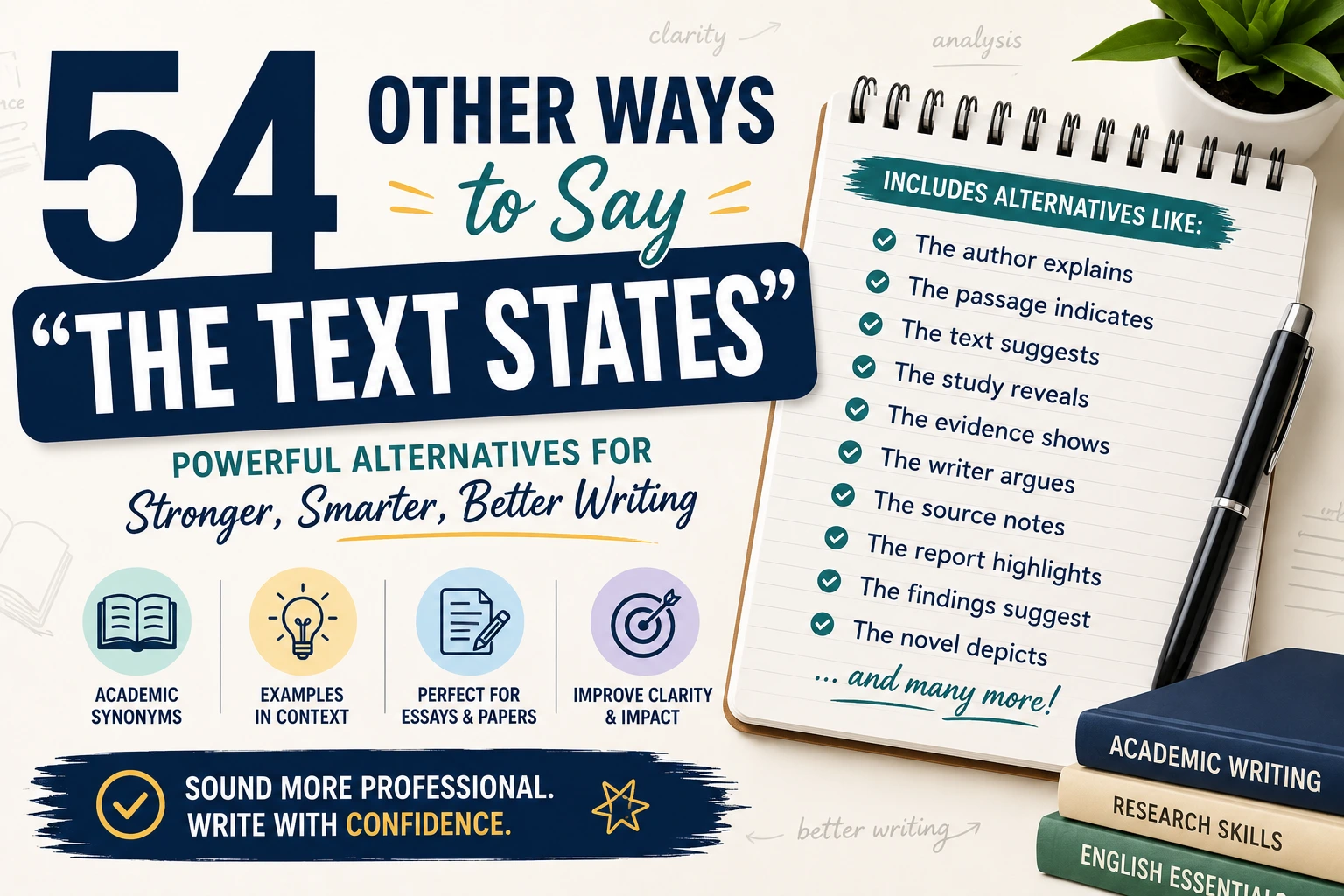
If you’ve ever written an essay, research paper, or literary analysis, you’ve probably found yourself using the phrase “the text states” over and over again. While it’s clear and correct, repeating the same expression can make your writing feel repetitive and less engaging. Teachers, professors, and editors often encourage students to vary their vocabulary to make their work sound more polished and professional.
That’s why many writers search for other ways to say “the text states.” Using a variety of academic phrases helps improve readability, demonstrates a stronger command of language, and makes your arguments flow more naturally. Whether you’re analyzing a novel, citing evidence in an essay, or writing a research paper, choosing the right alternative can elevate your writing. In this guide, you’ll discover 54 effective substitutes, complete with meanings, examples, and practical tips to help you write with greater confidence.
What Does “The Text States” Mean?
The phrase “the text states” is commonly used in academic writing to introduce information, evidence, or ideas taken directly from a written source. It tells the reader that the following point comes from the text rather than from your own opinion.
For example:
“The text states that climate change has accelerated over the past century.”
This phrase appears frequently in essays, book reports, literary analyses, research papers, and reading responses. While it’s accurate and easy to understand, relying on it too often can make your writing sound repetitive. Replacing it with appropriate alternatives creates smoother, more engaging academic writing.
Formal Academic Alternatives
1. The Text Explains
Meaning: Indicates that the source provides a detailed explanation.
Best Use: Essays and analytical writing.
Example: The text explains how social media influences modern communication.
Writing Tip: Use this phrase when the source expands on an idea rather than simply mentioning it.
2. The Text Suggests
Meaning: Implies an idea without directly stating it.
Best Use: Literary analysis.
Example: The text suggests that the main character feels isolated despite being surrounded by friends.
Writing Tip: Ideal when discussing implied meanings or symbolism.
3. The Passage Indicates
Meaning: Points readers toward a specific conclusion.
Best Use: Close reading assignments.
Example: The passage indicates that trust develops gradually throughout the story.
Writing Tip: Works well when referring to a particular section of a text.
4. The Author States
Meaning: Attributes information directly to the writer.
Best Use: Research papers and essays.
Example: The author states that regular exercise improves mental health.
Writing Tip: Use this when emphasizing the author’s viewpoint.
5. The Author Explains
Meaning: Shows that the author provides clarification or detail.
Best Use: Informative writing.
Example: The author explains why biodiversity is essential for healthy ecosystems.
Writing Tip: Best when discussing processes or reasoning.
6. The Article Notes
Meaning: Introduces an important observation.
Best Use: News articles and journal references.
Example: The article notes that renewable energy use has increased significantly.
Writing Tip: Excellent for summarizing supporting evidence.
7. The Source States
Meaning: Refers broadly to any reference material.
Best Use: Research assignments.
Example: The source states that early intervention improves learning outcomes.
Writing Tip: Useful when citing multiple types of references.
8. The Report Mentions
Meaning: Indicates that information is briefly included.
Best Use: Reports and case studies.
Example: The report mentions several challenges facing small businesses.
Writing Tip: Use when the information is not discussed in great depth.
9. The Study Reveals
Meaning: Highlights important research findings.
Best Use: Academic research papers.
Example: The study reveals a strong relationship between sleep and memory.
Writing Tip: Best for scientific or statistical evidence.
10. The Document Highlights
Meaning: Emphasizes an important point.
Best Use: Reports and policy documents.
Example: The document highlights the importance of digital literacy.
Writing Tip: Use when the source intentionally draws attention to something.
11. The Evidence Shows
Meaning: Introduces factual support.
Best Use: Persuasive essays.
Example: The evidence shows that recycling reduces environmental waste.
Writing Tip: Strong choice when presenting proof.
Analytical Writing Alternatives
12. The Passage Describes
Meaning: Explains what is happening in detail.
Best Use: Literature essays.
Example: The passage describes the village as peaceful and welcoming.
Writing Tip: Ideal for descriptive scenes.
13. The Story Reveals
Meaning: Introduces information uncovered throughout the narrative.
Best Use: Fiction analysis.
Example: The story reveals the character’s true intentions in the final chapter.
Writing Tip: Great for discussing plot development.
14. The Novel Illustrates
Meaning: Shows an idea through events or characters.
Best Use: Literary criticism.
Example: The novel illustrates the effects of social inequality.
Writing Tip: Excellent when discussing themes.
15. The Text Demonstrates
Meaning: Clearly proves or shows something.
Best Use: Academic analysis.
Example: The text demonstrates how perseverance leads to success.
Writing Tip: Adds authority to your writing.
16. The Reading Points Out
Meaning: Draws attention to an important idea.
Best Use: Classroom assignments.
Example: The reading points out the importance of critical thinking.
Writing Tip: Sounds natural in educational writing.
17. The Author Emphasizes
Meaning: Stresses a key idea.
Best Use: Argumentative essays.
Example: The author emphasizes the need for equal access to education.
Writing Tip: Use for repeated or significant ideas.
18. The Writer Observes
Meaning: Shares a thoughtful observation.
Best Use: Analytical essays.
Example: The writer observes that human behavior often changes under pressure.
Writing Tip: Works well for reflective discussions.
19. The Author Argues
Meaning: Presents a clear position or claim.
Best Use: Persuasive writing.
Example: The author argues that renewable energy should replace fossil fuels.
Writing Tip: Best when discussing opinions supported by evidence.
20. The Source Explores
Meaning: Examines a topic in depth.
Best Use: Research papers.
Example: The source explores the causes of climate migration.
Writing Tip: Useful for complex discussions.
21. The Text Presents
Meaning: Introduces information or ideas.
Best Use: General academic writing.
Example: The text presents several solutions to the problem.
Writing Tip: One of the most versatile alternatives.
22. The Book Explains
Meaning: Refers specifically to books.
Best Use: Book reviews and essays.
Example: The book explains the origins of modern democracy.
Writing Tip: Replace “text” with the specific source whenever possible.
23. The Chapter Discusses
Meaning: Focuses on one section of a book.
Best Use: Chapter summaries.
Example: The chapter discusses the challenges of urban development.
Writing Tip: Makes your references more precise.
24. The Research Indicates
Meaning: Introduces research findings.
Best Use: Academic reports.
Example: The research indicates that regular exercise improves concentration.
Writing Tip: Strong alternative for evidence-based writing.
25. The Findings Suggest
Meaning: Summarizes research conclusions.
Best Use: Scientific writing.
Example: The findings suggest that early intervention leads to better outcomes.
Writing Tip: Ideal when discussing study results.
26. The Publication Reports
Meaning: References published material.
Best Use: Journals and magazines.
Example: The publication reports significant growth in online education.
Writing Tip: Useful for news articles and journals.
27. The Paper Concludes
Meaning: Introduces the author’s final conclusion.
Best Use: Research summaries.
Example: The paper concludes that further studies are needed.
Writing Tip: Perfect for discussing final observations or recommendations.
Literary Analysis Alternatives
These alternatives work especially well when you’re writing about novels, poems, plays, or short stories.
28. The Narrative Reveals
Meaning: Shows information through the storyline.
Best Use: Literary analysis.
Example: The narrative reveals the protagonist’s inner conflict through vivid descriptions.
Writing Tip: Excellent for discussing plot development and character growth.
29. The Character Expresses
Meaning: Focuses on what a character says or feels.
Best Use: Character analysis.
Example: The character expresses regret after realizing the consequences of his actions.
Writing Tip: Use this instead of referring to the text when discussing dialogue.
30. The Dialogue Suggests
Meaning: Uses conversations between characters as evidence.
Best Use: Fiction analysis.
Example: The dialogue suggests growing tension between the two brothers.
Writing Tip: Perfect for analyzing conversations.
31. The Scene Illustrates
Meaning: Explains what a specific scene demonstrates.
Best Use: Story analysis.
Example: The scene illustrates the importance of forgiveness.
Writing Tip: Makes your writing more precise.
32. The Poem Conveys
Meaning: Shows the message or emotion of a poem.
Best Use: Poetry analysis.
Example: The poem conveys feelings of hope despite hardship.
Writing Tip: Ideal when discussing tone and emotion.
33. The Author Portrays
Meaning: Describes how the writer presents an idea or character.
Best Use: Literary essays.
Example: The author portrays courage through the actions of the main character.
Writing Tip: Strong alternative when discussing characterization.
34. The Story Highlights
Meaning: Draws attention to an important idea.
Best Use: Narrative analysis.
Example: The story highlights the value of friendship during difficult times.
Writing Tip: Useful when identifying themes.
35. The Novel Depicts
Meaning: Describes people, events, or settings vividly.
Best Use: Literature essays.
Example: The novel depicts life during a period of political unrest.
Writing Tip: Great for descriptive analysis.
36. The Passage Illustrates
Meaning: Demonstrates an idea using a specific section.
Best Use: Close reading assignments.
Example: The passage illustrates the character’s determination.
Writing Tip: Ideal when quoting evidence.
37. The Writer Suggests
Meaning: Indicates an implied meaning.
Best Use: Analytical writing.
Example: The writer suggests that change begins with individual action.
Writing Tip: Best when discussing subtle messages.
Research and Evidence Based Alternatives
38. The Research Shows
Meaning: Introduces findings from research.
Best Use: Research papers.
Example: The research shows that regular reading improves vocabulary.
Writing Tip: Strong choice for evidence based arguments.
39. The Results Indicate
Meaning: Refers to study outcomes.
Best Use: Scientific reports.
Example: The results indicate a significant improvement in student performance.
Writing Tip: Appropriate when discussing data.
40. The Analysis Demonstrates
Meaning: Shows conclusions reached after careful examination.
Best Use: Academic reports.
Example: The analysis demonstrates a clear relationship between exercise and mental health.
Writing Tip: Adds authority to your writing.
41. The Findings Reveal
Meaning: Highlights important discoveries.
Best Use: Research summaries.
Example: The findings reveal several factors contributing to climate change.
Writing Tip: Excellent for presenting conclusions.
42. The Evidence Indicates
Meaning: Points toward a logical conclusion.
Best Use: Persuasive essays.
Example: The evidence indicates that early intervention improves outcomes.
Writing Tip: Works well when building an argument.
43. The Report Explains
Meaning: Clarifies information from an official report.
Best Use: Formal writing.
Example: The report explains the causes of economic growth.
Writing Tip: Useful for government or business documents.
44. The Data Suggests
Meaning: Presents information based on statistics.
Best Use: Research papers.
Example: The data suggests a steady increase in online learning.
Writing Tip: Perfect for numerical evidence.
45. The Publication Explains
Meaning: References information from books, journals, or magazines.
Best Use: Academic citations.
Example: The publication explains the history of renewable energy.
Writing Tip: A versatile alternative for many sources.
Simple Everyday Academic Alternatives
46. According to the Text
Meaning: Introduces evidence directly.
Best Use: School assignments.
Example: According to the text, teamwork improves productivity.
Writing Tip: One of the most common academic transitions.
47. Based on the Text
Meaning: Refers to information found in the source.
Best Use: Reading comprehension.
Example: Based on the text, the community benefited from the new policy.
Writing Tip: Useful when drawing conclusions.
48. As the Author Points Out
Meaning: Highlights an important observation.
Best Use: Essays.
Example: As the author points out, education creates opportunities.
Writing Tip: Makes your writing flow naturally.
49. As Mentioned in the Text
Meaning: Refers back to previously cited information.
Best Use: Summaries.
Example: As mentioned in the text, pollution affects marine life.
Writing Tip: Avoid overusing this phrase repeatedly.
50. The Text Makes It Clear That
Meaning: Introduces obvious evidence.
Best Use: Analytical writing.
Example: The text makes it clear that honesty is one of the story’s central themes.
Writing Tip: Great for emphasizing certainty.
51. The Author Makes the Point That
Meaning: Introduces an important argument.
Best Use: Critical essays.
Example: The author makes the point that technology should support education rather than replace it.
Writing Tip: Works well in argumentative writing.
52. The Source Makes It Evident That
Meaning: Emphasizes strong supporting evidence.
Best Use: Research papers.
Example: The source makes it evident that healthy eating improves overall well being.
Writing Tip: Suitable for formal academic writing.
53. The Text Affirms
Meaning: Confirms or supports an idea.
Best Use: Literary and research analysis.
Example: The text affirms the importance of perseverance during difficult times.
Writing Tip: A sophisticated alternative that adds variety.
54. The Text Confirms
Meaning: Verifies or supports a statement.
Best Use: Essays and research papers.
Example: The text confirms that effective communication strengthens teamwork.
Writing Tip: Best when reinforcing evidence already discussed.
When to Use These Alternatives
Choosing the right phrase depends on the type of writing you’re doing.
- Essays: The author explains, The text demonstrates, According to the text
- Research papers: The study reveals, The findings suggest, The data indicates
- Literary analysis: The narrative reveals, The poem conveys, The novel depicts
- Book reports: The chapter discusses, The story highlights, The author portrays
- Reading responses: Based on the text, The passage indicates, The text makes it clear that
Using a variety of expressions makes your writing sound more polished and engaging.
Common Mistakes to Avoid
1. Repeating the Same Phrase
Using “the text states” in every paragraph can make your writing repetitive.
2. Choosing the Wrong Alternative
Use “argues” only when the author is presenting a claim. Use “describes” when simply explaining events.
3. Ignoring Context
Different sources require different wording. A poem, research study, and news article should not all be introduced the same way.
4. Overcomplicating Your Writing
Sophisticated vocabulary is helpful, but clarity should always come first.
5. Forgetting to Cite Your Sources
Even when using varied reporting verbs, proper citations are still essential.
Pro Writing Tips
Match the Verb to the Evidence
Choose verbs like explains, argues, reveals, or suggests based on what the author is actually doing.
Vary Your Reporting Verbs
Alternating between different academic phrases makes your writing smoother and more engaging.
Be Precise
Whenever possible, refer to the specific source, such as the article, the study, the novel, or the report, instead of repeatedly saying the text.
Bonus: 10 Quick Alternatives
- The author explains
- The text demonstrates
- The passage reveals
- According to the text
- The study indicates
- The source notes
- The article highlights
- The findings suggest
- The novel portrays
- The report concludes
Conclusion
Finding other ways to say “the text states” is one of the simplest ways to improve your academic writing. Instead of relying on the same phrase throughout your essay, you can choose alternatives that better match your source, strengthen your analysis, and make your work more engaging to read.
Whether you’re writing a literary analysis, research paper, book report, or classroom essay, these 54 alternatives will help you sound more confident and professional. The more variety you use naturally, the more polished and effective your writing will become.
Discover more
other ways to say it was a pleasure working with you