
Sometimes you just need to let someone know, “Got it.” The problem? Saying “noted” over and over can start to sound cold, robotic, or even slightly annoyed. Whether you are replying to a coworker, texting a friend, responding to someone you like, or acknowledging an important message, the words you choose can completely change the tone.
That is why people search for other ways to say noted for clear replies. A good alternative can make your response sound warmer, more confident, playful, professional, or genuinely interested without changing the basic meaning.
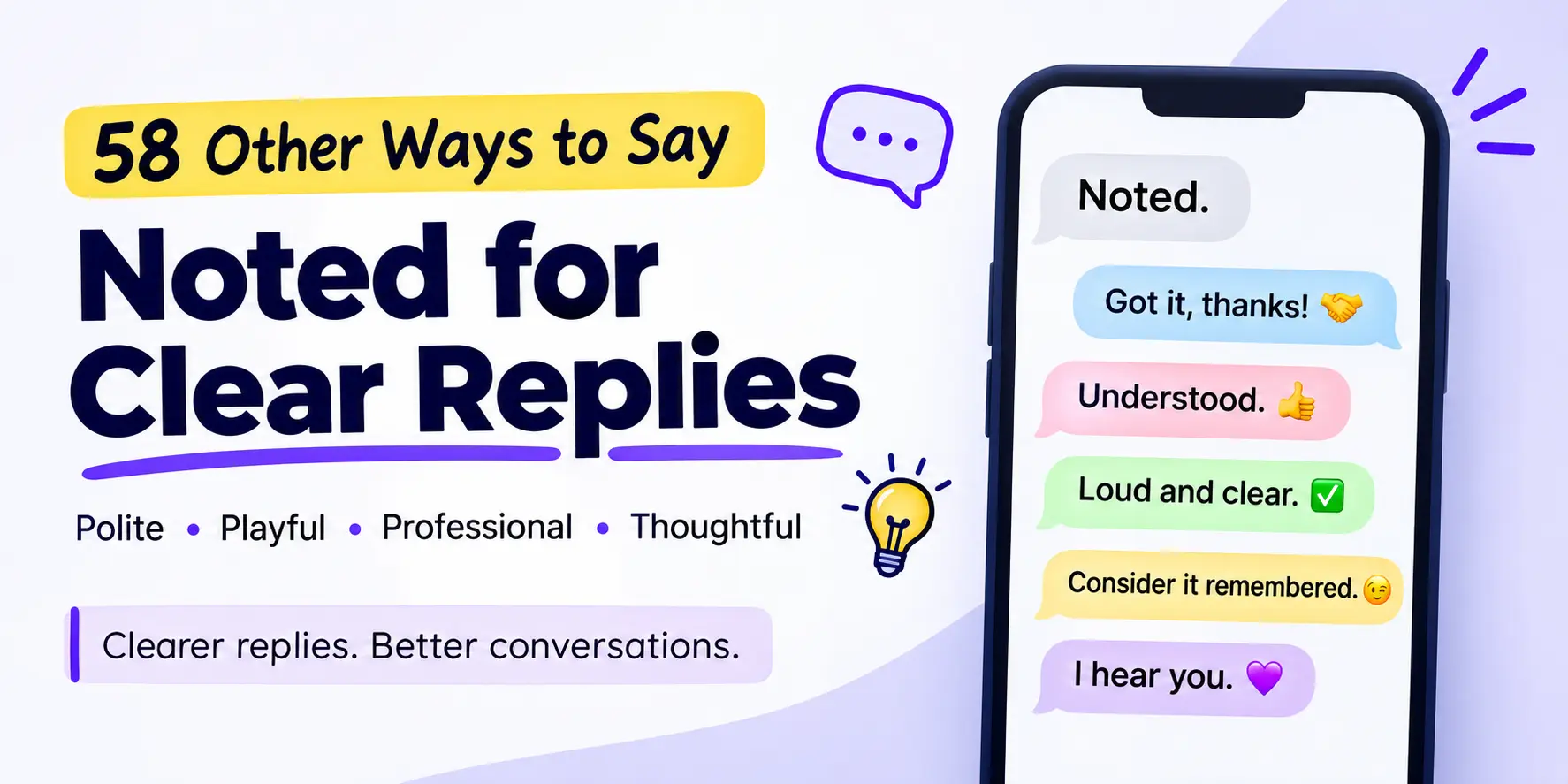
The best reply depends on the situation. “Got it, thanks!” feels friendly, while “Understood. I’ll take care of it” sounds professional. With the right wording, even a two-word reply can communicate respect, confidence, and personality.
Here are 58 natural alternatives you can actually use in real conversations.
2. What Does “Noted” Mean?
“Noted” generally means “I have received your message, understood the information, and will keep it in mind.”
People commonly use it when someone gives them information, instructions, advice, a reminder, or an important detail.
For example:
Person A: “Please send the final report before 5 PM.”
Person B: “Noted.”
The meaning is clear, but the tone can sometimes feel formal or distant. Depending on the relationship, you might want something warmer:
“Got it, thanks!”
Or more professional:
“Understood. I’ll make sure it’s done.”
Or even playful:
“Loud and clear.”
So, when looking for other ways to say noted for clear replies, think about what you actually want your message to communicate: acknowledgment, appreciation, confidence, humor, interest, or boundaries.
Category 1: Polite & Appreciative Replies
These are ideal when you want to acknowledge someone’s message while sounding respectful, friendly, and cooperative.
1. “Got it, thanks!”
Reply: “Got it, thanks!”
Example:
Your coworker reminds you about a meeting time. You want to acknowledge it without sounding overly formal.
Coworker: “The meeting has been moved to 3 PM.”
You: “Got it, thanks!”
2. “Understood, thank you.”
Reply: “Understood, thank you.”
Example:
Your teacher explains an assignment deadline.
Teacher: “Please submit everything by Thursday.”
You: “Understood, thank you.”
3. “Thanks for letting me know.”
Reply: “Thanks for letting me know.”
Example:
A friend tells you they will arrive a little late.
Friend: “I might be 15 minutes late.”
You: “Thanks for letting me know.”
4. “I appreciate the heads-up.”
Reply: “I appreciate the heads-up.”
Example:
A colleague warns you that a project requirement has changed.
Colleague: “The client added another requirement.”
You: “I appreciate the heads-up.”
5. “Absolutely, I’ll keep that in mind.”
Reply: “Absolutely, I’ll keep that in mind.”
Example:
Someone gives you useful advice before an important presentation.
Friend: “Try to keep your introduction short.”
You: “Absolutely, I’ll keep that in mind.”
6. “Thanks, I’ll remember that.”
Reply: “Thanks, I’ll remember that.”
Example:
Your friend recommends something important before you make a decision.
Friend: “Make sure you check the reviews first.”
You: “Thanks, I’ll remember that.”
7. “I’ve got it. Thanks!”
Reply: “I’ve got it. Thanks!”
Example:
Your teammate gives you a quick instruction during a busy project.
Teammate: “Just upload the revised file to the shared folder.”
You: “I’ve got it. Thanks!”
8. “Thanks for clarifying.”
Reply: “Thanks for clarifying.”
Example:
You misunderstood something in a group project, and your friend explains it.
Friend: “No, I meant the second section, not the introduction.”
You: “Ah, thanks for clarifying.”
9. “Message received.”
Reply: “Message received.”
Example:
Someone gives you an important reminder and you want a concise response.
Friend: “Do not forget your passport tomorrow.”
You: “Message received.”
10. “I’ll take that into account.”
Reply: “I’ll take that into account.”
Example:
A mentor gives you feedback on your work.
Mentor: “Try to make your presentation more concise.”
You: “I’ll take that into account. Thank you.”
11. “That’s clear, thank you.”
Reply: “That’s clear, thank you.”
Example:
A manager explains what needs to be completed.
Manager: “We only need the final version by Friday.”
You: “That’s clear, thank you.”
12. “Thanks, I understand.”
Reply: “Thanks, I understand.”
Example:
Someone explains why plans have changed.
Friend: “We had to change the venue because it was fully booked.”
You: “Thanks, I understand.”
Category 2: Flirty & Playful Replies
When the conversation is lighthearted, you do not always need a boring “noted.” These responses add personality without taking the conversation too seriously.
13. “Loud and clear.”
Reply: “Loud and clear.”
Example:
Your crush tells you not to forget your promise.
Crush: “You better remember what you promised me.”
You: “Loud and clear.”
14. “Consider it remembered.”
Reply: “Consider it remembered.”
Example:
Someone playfully tells you their favorite snack.
Them: “Just so you know, I’m obsessed with chocolate.”
You: “Consider it remembered.”
15. “Oh, I’m definitely remembering that.”
Reply: “Oh, I’m definitely remembering that.”
Example:
Your crush casually mentions their favorite restaurant.
Crush: “That little Italian place downtown is my favorite.”
You: “Oh, I’m definitely remembering that.”
16. “Noted… very carefully.”
Reply: “Noted… very carefully.”
Example:
Someone gives you a teasing warning.
Them: “I’m warning you, I take my coffee seriously.”
You: “Noted… very carefully.”
17. “Say less, I got you.”
Reply: “Say less, I got you.”
Example:
Your friend asks you to bring their favorite drink.
Friend: “If you’re stopping by, you know what I want.”
You: “Say less, I got you.”
18. “Got it. I’m taking notes.”
Reply: “Got it. I’m taking notes.”
Example:
Your crush tells you what kind of movie they love.
Crush: “I love old mystery movies.”
You: “Got it. I’m taking notes.”
19. “Consider it locked in.”
Reply: “Consider it locked in.”
Example:
You and a friend are making weekend plans.
Friend: “Saturday at 7?”
You: “Consider it locked in.”
20. “Noted for future reference.”
Reply: “Noted for future reference.”
Example:
Someone jokingly tells you their favorite dessert.
Them: “Cheesecake is always the answer.”
You: “Noted for future reference.”
21. “Oh, that information is staying with me.”
Reply: “Oh, that information is staying with me.”
Example:
Someone shares a funny personal preference.
Friend: “I secretly love cheesy romantic movies.”
You: “Oh, that information is staying with me.”
22. “You really thought I’d forget?”
Reply: “You really thought I’d forget?”
Example:
Your crush reminds you about something important.
Crush: “Remember our plan tomorrow.”
You: “You really thought I’d forget?”
Category 3: Confident & Self-Respecting Replies
These responses are useful when you want to acknowledge someone clearly without sounding desperate, overly apologetic, or passive.
23. “Understood. I’ll handle it.”
Reply: “Understood. I’ll handle it.”
Example:
Your teammate gives you responsibility for part of a project.
Teammate: “Can you take care of the presentation slides?”
You: “Understood. I’ll handle it.”
24. “Got it. I know what needs to be done.”
Reply: “Got it. I know what needs to be done.”
Example:
A colleague explains a task you are already familiar with.
Colleague: “Just make sure the final version is uploaded.”
You: “Got it. I know what needs to be done.”
25. “Understood. I’ll keep it in mind.”
Reply: “Understood. I’ll keep it in mind.”
Example:
Someone gives you constructive feedback.
Manager: “Try to be more concise in future meetings.”
You: “Understood. I’ll keep it in mind.”
26. “Consider it taken care of.”
Reply: “Consider it taken care of.”
Example:
Your teammate asks you to complete a simple task.
Teammate: “Can you send the documents today?”
You: “Consider it taken care of.”
27. “I hear you.”
Reply: “I hear you.”
Example:
A friend explains that they need some space.
Friend: “I just need some time to myself right now.”
You: “I hear you.”
28. “Point taken.”
Reply: “Point taken.”
Example:
Someone makes a reasonable argument during a discussion.
Friend: “You might want to look at both sides before deciding.”
You: “Point taken.”
29. “Fair enough. I understand.”
Reply: “Fair enough. I understand.”
Example:
Someone explains why they cannot make plans.
Friend: “I have too much going on this week.”
You: “Fair enough. I understand.”
30. “Understood. No confusion here.”
Reply: “Understood. No confusion here.”
Example:
A teammate wants to make sure everyone understands the plan.
Teammate: “So we’re meeting at 10, not 11.”
You: “Understood. No confusion here.”
31. “I’ll act accordingly.”
Reply: “I’ll act accordingly.”
Example:
Someone communicates an important workplace instruction.
Manager: “Please use the updated format from now on.”
You: “Understood. I’ll act accordingly.”
32. “Got it. I’ll make the adjustment.”
Reply: “Got it. I’ll make the adjustment.”
Example:
A client asks you to make a small change.
Client: “Could you move the title slightly higher?”
You: “Got it. I’ll make the adjustment.”
33. “Understood. Thanks for being direct.”
Reply: “Understood. Thanks for being direct.”
Example:
Someone gives you honest feedback instead of sugarcoating it.
Friend: “Honestly, I think you should rethink that decision.”
You: “Understood. Thanks for being direct.”
34. “I understand where you’re coming from.”
Reply: “I understand where you’re coming from.”
Example:
You disagree with someone but still acknowledge their perspective.
Friend: “I think we should wait before making a decision.”
You: “I understand where you’re coming from.”
Category 4: Funny & Savage Replies
Sometimes “noted” is way too serious. If the conversation allows it, these alternatives add a little humor.
35. “Noted and filed.”
Reply: “Noted and filed.”
Example:
Your friend gives you an unnecessarily detailed warning.
Friend: “Do not touch my fries.”
You: “Noted and filed.”
36. “Adding that to the mental database.”
Reply: “Adding that to the mental database.”
Example:
Your friend reveals their latest obsession.
Friend: “I’ve been listening to the same song for three days.”
You: “Adding that to the mental database.”
37. “Copy that, captain.”
Reply: “Copy that, captain.”
Example:
Your friend gives you a dramatic instruction.
Friend: “Meet me outside in five minutes.”
You: “Copy that, captain.”
38. “Noted. The committee has been informed.”
Reply: “Noted. The committee has been informed.”
Example:
Your friend tells you something ridiculously simple.
Friend: “I want pizza tonight.”
You: “Noted. The committee has been informed.”
39. “Understood, your honor.”
Reply: “Understood, your honor.”
Example:
Your sibling orders you to stop stealing their snacks.
Sibling: “Please stop eating my chips.”
You: “Understood, your honor.”
40. “Message received from headquarters.”
Reply: “Message received from headquarters.”
Example:
Your friend sends a dramatic reminder about your plans.
Friend: “Do NOT be late tomorrow.”
You: “Message received from headquarters.”
41. “Consider the memo received.”
Reply: “Consider the memo received.”
Example:
Your friend gives you a long list of things to remember.
Friend: “Bring your charger, headphones, and water.”
You: “Consider the memo received.”
42. “Okay, boss.”
Reply: “Okay, boss.”
Example:
Your friend tells you where to meet.
Friend: “Meet me at the café at 6.”
You: “Okay, boss.”
43. “Say no more.”
Reply: “Say no more.”
Example:
Your friend explains that they need help with something.
Friend: “I could really use some help tonight.”
You: “Say no more.”
44. “Noted with unnecessary levels of seriousness.”
Reply: “Noted with unnecessary levels of seriousness.”
Example:
Your friend tells you their favorite snack.
Friend: “I need fries after this.”
You: “Noted with unnecessary levels of seriousness.”
45. “Copy that. My brain has officially logged it.”
Reply: “Copy that. My brain has officially logged it.”
Example:
Someone reminds you about an upcoming event.
Friend: “Don’t forget the party on Saturday.”
You: “Copy that. My brain has officially logged it.”
46. “Noted. I shall pretend I knew this already.”
Reply: “Noted. I shall pretend I knew this already.”
Example:
Your friend teaches you a random fact.
Friend: “Apparently that café closes at 8.”
You: “Noted. I shall pretend I knew this already.”
Category 5: Curious, Thoughtful & Mature Replies
These work best when you want to show that you are genuinely listening rather than simply ending the conversation.
47. “I understand. Tell me more.”
Reply: “I understand. Tell me more.”
Example:
A friend opens up about something personal.
Friend: “I’ve been feeling a little overwhelmed lately.”
You: “I understand. Tell me more.”
48. “I hear you. What would help?”
Reply: “I hear you. What would help?”
Example:
Someone tells you they are struggling with a situation.
Friend: “I don’t really know how to deal with this.”
You: “I hear you. What would help?”
49. “That makes sense. I hadn’t looked at it that way.”
Reply: “That makes sense. I hadn’t looked at it that way.”
Example:
Someone gives you a different perspective.
Friend: “Maybe you’re judging the situation too quickly.”
You: “That makes sense. I hadn’t looked at it that way.”
50. “I appreciate your perspective.”
Reply: “I appreciate your perspective.”
Example:
A friend respectfully disagrees with you.
Friend: “I see it differently, but I understand why you feel that way.”
You: “I appreciate your perspective.”
51. “That’s worth thinking about.”
Reply: “That’s worth thinking about.”
Example:
Someone gives you advice about a decision.
Friend: “Maybe give yourself a little more time before deciding.”
You: “That’s worth thinking about.”
52. “I’ll give that some thought.”
Reply: “I’ll give that some thought.”
Example:
Someone suggests an idea you are not ready to accept immediately.
Friend: “Have you considered applying for that position?”
You: “I’ll give that some thought.”
53. “I understand your point.”
Reply: “I understand your point.”
Example:
You are having a respectful disagreement.
Friend: “I think we should prioritize this differently.”
You: “I understand your point.”
54. “That’s something I’ll genuinely consider.”
Reply: “That’s something I’ll genuinely consider.”
Example:
A trusted friend gives you meaningful advice.
Friend: “Maybe you should focus on what makes you happy instead of pleasing everyone.”
You: “That’s something I’ll genuinely consider.”
55. “Thanks for sharing that with me.”
Reply: “Thanks for sharing that with me.”
Example:
Someone tells you something personal.
Friend: “I don’t usually talk about this with people.”
You: “Thanks for sharing that with me.”
56. “I’ll keep that perspective in mind.”
Reply: “I’ll keep that perspective in mind.”
Example:
A mentor gives you advice about handling criticism.
Mentor: “Not every piece of criticism needs an immediate response.”
You: “I’ll keep that perspective in mind.”
57. “I appreciate you being honest with me.”
Reply: “I appreciate you being honest with me.”
Example:
A friend tells you something you may not want to hear.
Friend: “I think you’re settling for less than you deserve.”
You: “I appreciate you being honest with me.”
58. “I understand. I’ll think about what you said.”
Reply: “I understand. I’ll think about what you said.”
Example:
You receive serious advice and want to respond without making an immediate decision.
Friend: “I really think you should reconsider the situation.”
You: “I understand. I’ll think about what you said.”
4. Real-Life Situations: Which Reply Should You Use?
Knowing alternatives is useful, but the real question is often: Which one should I actually send?
When Your Crush Says Something Important
If your crush gives you a playful reminder or tells you something personal, avoid sounding like a customer-service email.
Best reply:
“Consider it remembered.”
Or, if you want to be slightly more playful:
“Oh, I’m definitely remembering that.”
These responses acknowledge what they said while leaving room for the conversation to continue.
When a Friend Is Joking With You
Your friends probably do not need a serious “Understood. I’ll take that into account.”
Try something more relaxed.
Best reply:
“Okay, boss.”
Or:
“Noted. The committee has been informed.”
The goal here is not perfection. It is matching their energy.
When Someone Says Something Too Early
If someone gives you advice, expectations, or a serious statement before you are ready to respond, you can acknowledge it without making a commitment.
Best reply:
“That’s something I’ll genuinely consider.”
This keeps the conversation respectful while giving you room to think.
When You Are Not Interested
You do not have to over-explain yourself.
If someone says something you do not want to encourage, keep your response polite and neutral.
Best reply:
“I understand. Thanks for being honest.”
Or:
“I hear you. I appreciate you telling me.”
These responses acknowledge what was said without accidentally sending mixed signals.
When Someone Gives You Genuine Advice
If you actually value the person’s opinion, make that clear.
Best reply:
“I appreciate your perspective. I’ll give that some thought.”
It sounds mature, thoughtful, and open-minded without promising that you will automatically follow their advice.
5. What to Avoid When Saying “Noted”
Even a simple acknowledgment can go wrong if the tone does not match the situation.
1. Do Not Sound Artificially Formal
If your best friend texts, “Don’t forget we’re meeting at 6,” replying with:
“Your information has been duly acknowledged.”
is technically understandable, but unnecessarily dramatic.
Match the relationship.
2. Do Not Use “Noted” to Shut Down Every Conversation
Sometimes “noted” can sound like you are trying to end the discussion.
If the person is sharing something emotional, try:
“I hear you.”
or:
“Thanks for telling me.”
3. Do Not Overuse Sarcasm
Funny responses are great when the other person understands your humor. They can be risky when the conversation is serious.
4. Do Not Promise Something You Cannot Deliver
“I’ll definitely do it” is stronger than “I’ll keep that in mind.”
Choose your words based on what you actually intend to do.
5. Do Not Overexplain a Simple Acknowledgment
Sometimes the best response is only three words.
“Got it, thanks!”
You do not need an entire paragraph every time someone sends you information.
6. Do Not Ignore the Emotional Context
If someone has trusted you with something personal, a casual “noted lol” can feel dismissive.
The more vulnerable the message, the more thoughtful your response should be.
6. Pro Tips for Better Replies
1. Match Their Energy
Professional message? Keep it polished.
Casual text? Relax.
Flirty conversation? Add a little personality.
Serious discussion? Slow down and acknowledge the emotion.
2. Think About What You Want Your Reply to Do
Do you want to:
- End the conversation?
- Show appreciation?
- Keep the conversation going?
- Show confidence?
- Add humor?
- Set a boundary?
Once you know the goal, choosing the right alternative becomes much easier.
3. Do Not Be Afraid of Short Replies
A confident response does not need to be complicated.
“Got it.”
“Fair enough.”
“Point taken.”
“Say less.”
Sometimes less really is more.
7. Bonus: Quick One-Liner Replies
Need something fast? Save these:
- “Got it.”
- “Absolutely.”
- “Understood.”
- “Point taken.”
- “Fair enough.”
- “Loud and clear.”
- “Say less.”
- “I hear you.”
- “Consider it remembered.”
- “Message received.”
8. Conclusion
Finding other ways to say noted for clear replies is really about understanding tone. The words you choose can make the same acknowledgment sound warm, confident, funny, professional, or deeply thoughtful. You do not need to memorize every response on this list. Instead, pay attention to the person, the situation, and what you genuinely want to communicate.
A great reply is not the fanciest one. It is the one that sounds like you while making the other person feel heard.
Discover more