
Sometimes, “no problem” is exactly the right response. It is short, friendly, and easy to understand. But when you use it repeatedly, your conversations can start to sound predictable. Whether someone has thanked you, apologized, asked for help, or appreciated something you did, having a few alternatives can make your response feel more natural.
The best alternative depends on the situation. A message to a close friend can be casual and playful, while a workplace email may need something more polished. You might also want a confident response that shows you were genuinely happy to help.
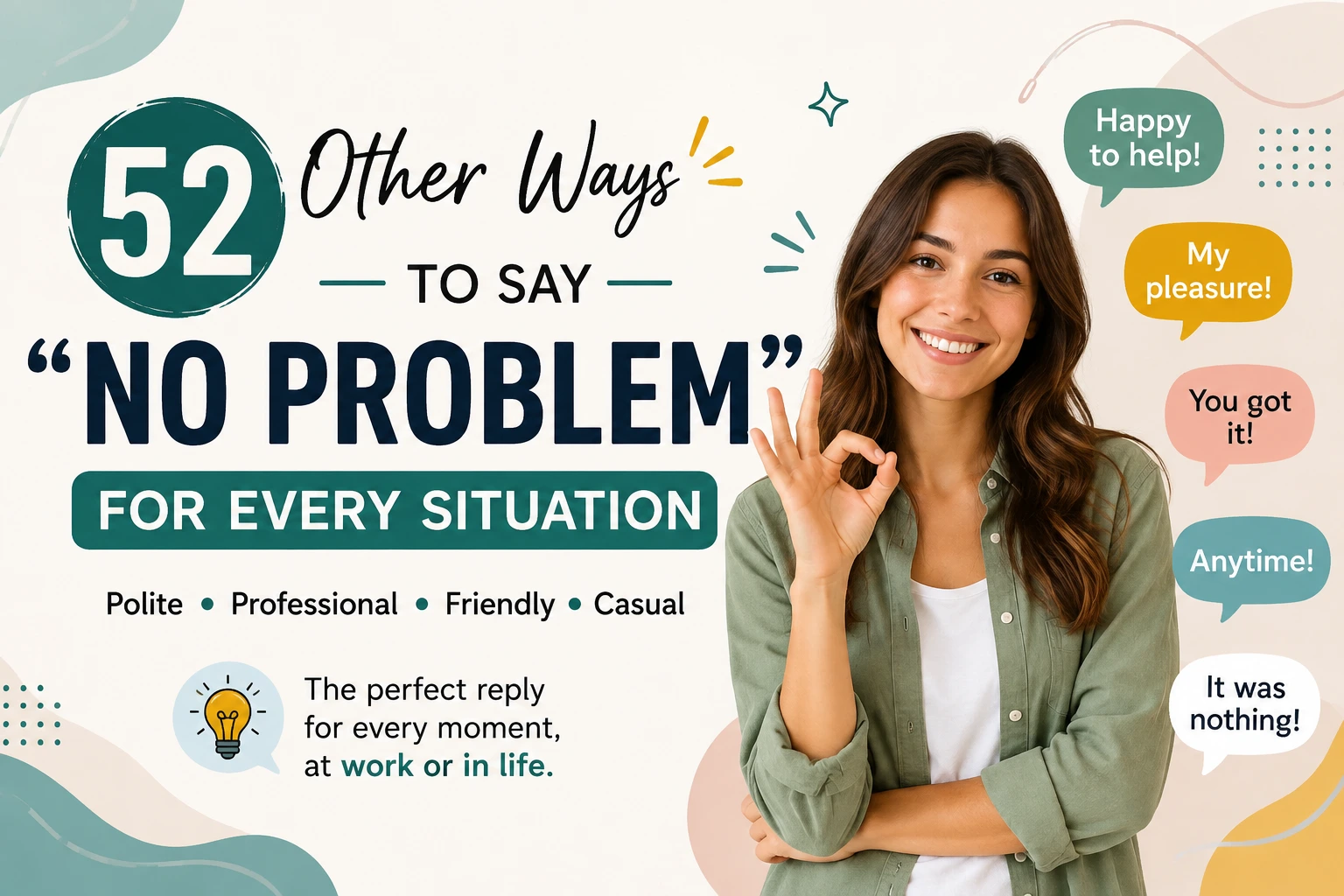
In this guide, you will find 52 useful alternatives to “no problem,” organized by tone and context. Each phrase includes a realistic example so you can choose the right response without making your conversation sound forced.
What Does “No Problem” Mean?
“No problem” is a common phrase used to tell someone that something is acceptable or that you are happy to help.
It is often used after someone says “thank you” or apologizes. For example:
Person: “Thanks for helping me with that.”
Response: “No problem.”
The phrase usually sounds friendly and relaxed. It can also mean “That is completely fine,” “You are welcome,” or “There is nothing to worry about.”
However, tone matters. In a professional setting, phrases such as “You’re welcome” or “My pleasure” may sound more polished. With friends, something like “Anytime” or “Don’t worry about it” may feel more natural.
Polite and Appreciative
These responses work well when you want to sound respectful, warm, and considerate.
1. You’re Welcome
Meaning: A standard way to respond to someone who thanks you.
Tone: Polite and professional.
Example: “Thanks for sending me the notes.” “You’re welcome. Glad they helped.”
Why use it: This is one of the safest alternatives in almost any situation.
2. My Pleasure
Meaning: You were happy to help.
Tone: Warm and professional.
Example: “Thank you for staying late to help.” “My pleasure. I was happy to help.”
Why use it: It shows that helping was not an inconvenience.
3. Happy to Help
Meaning: You were glad to assist.
Tone: Friendly and professional.
Example: “Thanks for explaining that.” “Happy to help.”
Why use it: This works especially well in customer service, school, and workplace conversations.
4. Glad I Could Help
Meaning: You are pleased that your help was useful.
Tone: Appreciative and sincere.
Example: “Thanks for helping me finish the presentation.” “Glad I could help.”
Why use it: Use this when you want to emphasize the positive result.
5. Of Course
Meaning: Helping was natural or expected.
Tone: Friendly and reassuring.
Example: “Could you send me that file?” “Of course. I’ll send it now.”
Why use it: It sounds effortless and welcoming.
6. Certainly
Meaning: You are willing to help or agree to a request.
Tone: Formal and professional.
Example: “Could you provide the updated document?” “Certainly.”
Why use it: A good choice for professional emails and formal conversations.
7. Absolutely
Meaning: You strongly agree or are happy to assist.
Tone: Positive and confident.
Example: “Can you help me review this?” “Absolutely.”
Why use it: It adds enthusiasm without sounding excessive.
8. It’s Quite Alright
Meaning: There is no need to worry about what happened.
Tone: Polite and reassuring.
Example: “Sorry for the delay.” “It’s quite alright.”
Why use it: This is particularly useful when responding to an apology.
9. Don’t Worry About It
Meaning: The situation is not serious or troublesome.
Tone: Casual and reassuring.
Example: “Sorry, I forgot to bring the book.” “Don’t worry about it. Bring it tomorrow.”
Why use it: Best for relaxed conversations with friends, classmates, or familiar people.
10. That’s Quite Alright
Meaning: Everything is fine.
Tone: Polite and composed.
Example: “I’m sorry I interrupted you.” “That’s quite alright.”
Why use it: A more polished alternative when you want to remain courteous.
Flirty and Playful
These alternatives are lighthearted and work best in friendly conversations where a playful tone is already established.
11. Anytime
Meaning: You would be willing to help again.
Tone: Friendly and warm.
Example: “Thanks for helping me choose between these two.” “Anytime.”
Why use it: It keeps the conversation relaxed and positive.
12. You Got It
Meaning: You are happy to take care of something.
Tone: Casual and confident.
Example: “Can you save me a seat?” “You got it.”
Why use it: It sounds natural in everyday texting.
13. Consider It Done
Meaning: You will take care of the request.
Tone: Playful and confident.
Example: “Can you remind me about the meeting?” “Consider it done.”
Why use it: It adds personality while still showing reliability.
14. Say Less
Meaning: You understand what is needed and are ready to help.
Tone: Casual and modern.
Example: “Can you bring snacks for the movie?” “Say less.”
Why use it: This works particularly well in casual texting.
15. No Stress
Meaning: There is nothing to worry about.
Tone: Relaxed and friendly.
Example: “Sorry, I replied late.” “No stress.”
Why use it: A quick option for informal conversations.
16. You Know I’ve Got You
Meaning: You can rely on me.
Tone: Warm and supportive.
Example: “Thanks for having my back during the project.” “You know I’ve got you.”
Why use it: Use it with someone you know well when you want to emphasize support.
17. Always Glad to Help
Meaning: You are consistently willing to assist.
Tone: Warm and friendly.
Example: “Thanks for checking that for me.” “Always glad to help.”
Why use it: It sounds more personal than a simple “no problem.”
18. Anything for a Good Cause
Meaning: You are jokingly saying the effort was worthwhile.
Tone: Playful.
Example: “Thanks for helping me decorate the classroom.” “Anything for a good cause.”
Why use it: This adds humor to an otherwise ordinary response.
19. You Owe Me Nothing
Meaning: You are not expecting anything in return.
Tone: Friendly and reassuring.
Example: “I feel bad that you helped me without asking for anything.” “You owe me nothing.”
Why use it: It emphasizes genuine generosity.
20. Happy to Be of Service
Meaning: You were pleased to assist.
Tone: Playful and slightly dramatic.
Example: “Thanks for finding the missing charger.” “Happy to be of service.”
Why use it: Great for humorous conversations where you want to sound intentionally formal.
Confident and Self-Respecting
These responses are useful when you want to be kind without sounding overly apologetic or eager.
21. Absolutely, Anytime
Meaning: You are confident that helping was not an issue.
Tone: Warm and confident.
Example: “Thanks for helping me prepare for the interview.” “Absolutely, anytime.”
Why use it: It combines reassurance with confidence.
22. It Was Nothing
Meaning: You did not consider the favor difficult.
Tone: Casual and humble.
Example: “Thanks for carrying those books.” “It was nothing.”
Why use it: Use it when you want to downplay a small favor.
23. It Was No Trouble
Meaning: Helping did not inconvenience you.
Tone: Polite and composed.
Example: “Thanks for coming all the way here.” “It was no trouble.”
Why use it: This sounds especially natural after someone expresses concern about inconveniencing you.
24. I Was Happy to Do It
Meaning: You genuinely wanted to help.
Tone: Sincere and confident.
Example: “Thank you for helping me prepare.” “I was happy to do it.”
Why use it: It communicates generosity without sounding overly formal.
25. I’m Glad It Worked Out
Meaning: You are pleased that your assistance had a positive result.
Tone: Mature and thoughtful.
Example: “Thanks for recommending that study method.” “I’m glad it worked out.”
Why use it: This is useful when your advice or assistance produced a good outcome.
26. It Was Worth It
Meaning: The effort was worthwhile because of the result.
Tone: Confident and positive.
Example: “Thanks for helping me finish this project.” “It was worth it.”
Why use it: A good response when helping required some effort.
27. I’m Always Willing to Help
Meaning: You are open to helping when appropriate.
Tone: Mature and supportive.
Example: “Thanks for explaining the assignment.” “I’m always willing to help.”
Why use it: This sounds dependable without being overly casual.
28. You Can Count on Me
Meaning: The other person can rely on you.
Tone: Confident and supportive.
Example: “Thanks for helping me organize everything.” “You can count on me.”
Why use it: Best when you want to communicate reliability.
29. I’m Glad I Was Able to Help
Meaning: You are pleased that you could provide assistance.
Tone: Professional and sincere.
Example: “Thank you for helping us solve the issue.” “I’m glad I was able to help.”
Why use it: This fits professional conversations especially well.
30. It’s All Good
Meaning: Everything is fine.
Tone: Casual and confident.
Example: “Sorry about the mix-up.” “It’s all good.”
Why use it: A simple choice for everyday conversations.
Funny and Savage
These responses are intentionally humorous. Use them when the relationship and situation make joking appropriate.
31. I’ll Survive
Meaning: The favor or inconvenience was manageable.
Tone: Dry and humorous.
Example: “Sorry I kept you waiting for five minutes.” “I’ll survive.”
Why use it: A playful response to a very minor inconvenience.
32. You’re Officially Off the Hook
Meaning: The other person does not need to feel guilty.
Tone: Funny and reassuring.
Example: “Sorry I forgot to reply yesterday.” “You’re officially off the hook.”
Why use it: It turns a simple reassurance into a playful response.
33. Crisis Averted
Meaning: The problem has been solved.
Tone: Funny and dramatic.
Example: “Thanks for finding my missing notebook.” “Crisis averted.”
Why use it: Perfect when a small problem has just been resolved.
34. The World Keeps Spinning
Meaning: The situation was not serious enough to cause concern.
Tone: Dry and humorous.
Example: “Sorry I took so long.” “The world keeps spinning.”
Why use it: Use this when you want to reassure someone with a little humor.
35. You’re Safe This Time
Meaning: You are jokingly pretending that the person almost caused trouble.
Tone: Teasing.
Example: “Sorry, I almost forgot your birthday.” “You’re safe this time.”
Why use it: Best among close friends who understand your humor.
36. I Demand Absolutely Nothing in Return
Meaning: You are joking that you expect no reward.
Tone: Playful and sarcastic.
Example: “Thanks for helping me with my presentation.” “I demand absolutely nothing in return.”
Why use it: It works when the favor was genuinely small.
37. And That’s Another Good Deed
Meaning: You are jokingly taking credit for helping.
Tone: Humorous.
Example: “Thanks for explaining that question.” “And that’s another good deed.”
Why use it: A fun option for casual conversations.
38. Put It on My Very Long List of Achievements
Meaning: You are humorously exaggerating a small favor.
Tone: Sarcastic and playful.
Example: “Thanks for finding my pen.” “Put it on my very long list of achievements.”
Why use it: Great when you and the other person enjoy exaggerated humor.
39. No Need for the Acceptance Speech
Meaning: The thanks are appreciated but unnecessary.
Tone: Funny and teasing.
Example: “Thank you so much for saving me a seat.” “No need for the acceptance speech.”
Why use it: This makes a simple exchange more entertaining.
40. Your Gratitude Has Been Noted
Meaning: You acknowledge the person’s thanks in an intentionally formal way.
Tone: Dry and humorous.
Example: “Thanks for helping me with the homework.” “Your gratitude has been noted.”
Why use it: Use it when you want to sound mock-serious.
Curious, Thoughtful, or Mature
These responses work when you want to keep the conversation meaningful rather than simply ending it.
41. Of Course. How Did It Go?
Meaning: You acknowledge the thanks and show interest in the outcome.
Tone: Thoughtful and friendly.
Example: “Thanks for helping me practice.” “Of course. How did the presentation go?”
Why use it: It naturally keeps the conversation moving.
42. You’re Very Welcome
Meaning: A warmer version of “you’re welcome.”
Tone: Polite and sincere.
Example: “Thank you for your advice.” “You’re very welcome.”
Why use it: Useful when you want to sound especially courteous.
43. I’m Glad You Asked
Meaning: You were happy that the person reached out.
Tone: Warm and supportive.
Example: “Thanks for answering my question.” “I’m glad you asked.”
Why use it: This makes the other person feel comfortable about seeking help.
44. I’m Always Happy to Support You
Meaning: You are willing to offer encouragement or assistance.
Tone: Mature and supportive.
Example: “Thanks for helping me prepare for the exam.” “I’m always happy to support you.”
Why use it: Best when the situation involves encouragement rather than a simple favor.
45. I’m Glad That Helped
Meaning: You are pleased your advice or assistance was useful.
Tone: Friendly and thoughtful.
Example: “Your explanation finally made sense.” “I’m glad that helped.”
Why use it: A natural response after giving advice or explaining something.
46. That’s What Friends Are For
Meaning: Helping each other is part of friendship.
Tone: Warm and familiar.
Example: “Thanks for helping me through that stressful day.” “That’s what friends are for.”
Why use it: Ideal for close friends.
47. I’m Here If You Need Anything Else
Meaning: You are offering continued support.
Tone: Caring and professional.
Example: “Thanks for helping me fix the issue.” “I’m here if you need anything else.”
Why use it: This works particularly well in customer service and professional communication.
48. Let Me Know If You Need More Help
Meaning: You are willing to assist again.
Tone: Helpful and professional.
Example: “Thanks for walking me through the process.” “Let me know if you need more help.”
Why use it: A useful closing line for emails and workplace conversations.
49. I’m Glad We Could Sort It Out
Meaning: You are pleased that the problem was resolved.
Tone: Mature and collaborative.
Example: “Thanks for helping resolve the misunderstanding.” “I’m glad we could sort it out.”
Why use it: Great for situations involving teamwork or resolving problems.
50. It’s Good to Know Everything Is Sorted
Meaning: You are relieved that the matter has been resolved.
Tone: Calm and professional.
Example: “Thanks for helping me fix the issue.” “It’s good to know everything is sorted.”
Why use it: A polished choice for professional communication.
51. I Appreciate You Saying That
Meaning: You value the other person’s acknowledgment.
Tone: Mature and sincere.
Example: “You really helped me today.” “I appreciate you saying that.”
Why use it: This is useful when someone gives you meaningful praise.
52. Anytime You Need Me
Meaning: You are offering future support.
Tone: Warm and reassuring.
Example: “Thanks for being there when I needed help.” “Anytime you need me.”
Why use it: Use this when you want your response to feel personal and supportive.
Real-Life Situations: Which Response Should You Choose?
When a friend thanks you
Keep it relaxed rather than overly formal.
Best reply: “Anytime.”
When someone apologizes for a small mistake
Reassure them without making the situation bigger.
Best reply: “Don’t worry about it.”
When responding to a professional email
Choose something polite and straightforward.
Best reply: “You’re welcome” or “Happy to help.”
When someone genuinely appreciates your support
A sincere response works better than a joke.
Best reply: “I’m glad I could help.”
When a close friend is being overly grateful
A little humor can make the exchange more natural.
Best reply: “No need for the acceptance speech.”
What to Avoid
1. Using the same phrase every time
Repeating “no problem” can make your responses feel automatic. Switch between a few alternatives depending on the situation.
2. Being too casual in professional settings
Expressions such as “say less” or “it’s all good” may not suit a formal email. Choose “certainly,” “happy to help,” or “you’re welcome” instead.
3. Using sarcasm with the wrong person
Funny responses depend heavily on context. A joke that works with a close friend may sound rude to someone you barely know.
4. Overexplaining a simple response
You do not need a long paragraph every time someone says thank you. Sometimes “Of course” is enough.
5. Ignoring the person’s tone
Match their energy. If someone is being sincere, respond sincerely. If the conversation is playful, a humorous answer may work better.
Pro Tips
1. Match the relationship.
Use professional phrases with colleagues and teachers, casual phrases with friends, and more thoughtful responses when someone is genuinely expressing appreciation.
2. Think about why they are thanking you.
If you gave advice, “Glad that helped” sounds natural. If you completed a task, “Happy to help” may fit better.
3. Keep it authentic.
The best alternative is not necessarily the most sophisticated one. Choose the phrase that sounds like something you would actually say.
Bonus: Quick One-Liners
- “Anytime.”
- “Of course.”
- “Happy to help.”
- “You got it.”
- “Absolutely.”
- “No stress.”
- “All good.”
- “My pleasure.”
- “Glad I could help.”
- “You can count on me.”
Conclusion
“No problem” is a perfectly useful phrase, but it does not have to be your only response. From professional options such as “certainly” and “happy to help” to casual choices such as “anytime” and “you got it,” there are plenty of ways to make your conversations sound more natural.
The key is to match your words with the situation, relationship, and tone. A thoughtful response can make even a quick exchange feel more genuine. Choose the phrase that fits the moment, and let your communication sound like you.
Discover more
other ways to say in my opinion