
Have you ever sent a message and then wondered, “Did they understand what I meant?” When plans, deadlines, appointments, or important details are involved, a quick confirmation can save you from a lot of confusion later.
“Just to confirm” is a simple and useful phrase, but using it again and again can make your messages sound repetitive. Sometimes you may also want to sound more professional, confident, friendly, or casual depending on who you are talking to.
That is why knowing other ways to say just to confirm clearly and effectively can make your communication much stronger. The right phrase helps you check information without sounding demanding or awkward.
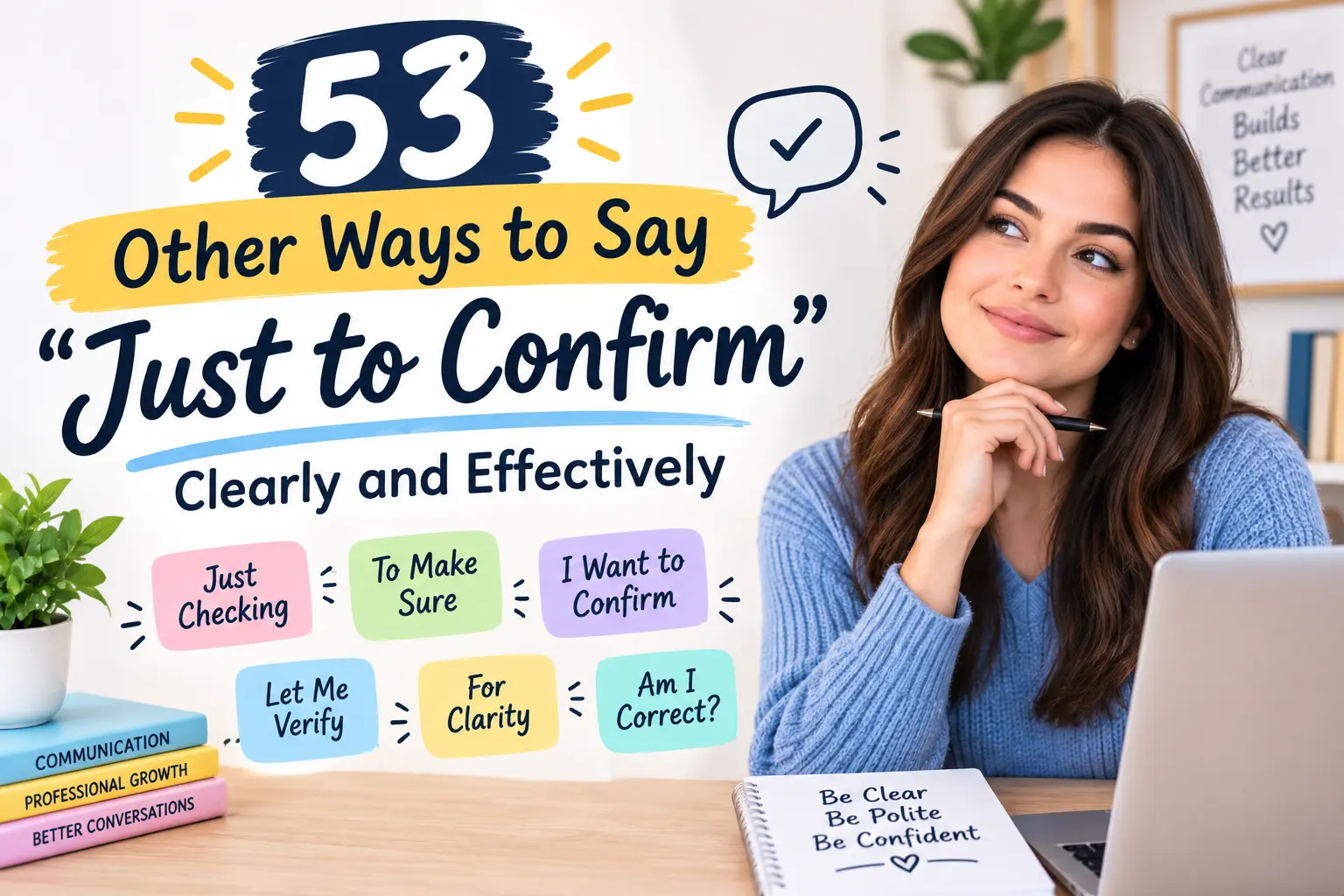
Below, you’ll find 53 natural alternatives, along with realistic examples to help you choose the right one for emails, texting, work, friendships, and everyday conversations.
What Does “Just to Confirm” Mean?
“Just to confirm” means that you want to make sure something is correct, understood, or agreed upon before moving forward.
For example, if someone says your meeting is at 3 p.m., you might say:
“Just to confirm, we’re meeting at 3 p.m., right?”
You are not necessarily questioning the person. You are simply checking the details so everyone is on the same page.
The phrase can be used in professional emails, casual conversations, appointments, plans with friends, and many other situations.
Here are 53 natural alternatives you can use depending on your tone and situation.
Polite and Appreciative
1. Reply: “Just to make sure I have that right.”
Example:
“Just to make sure I have that right, the meeting is scheduled for Thursday.”
This sounds polite and natural when you want to double-check information without sounding formal.
2. Reply: “I just wanted to confirm.”
Example:
“I just wanted to confirm that you received the documents I sent yesterday.”
This is simple, professional, and works well in emails.
3. Reply: “Just checking that everything is correct.”
Example:
“Just checking that everything is correct before I submit the application.”
Use this when accuracy matters.
4. Reply: “I wanted to make sure we’re on the same page.”
Example:
“I wanted to make sure we’re on the same page about the project deadline.”
This is especially useful for work or group projects.
5. Reply: “May I confirm the details?”
Example:
“May I confirm the details before we finalize the booking?”
This sounds respectful and professional.
6. Reply: “I’d just like to verify that.”
Example:
“I’d just like to verify that the appointment is still scheduled for Monday.”
It is a polished option for formal communication.
7. Reply: “Could I quickly confirm something?”
Example:
“Could I quickly confirm something? Are we meeting online or in person?”
This sounds friendly while still being respectful.
8. Reply: “I just want to make sure I understood correctly.”
Example:
“I just want to make sure I understood correctly. You need the report by Friday, right?”
This is helpful when you are confirming someone’s instructions.
9. Reply: “Let me make sure I’ve got this right.”
Example:
“Let me make sure I’ve got this right: you’ll handle the presentation, and I’ll handle the research.”
This works well in both casual and professional conversations.
10. Reply: “Thank you for clarifying. I just want to double-check one detail.”
Example:
“Thank you for clarifying. I just want to double-check one detail before moving forward.”
This is a good choice when someone has already explained something to you.
Flirty and Playful
11. Reply: “Just making sure we’re thinking the same thing.”
Example:
“You said dinner at 8, right? Just making sure we’re thinking the same thing.”
It adds a light, playful feel without overdoing it.
12. Reply: “Just checking I heard you right.”
Example:
“You’re actually coming tonight? Just checking I heard you right.”
This works naturally in casual texting.
13. Reply: “Wait, did you really mean that?”
Example:
“You’re taking me out for coffee? Wait, did you really mean that?”
Use it when you want your confirmation to sound playful.
14. Reply: “Just making sure this is actually happening.”
Example:
“You’re finally visiting this weekend? Just making sure this is actually happening.”
This is fun when you are excited about a plan.
15. Reply: “So we’re definitely doing this?”
Example:
“You found the tickets? So we’re definitely doing this?”
It sounds casual and enthusiastic.
16. Reply: “Tell me I heard that correctly.”
Example:
“You’re bringing snacks too? Tell me I heard that correctly.”
This adds humor to a simple confirmation.
17. Reply: “Just checking before I get excited.”
Example:
“You’re really joining us tomorrow? Just checking before I get excited.”
This is playful and works well with friends.
18. Reply: “So, that’s a yes?”
Example:
“You said you’re free Saturday, so that’s a yes?”
Short, confident, and easy to use in texting.
19. Reply: “I need confirmation before I celebrate.”
Example:
“You finally finished the assignment? I need confirmation before I celebrate.”
This adds a little humor without becoming too dramatic.
20. Reply: “Please tell me I understood that correctly.”
Example:
“You’re actually coming with us? Please tell me I understood that correctly.”
It works when you want to sound pleasantly surprised.
Confident and Self-Respecting
21. Reply: “I’d like to be clear on the details.”
Example:
“I’d like to be clear on the details before I agree to anything.”
This sounds direct and mature.
22. Reply: “Let’s make sure the details are clear.”
Example:
“Let’s make sure the details are clear before we move forward.”
Use this when clarity matters more than casual conversation.
23. Reply: “I want to make sure we have the same understanding.”
Example:
“I want to make sure we have the same understanding about the deadline.”
This is confident without sounding aggressive.
24. Reply: “Before we proceed, I’d like to verify one thing.”
Example:
“Before we proceed, I’d like to verify one thing about the payment schedule.”
This is particularly useful in professional situations.
25. Reply: “I want to be certain about this.”
Example:
“I want to be certain about this before making the final decision.”
It communicates that you value accuracy.
26. Reply: “Let’s clear that up first.”
Example:
“Let’s clear that up first so there’s no confusion later.”
This is direct and practical.
27. Reply: “I’d rather clarify this now.”
Example:
“I’d rather clarify this now than deal with confusion later.”
This shows confidence and good communication skills.
28. Reply: “I want to make sure there’s no misunderstanding.”
Example:
“I want to make sure there’s no misunderstanding about what we agreed on.”
A strong option when expectations need to be clear.
29. Reply: “I’d like to verify that before moving forward.”
Example:
“I’d like to verify that before moving forward with the order.”
This sounds professional and composed.
30. Reply: “Let’s get the details straight.”
Example:
“Let’s get the details straight before we finalize everything.”
It is confident and straightforward.
31. Reply: “I need a clear answer on that.”
Example:
“I need a clear answer on that before I make plans.”
Use this when you genuinely need certainty.
Funny and Savage
32. Reply: “Just checking before my brain creates a whole story.”
Example:
“You said you’ll be here at 7? Just checking before my brain creates a whole story.”
A funny option for close friends.
33. Reply: “Let me confirm before I embarrass myself.”
Example:
“You meant me, right? Let me confirm before I embarrass myself.”
It adds humor to an uncertain moment.
34. Reply: “Just making sure my ears are still working.”
Example:
“You really said free food? Just making sure my ears are still working.”
Use this with friends when the situation is funny.
35. Reply: “I’m going to need that in writing.”
Example:
“You said you’re paying for lunch? I’m going to need that in writing.”
This is playful and sarcastic.
36. Reply: “Hold on, I need official confirmation.”
Example:
“You’re actually coming tomorrow? Hold on, I need official confirmation.”
A fun way to exaggerate a simple question.
37. Reply: “Let me check before I celebrate too soon.”
Example:
“We got the tickets? Let me check before I celebrate too soon.”
This works well in excited conversations.
38. Reply: “Are we sure, or are we just being optimistic?”
Example:
“You think the project will be finished today? Are we sure, or are we just being optimistic?”
A witty choice when plans are uncertain.
39. Reply: “I’m just making sure this isn’t a plot twist.”
Example:
“You’re actually coming with us? I’m just making sure this isn’t a plot twist.”
This keeps the conversation light.
40. Reply: “Let me confirm before I make plans around that.”
Example:
“You might be free Saturday? Let me confirm before I make plans around that.”
It combines humor with a practical point.
41. Reply: “I need confirmation from the source.”
Example:
“You heard the event is canceled? I need confirmation from the source.”
Funny, especially when friends are sharing rumors.
Curious, Thoughtful, and Mature
42. Reply: “Could you clarify that for me?”
Example:
“Could you clarify that for me? I’m not completely sure what you mean.”
This is ideal when you need more than a simple yes or no.
43. Reply: “Can we make sure I understood you correctly?”
Example:
“Can we make sure I understood you correctly before I start working on it?”
It encourages clear communication.
44. Reply: “Could you confirm what you meant?”
Example:
“Could you confirm what you meant by changing the deadline?”
This is useful when someone’s message is unclear.
45. Reply: “I just want to understand your point correctly.”
Example:
“I just want to understand your point correctly before I respond.”
This sounds thoughtful and mature.
46. Reply: “Can you confirm the exact details?”
Example:
“Can you confirm the exact details so I can plan accordingly?”
A practical choice when specific information matters.
47. Reply: “Is that how you intended it?”
Example:
“You said the meeting was optional. Is that how you intended it?”
This can prevent misunderstandings.
48. Reply: “Could we clarify that before continuing?”
Example:
“Could we clarify that before continuing with the discussion?”
This works well during serious conversations.
49. Reply: “I want to make sure I’m interpreting this correctly.”
Example:
“I want to make sure I’m interpreting this correctly. Are you asking me to revise the entire document?”
This is professional and careful.
50. Reply: “Can you confirm that this is still the plan?”
Example:
“Can you confirm that this is still the plan for tomorrow?”
Perfect when plans may have changed.
51. Reply: “I’d appreciate a quick confirmation.”
Example:
“I’d appreciate a quick confirmation so I can finalize the arrangements.”
This sounds polite and professional.
52. Reply: “Before I assume anything, can we clarify?”
Example:
“Before I assume anything, can we clarify what you meant by that message?”
This helps you avoid making assumptions.
53. Reply: “Just so we’re completely clear.”
Example:
“Just so we’re completely clear, the final version needs to be submitted by Friday.”
This is one of the strongest alternatives when you want clarity without sounding unnecessarily formal.
Real-Life Situations
When a friend makes a plan
If your friend says, “We’re meeting at 6 tomorrow,” you can say:
Best reply: “Just to make sure I have that right, we’re meeting at 6 tomorrow?”
It is simple and natural.
When someone you like makes a plan
If someone says, “I’ll see you this weekend,” you could keep the tone playful:
Best reply: “So we’re definitely doing this?”
It shows interest without making the conversation overly serious.
When someone gives unclear instructions
If a classmate or coworker gives you several tasks, avoid guessing.
Best reply: “I want to make sure I understood correctly. You need the report by Friday, right?”
This keeps expectations clear.
When plans keep changing
If someone has changed the plan several times, you can be more direct:
Best reply: “Can you confirm that this is still the plan?”
It is calm but makes it clear that you need a definite answer.
When you are not interested in continuing a conversation
You do not need to sound cold or rude. Keep your response short and clear.
Best reply: “I just want to make sure we have the same understanding before we move forward.”
This gives you space to communicate your expectations without unnecessary drama.
What to Avoid
1. Overusing “just to confirm”
Using the same phrase in every message can make your writing feel repetitive. Switch between natural alternatives.
2. Sounding accusatory
“Are you sure you actually said that?” can sound confrontational. Try “I just want to make sure I understood correctly.”
3. Confirming every tiny detail
Not every casual conversation needs formal confirmation. Save stronger wording for situations where clarity actually matters.
4. Making confirmation sound like distrust
A confirmation should usually clarify information, not make the other person feel questioned.
5. Being too vague
If you need a specific answer, ask a specific question. Instead of “Can you confirm?” say what you need confirmed.
6. Using overly formal language in casual chats
“Kindly verify the aforementioned information” may be correct, but it sounds strange in a normal text conversation.
Pro Tips
Match the tone to the situation.
Use “Could you confirm the details?” at work and “So we’re definitely doing this?” with friends.
Be specific.
The clearest confirmation includes the exact detail you want to verify, such as a date, time, location, deadline, or responsibility.
Do not apologize for wanting clarity.
Asking for confirmation is not being difficult. Clear communication can prevent bigger problems later.
Conclusion
Knowing other ways to say just to confirm clearly and effectively gives you more control over how your message sounds. You can be polite without sounding uncertain, confident without sounding rude, and playful without losing the point.
The best phrase depends on the person, situation, and tone you want to create.
When something matters, do not leave it to assumptions. Ask clearly, communicate calmly, and make sure everyone is on the same page.
Clear communication is not about saying more. It is about making sure the right message is understood.
Discover more
other ways to say i need your help