
Whether you’re replying to an email, confirming weekend plans, or responding to a coworker’s suggestion, you’ve probably said “sounds good” more times than you can count. It’s a simple, friendly phrase that works in almost every situation. However, using it repeatedly can make your conversations feel predictable and less engaging.
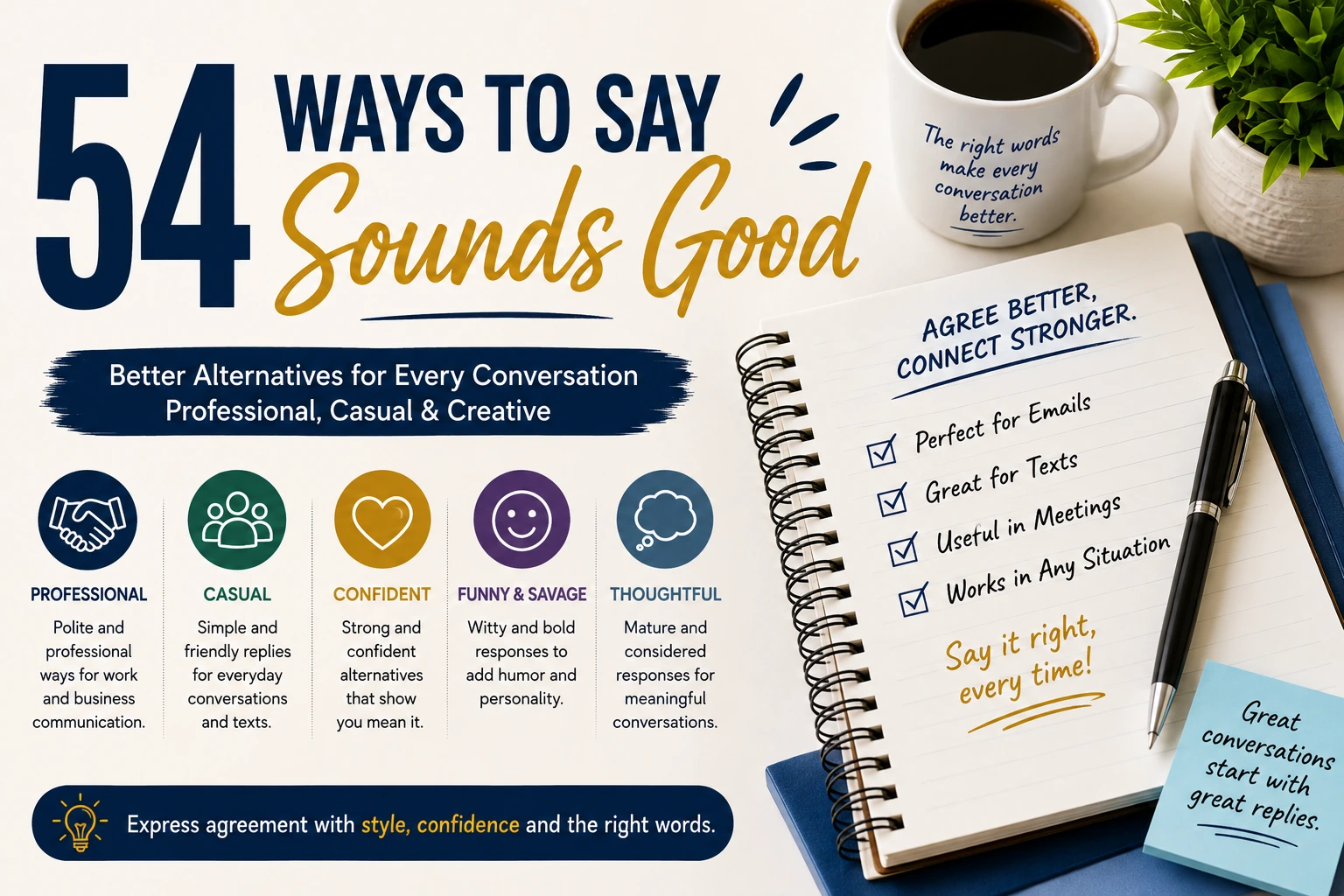
That’s why many people look for different ways to say sounds good. Choosing a fresh alternative can help you sound more professional in business emails, more enthusiastic in text messages, or simply more natural in everyday conversations. The right expression also allows you to match your tone to the situation, whether you’re speaking with a client, a close friend, or your manager. In this guide, you’ll discover practical alternatives to sounds good, complete with meanings, explanations, and real life examples so you can communicate with confidence in any setting.
What Does “Sounds Good” Mean?
The phrase “sounds good” is a common way of expressing agreement, approval, or acceptance of an idea, suggestion, or plan. It tells the other person that you’re happy with what they’ve proposed and that you’re willing to move forward.
For example, if someone says:
“Let’s meet at 3 PM tomorrow.”
You might simply reply:
“Sounds good!”
This response feels friendly, positive, and easygoing. However, depending on the situation, you may want to sound more professional, enthusiastic, or formal. That’s where alternatives become useful.
For instance:
- Instead of “Sounds good,” you could say “That works perfectly.”
- In a business email, you might write “That arrangement works well for me.”
- With friends, you could simply say “I’m in.”
Learning different ways to say sounds good helps you avoid repetition, improve your communication skills, and express agreement in a way that feels natural and appropriate for every conversation.
Formal and Professional Alternatives
1. That works perfectly.
Alternative: “That works perfectly.”
Example:
Your manager schedules a meeting for Thursday morning.
“Thursday at 10 AM works perfectly for me. I’ll be there.”
A polished response that sounds professional without being overly formal.
2. That sounds excellent.
Alternative: “That sounds excellent.”
Example:
A client suggests a new project timeline.
“That sounds excellent. I appreciate the thoughtful planning.”
Shows genuine approval while maintaining a professional tone.
3. I completely agree.
Alternative: “I completely agree.”
Example:
A teammate recommends a new strategy.
“I completely agree. I think this approach will produce better results.”
Ideal when you’re expressing both agreement and support.
4. That works well for me.
Alternative: “That works well for me.”
Example:
A coworker asks if you can meet after lunch.
“That works well for me. I’ll see you then.”
Simple, polite, and suitable for workplace communication.
5. I think that’s a great idea.
Alternative: “I think that’s a great idea.”
Example:
Your team proposes a new marketing campaign.
“I think that’s a great idea. Let’s move forward with it.”
Shows enthusiasm and encouragement.
6. I’m happy with that plan.
Alternative: “I’m happy with that plan.”
Example:
A project manager outlines the next steps.
“I’m happy with that plan. Let’s begin on Monday.”
Professional and reassuring.
7. That arrangement works for me.
Alternative: “That arrangement works for me.”
Example:
A client suggests a revised contract schedule.
“That arrangement works for me. Thank you for your flexibility.”
A formal alternative that’s perfect for business discussions.
8. I’m on board with that.
Alternative: “I’m on board with that.”
Example:
Your team votes on a new proposal.
“I’m on board with that. It seems like the best option.”
Professional but conversational.
9. That seems like the right approach.
Alternative: “That seems like the right approach.”
Example:
A colleague shares a solution to a problem.
“That seems like the right approach. Let’s give it a try.”
Useful when discussing ideas or strategies.
10. I have no objections.
Alternative: “I have no objections.”
Example:
A committee approves a proposal.
“I have no objections. You may proceed with the implementation.”
Best suited for formal meetings or official communication.
11. Let’s move forward with that.
Alternative: “Let’s move forward with that.”
Example:
A client approves the final design.
“Let’s move forward with that. Everything looks ready.”
A confident response that signals agreement and action.
Casual and Friendly Alternatives
12. I’m in.
Alternative: “I’m in.”
Example:
Your friends invite you to a movie night.
“I’m in. Just tell me what time we’re meeting.”
Short, enthusiastic, and perfect for casual conversations.
13. Works for me.
Alternative: “Works for me.”
Example:
A friend suggests meeting at a coffee shop.
“Works for me. I’ll see you there at two.”
One of the most common alternatives in everyday conversations.
14. Perfect.
Alternative: “Perfect.”
Example:
Someone offers to pick you up after work.
“Perfect. Thanks for saving me the trip.”
A simple reply that expresses complete agreement.
15. Absolutely.
Alternative: “Absolutely.”
Example:
A sibling asks if you’d like to order pizza.
“Absolutely. I’ve been craving pizza all day.”
Shows excitement and confidence.
16. I’m good with that.
Alternative: “I’m good with that.”
Example:
A roommate suggests splitting household chores differently.
“I’m good with that. It seems much more balanced.”
Friendly and relaxed.
17. That’ll work.
Alternative: “That’ll work.”
Example:
Your friend changes the meeting location.
“That’ll work. It’s actually closer for me.”
Casual and natural.
18. No problem.
Alternative: “No problem.”
Example:
Someone asks if you can arrive a little earlier.
“No problem. I’ll be there by six.”
A polite response that also shows flexibility.
19. Deal.
Alternative: “Deal.”
Example:
A friend offers to buy lunch if you drive.
“Deal. I’ll pick you up in fifteen minutes.”
Great for informal agreements.
20. Count me in.
Alternative: “Count me in.”
Example:
Your coworkers organize a team dinner.
“Count me in. It sounds like fun.”
Shows enthusiasm and willingness to participate.
21. I’m all for it.
Alternative: “I’m all for it.”
Example:
A friend suggests taking a weekend trip.
“I’m all for it. Let’s start planning.”
Expresses strong support for an idea.
22. Why not?
Alternative: “Why not?”
Example:
Someone suggests trying a new restaurant.
“Why not? I’ve heard great things about it.”
A relaxed way to accept an idea.
Workplace and Business Alternatives
23. That aligns with my schedule.
Alternative: “That aligns with my schedule.”
Example:
A colleague proposes a meeting time.
“That aligns with my schedule. I’ll send a calendar invitation.”
Professional and polished.
24. I’m comfortable with that approach.
Alternative: “I’m comfortable with that approach.”
Example:
A project lead suggests a new workflow.
“I’m comfortable with that approach. It seems efficient.”
Suitable for collaborative discussions.
25. That seems reasonable.
Alternative: “That seems reasonable.”
Example:
A client requests a slight extension.
“That seems reasonable. We’ll adjust the timeline accordingly.”
Shows thoughtful agreement.
26. I approve of that plan.
Alternative: “I approve of that plan.”
Example:
A department head reviews a proposal.
“I approve of that plan. Let’s begin implementation next week.”
Best for leadership roles.
27. That meets my expectations.
Alternative: “That meets my expectations.”
Example:
A designer presents the final version of a project.
“That meets my expectations. Excellent work.”
Professional and encouraging.
28. I’m satisfied with that solution.
Alternative: “I’m satisfied with that solution.”
Example:
Your team resolves a technical issue.
“I’m satisfied with that solution. Let’s proceed.”
A confident workplace response.
29. That is acceptable.
Alternative: “That is acceptable.”
Example:
A vendor proposes revised delivery dates.
“That is acceptable. Please confirm the final schedule.”
Formal and direct.
30. That sounds like a solid plan.
Alternative: “That sounds like a solid plan.”
Example:
A coworker explains the next project phase.
“That sounds like a solid plan. Let’s move ahead.”
Supportive while remaining professional.
31. I support that decision.
Alternative: “I support that decision.”
Example:
A manager announces a policy update.
“I support that decision. It benefits the entire team.”
Ideal for meetings and discussions.
32. That makes perfect sense.
Alternative: “That makes perfect sense.”
Example:
A colleague explains a new process.
“That makes perfect sense. Thanks for clarifying.”
Shows understanding and agreement.
33. Let’s proceed with that option.
Alternative: “Let’s proceed with that option.”
Example:
Your team chooses between two proposals.
“Let’s proceed with that option. It offers the best value.”
A decisive response suitable for professional settings.
Creative and Confident Alternatives
34. You have my vote.
Alternative: “You have my vote.”
Example:
A friend suggests trying a new hiking trail.
“You have my vote. It looks like a great adventure.”
A fun way to show support for an idea.
35. Let’s make it happen.
Alternative: “Let’s make it happen.”
Example:
Your coworker proposes launching a new campaign.
“Let’s make it happen. I’ll start working on the first draft.”
Motivational and action oriented.
36. I’m all set.
Alternative: “I’m all set.”
Example:
A friend confirms your travel plans.
“I’m all set. Just let me know when you’re leaving.”
Shows readiness and agreement.
37. I’m looking forward to it.
Alternative: “I’m looking forward to it.”
Example:
A client schedules a project kickoff meeting.
“I’m looking forward to it. See you on Tuesday.”
Adds enthusiasm to your response.
38. That checks all the boxes.
Alternative: “That checks all the boxes.”
Example:
Your team presents a final proposal.
“That checks all the boxes. I think we’re ready to move ahead.”
Great for professional and creative discussions.
39. You’ve convinced me.
Alternative: “You’ve convinced me.”
Example:
A friend recommends a new restaurant.
“You’ve convinced me. Let’s give it a try this weekend.”
Perfect when someone changes your mind.
40. I’m sold.
Alternative: “I’m sold.”
Example:
Someone describes an exciting vacation destination.
“I’m sold. Let’s book the tickets.”
A confident and modern way to agree.
41. That sounds like a winner.
Alternative: “That sounds like a winner.”
Example:
A colleague shares a new marketing idea.
“That sounds like a winner. I think it’ll perform well.”
Positive and encouraging.
42. You’ve got a deal.
Alternative: “You’ve got a deal.”
Example:
A friend offers to cook if you bring dessert.
“You’ve got a deal. I’ll pick up something on the way.”
Common for informal agreements.
43. I’m completely on board.
Alternative: “I’m completely on board.”
Example:
A manager outlines a new strategy.
“I’m completely on board. Let’s get started.”
Shows strong commitment.
44. That feels right.
Alternative: “That feels right.”
Example:
You and a friend finally choose a travel destination.
“That feels right. I think we’ll have an amazing trip.”
Natural and reassuring.
45. I couldn’t agree more.
Alternative: “I couldn’t agree more.”
Example:
A coworker suggests simplifying a process.
“I couldn’t agree more. It will save everyone time.”
Expresses complete agreement.
46. I’m happy to go with that.
Alternative: “I’m happy to go with that.”
Example:
A teammate proposes a presentation format.
“I’m happy to go with that. It looks organized and clear.”
Friendly and collaborative.
47. That sounds promising.
Alternative: “That sounds promising.”
Example:
A startup founder explains a new business idea.
“That sounds promising. I’d love to hear more.”
Ideal when you’re optimistic but open minded.
48. I’m fully behind that idea.
Alternative: “I’m fully behind that idea.”
Example:
Your team discusses future improvements.
“I’m fully behind that idea. It could make a real difference.”
Shows enthusiasm and support.
49. I’m good to go.
Alternative: “I’m good to go.”
Example:
A coworker asks if you’re ready for the presentation.
“I’m good to go. Let’s begin.”
Confident and concise.
50. That gets my approval.
Alternative: “That gets my approval.”
Example:
A supervisor reviews the final design.
“That gets my approval. Excellent work.”
Professional and decisive.
51. That fits perfectly.
Alternative: “That fits perfectly.”
Example:
A friend suggests a weekend schedule.
“That fits perfectly. I don’t have any other plans.”
A smooth alternative to “sounds good.”
52. I like that idea.
Alternative: “I like that idea.”
Example:
Someone recommends a new approach.
“I like that idea. Let’s see how it works.”
Simple, positive, and versatile.
53. Let’s do it.
Alternative: “Let’s do it.”
Example:
Your friends decide on a road trip.
“Let’s do it. This is going to be fun.”
Energetic and motivating.
54. Consider it agreed.
Alternative: “Consider it agreed.”
Example:
A client finalizes the project details.
“Consider it agreed. I’ll send the confirmation shortly.”
A polished phrase suitable for business communication.
Real Life Situations
When Your Boss Suggests a Meeting Time
Best Reply: That works perfectly.
When a Coworker Shares a New Idea
Best Reply: That sounds like a solid plan.
When a Friend Makes Weekend Plans
Best Reply: Count me in.
When Your Partner Suggests Dinner
Best Reply: I’m all for it.
When Confirming a Business Email
Best Reply: Let’s proceed with that option.
Common Mistakes to Avoid
1. Saying “Sounds Good” in Every Conversation
Using the same phrase repeatedly can make your responses feel repetitive and less engaging.
2. Using Casual Replies in Formal Emails
Expressions like I’m sold or Let’s do it may sound too informal in professional settings.
3. Sounding Too Enthusiastic for Simple Requests
Choose a response that matches the situation instead of overreacting.
4. Ignoring the Context
Your response should fit the relationship and the level of formality.
5. Giving One Word Replies Too Often
Occasionally adding a complete sentence makes your communication warmer and more thoughtful.
6. Forgetting to Personalize
A small personalized comment can make your agreement feel much more genuine.
Pro Tips
Match Your Tone
Use professional alternatives at work and relaxed expressions with friends and family.
Show Enthusiasm Naturally
Adding a brief follow up like “Looking forward to it” makes your reply more engaging.
Rotate Your Vocabulary
Using different alternatives keeps your conversations fresh and helps you sound more confident.
Bonus Quick Alternatives
- Works for me.
- Perfect.
- Absolutely.
- Count me in.
- I’m on board.
- That works perfectly.
- Let’s do it.
- Deal.
- I’m good to go.
- Consider it agreed.
Conclusion
Learning different ways to say sounds good helps you communicate with greater confidence and variety. Whether you’re responding to a work email, confirming plans with friends, or agreeing with a client, choosing the right expression can make your conversations feel more natural and engaging. Instead of relying on the same phrase every time, try mixing in these professional, casual, and creative alternatives. A small change in wording can leave a stronger impression and make your communication sound more polished and authentic.
Discover more