
The closing line of an email can leave a lasting impression. While “don’t hesitate to contact me” is polite and professional, it can also feel a little repetitive when you use it in every message. Sometimes, you want to sound warmer. Other times, you need a polished phrase that feels confident without sounding overly formal.
That is why finding the right alternatives can make a real difference.
Whether you are writing to a client, responding to a customer, applying for a job, communicating with a colleague, or simply helping someone you know, your final sentence should match the relationship and situation. A thoughtful closing can make people feel comfortable reaching out and can keep the conversation open.
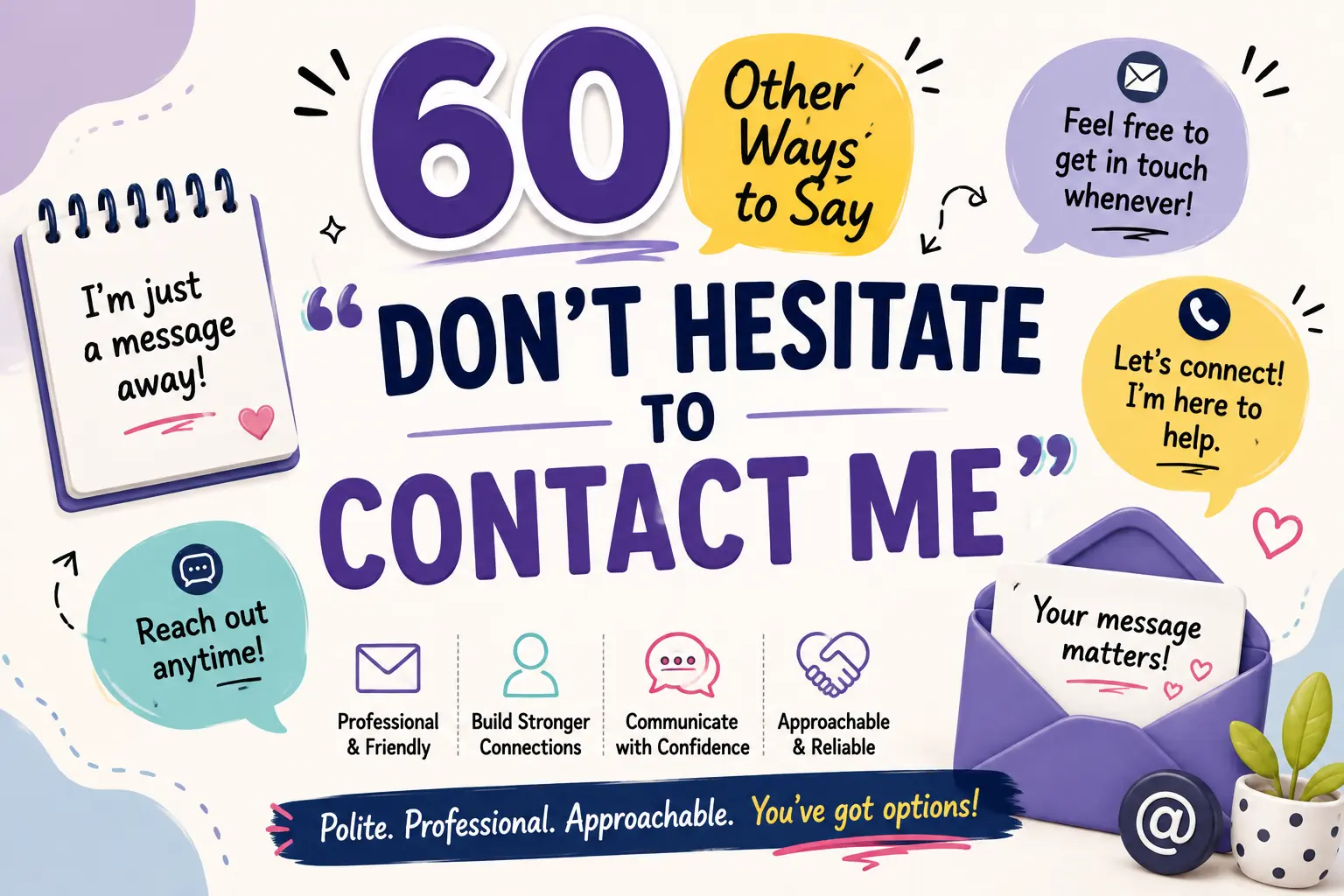
Below, you will find 60 natural alternatives to “don’t hesitate to contact me,” organized by tone and purpose, with practical examples for everyday and professional communication.
What Does “Don’t Hesitate to Contact Me” Mean?
“Don’t hesitate to contact me” means you are encouraging someone to get in touch with you whenever they have a question, need assistance, or want to discuss something further.
It is commonly used at the end of emails, letters, business messages, and professional conversations.
For example:
“Please review the attached document, and don’t hesitate to contact me if you have any questions.”
The phrase communicates openness and availability. It tells the reader that contacting you is welcome.
Although it is polite, it can sometimes sound formal or repetitive. Depending on your audience, alternatives such as “Please feel free to reach out,” “I’m happy to help,” or “Let me know if you need anything” may sound more natural.
Polite and Appreciative Alternatives
These options work well for professional emails, customer communication, colleagues, clients, and people you want to treat with courtesy.
1. “Please feel free to reach out.”
Reply: “Please feel free to reach out if you have any questions.”
Example: You send a client information about a service and want to keep communication open.
Why use it: One of the most natural and widely accepted professional alternatives.
2. “Please feel free to contact me.”
Reply: “Please feel free to contact me if you need further information.”
Example: You finish an email about an upcoming project.
Why use it: Polite, clear, and slightly more formal than “reach out.”
3. “I’d be happy to hear from you.”
Reply: “I’d be happy to hear from you if you have any questions.”
Example: You are communicating with someone who may need additional assistance.
Why use it: Warm and welcoming without sounding overly casual.
4. “Please let me know if I can help.”
Reply: “Please let me know if I can help with anything further.”
Example: You have just completed a task for a colleague.
Why use it: Shows willingness to provide additional support.
5. “I’m happy to assist.”
Reply: “I’m happy to assist if you need anything else.”
Example: A customer may need additional information after your response.
Why use it: Professional, concise, and service-oriented.
6. “I’m available if you need anything.”
Reply: “I’m available if you need anything further.”
Example: You are wrapping up a conversation with a coworker.
Why use it: Reassuring and straightforward.
7. “Please let me know if you have any questions.”
Reply: “Please let me know if you have any questions about the proposal.”
Example: You send a proposal to a potential client.
Why use it: Specific and professional.
8. “I’m always happy to help.”
Reply: “I’m always happy to help if anything comes up.”
Example: You want to reassure a colleague that they can ask for assistance.
Why use it: Friendly while remaining appropriate for work.
9. “I’d be glad to assist further.”
Reply: “I’d be glad to assist further if needed.”
Example: You have answered someone’s initial inquiry.
Why use it: Polished and courteous.
10. “You’re welcome to reach out.”
Reply: “You’re welcome to reach out whenever you need clarification.”
Example: You have explained a complicated process to someone.
Why use it: Makes future communication feel easy and welcome.
11. “I’m happy to answer any questions.”
Reply: “I’m happy to answer any questions you may have.”
Example: You send someone a detailed document for review.
Why use it: Directly invites questions without sounding repetitive.
12. “Please let me know how I can assist.”
Reply: “Please let me know how I can assist with the next steps.”
Example: You are communicating with a customer or business partner.
Why use it: Professional and helpful.
Flirty and Playful Alternatives
These alternatives are best for casual conversations with friends or someone you know personally. They should not be used in formal business communication.
13. “You know where to find me.”
Reply: “You know where to find me if you need me.”
Example: You are ending a casual conversation with a friend.
Why use it: Short, relaxed, and confident.
14. “You’ve got my number.”
Reply: “You’ve got my number, so you know what to do.”
Example: You are joking with someone you regularly text.
Why use it: Casual and playful.
15. “My inbox is open.”
Reply: “My inbox is open if you need anything.”
Example: You are ending a conversation through messaging.
Why use it: Modern and casual.
16. “You can always drop me a message.”
Reply: “You can always drop me a message if you want to chat.”
Example: You are talking to a friend.
Why use it: Friendly and natural.
17. “Just give me a shout.”
Reply: “Just give me a shout if you need anything.”
Example: A friend may need your help later.
Why use it: Relaxed and conversational.
18. “You know how to reach me.”
Reply: “You know how to reach me if anything comes up.”
Example: You are wrapping up a casual conversation.
Why use it: Confident and uncomplicated.
19. “Send me a message anytime.”
Reply: “Send me a message anytime you want to talk.”
Example: A friend wants to continue the conversation later.
Why use it: Warm and inviting.
20. “I’m just a message away.”
Reply: “I’m just a message away if you need me.”
Example: You want to reassure a friend that you are available.
Why use it: Supportive and personal.
21. “Drop me a line whenever.”
Reply: “Drop me a line whenever you feel like chatting.”
Example: You are saying goodbye to someone after a casual conversation.
Why use it: Informal and friendly.
22. “You know where my messages are.”
Reply: “You know where my messages are if you need me.”
Example: You are joking with a friend about staying in touch.
Why use it: Lighthearted and playful.
Confident and Self-Respectful Alternatives
These phrases are direct and composed. They work well when you want to remain professional without sounding overly formal or apologetic.
23. “I’m available to discuss this further.”
Reply: “I’m available to discuss this further if needed.”
Example: You have presented a proposal to your manager.
Why use it: Confident and professional.
24. “I’m happy to discuss this further.”
Reply: “I’m happy to discuss this further at your convenience.”
Example: You are responding to a business inquiry.
Why use it: Shows confidence and openness.
25. “Let me know what you need from me.”
Reply: “Let me know what you need from me to move forward.”
Example: You are working with a teammate on a project.
Why use it: Direct and action-oriented.
26. “I’m available should you need further assistance.”
Reply: “I’m available should you need further assistance.”
Example: You are concluding a formal customer-service email.
Why use it: Formal, composed, and professional.
27. “I remain available for further discussion.”
Reply: “I remain available for further discussion regarding the proposal.”
Example: You are communicating about an important business matter.
Why use it: Suitable for formal professional writing.
28. “Let me know if you’d like to discuss it.”
Reply: “Let me know if you’d like to discuss the details further.”
Example: You have shared an idea with your team.
Why use it: Confident without putting pressure on the reader.
29. “I’m available to help with the next steps.”
Reply: “I’m available to help with the next steps whenever you’re ready.”
Example: You have completed the first stage of a project.
Why use it: Keeps the focus on progress and collaboration.
30. “I’d welcome the opportunity to discuss this further.”
Reply: “I’d welcome the opportunity to discuss this further with your team.”
Example: You are communicating with a potential business partner.
Why use it: Professional and confident.
31. “Let’s stay in touch.”
Reply: “Let’s stay in touch as the project develops.”
Example: You have finished an initial meeting with a professional contact.
Why use it: Short, positive, and relationship-focused.
32. “I’m here if further discussion is needed.”
Reply: “I’m here if further discussion is needed.”
Example: You have addressed a workplace concern.
Why use it: Calm and confident without overexplaining.
Funny and Lighthearted Alternatives
Use these only when the relationship and situation allow humor. They are not suitable for formal client emails or serious workplace matters.
33. “My inbox is always ready.”
Reply: “My inbox is always ready for your questions.”
Example: You are joking with a coworker after helping them solve a problem.
Why use it: Adds personality to an otherwise routine message.
34. “You know where to find me.”
Reply: “You know where to find me if round two is needed.”
Example: You have helped someone with a project and are joking about future questions.
Why use it: Casual and confident.
35. “Send reinforcements if necessary.”
Reply: “Send reinforcements if you need another pair of eyes.”
Example: A friend is working through a difficult assignment.
Why use it: A playful way to offer assistance.
36. “My virtual door is open.”
Reply: “My virtual door is always open for questions.”
Example: You are helping teammates communicate remotely.
Why use it: Lighthearted but still useful.
37. “Questions are welcome.”
Reply: “Questions are welcome. Confusing ones may require coffee.”
Example: You are joking with a close coworker after explaining something complicated.
Why use it: Adds humor while keeping the invitation clear.
38. “You know the drill.”
Reply: “You know the drill. Message me if you need anything.”
Example: A friend frequently asks you for advice.
Why use it: Casual and familiar.
39. “The communication lines remain open.”
Reply: “The communication lines remain open if anything comes up.”
Example: You are jokingly ending a conversation with a friend.
Why use it: Makes a simple closing sound more playful.
40. “Call in the expert if needed.”
Reply: “Call in the expert if you need another opinion.”
Example: You are helping a friend with a problem you understand well.
Why use it: Confident and humorous.
41. “I’ll be around.”
Reply: “I’ll be around if you need a second opinion.”
Example: You are finishing a casual conversation.
Why use it: Short, relaxed, and approachable.
42. “The hotline is open.”
Reply: “The hotline is open if you have more questions.”
Example: You are joking with a friend who frequently asks for advice.
Why use it: Works when you already have a playful relationship.
Curious, Thoughtful, and Mature Alternatives
These options are ideal when you want to encourage meaningful communication while remaining respectful and considerate.
43. “I’d be happy to talk this through.”
Reply: “I’d be happy to talk this through whenever you’re ready.”
Example: Someone has concerns about a decision you made together.
Why use it: Encourages an open and thoughtful conversation.
44. “Let me know if you’d like to talk more about this.”
Reply: “Let me know if you’d like to talk more about this.”
Example: You have shared advice with someone.
Why use it: Gives them space while leaving the door open.
45. “I’m here to help if you need it.”
Reply: “I’m here to help if you need it.”
Example: A colleague is facing a challenging task.
Why use it: Supportive, sincere, and direct.
46. “I’m available whenever you’re ready.”
Reply: “I’m available whenever you’re ready to discuss the matter.”
Example: Someone needs time before continuing an important conversation.
Why use it: Patient and respectful.
47. “Please reach out whenever it’s convenient.”
Reply: “Please reach out whenever it’s convenient for you.”
Example: You are offering assistance without creating pressure.
Why use it: Respectful and considerate.
48. “I’d be glad to hear your thoughts.”
Reply: “I’d be glad to hear your thoughts once you’ve had time to review everything.”
Example: You have sent someone a proposal for feedback.
Why use it: Encourages thoughtful communication.
49. “I’m open to discussing this further.”
Reply: “I’m open to discussing this further if you have any concerns.”
Example: You are addressing a disagreement respectfully.
Why use it: Mature, calm, and constructive.
50. “Let me know how I can support you.”
Reply: “Let me know how I can support you as you move forward.”
Example: A teammate is beginning a challenging project.
Why use it: More personal and supportive than a standard closing.
51. “I’m happy to continue the conversation.”
Reply: “I’m happy to continue the conversation whenever it’s helpful.”
Example: You have been discussing a complicated issue.
Why use it: Encourages further dialogue without pressure.
52. “I’m available for any follow-up questions.”
Reply: “I’m available for any follow-up questions you may have.”
Example: You send detailed instructions to a client.
Why use it: Clear and highly practical for professional emails.
53. “Please reach out if anything needs clarification.”
Reply: “Please reach out if anything needs clarification.”
Example: You have provided instructions for a new process.
Why use it: Specific and professional.
54. “I’m happy to provide more information.”
Reply: “I’m happy to provide more information if needed.”
Example: A potential customer may want more details about your service.
Why use it: Helpful and professional.
55. “I welcome any questions you may have.”
Reply: “I welcome any questions you may have about the proposal.”
Example: You have presented a new idea to your team.
Why use it: Inviting and polished.
56. “I’m here should you need further assistance.”
Reply: “I’m here should you need further assistance with the process.”
Example: You are closing a formal support email.
Why use it: Professional and reassuring.
57. “Please let me know if there is anything else I can do.”
Reply: “Please let me know if there is anything else I can do to help.”
Example: You have resolved someone’s initial concern.
Why use it: Thoughtful and service-focused.
58. “I’d be happy to assist with any follow-up.”
Reply: “I’d be happy to assist with any follow-up questions.”
Example: You have completed a professional consultation.
Why use it: Clear and appropriate for workplace communication.
59. “Feel free to keep me posted.”
Reply: “Feel free to keep me posted as things develop.”
Example: You are collaborating with someone on a long-term project.
Why use it: Encourages continued communication in a natural way.
60. “I look forward to staying in touch.”
Reply: “I look forward to staying in touch as we move forward.”
Example: You have finished an introductory business conversation.
Why use it: Warm, polished, and relationship-focused.
Real-Life Situations: Which Alternative Should You Use?
When Writing to a Client
A client email should feel helpful without becoming overly casual.
Best option:
“Please feel free to reach out if you have any questions.”
It is professional, approachable, and easy to understand.
When Talking to a Coworker
You can use a more conversational style.
Best option:
“Let me know what you need from me.”
It is direct and keeps the focus on collaboration.
When Helping a Friend
Formal business language is unnecessary.
Best option:
“I’m just a message away if you need me.”
It sounds supportive and personal.
When You Want to Encourage a Difficult Conversation
Give the other person room while making your availability clear.
Best option:
“I’m available whenever you’re ready to talk.”
It sounds patient and respectful.
When Ending a Professional Email
Keep the closing concise.
Best option:
“Please let me know if you need any further information.”
It is polished and appropriate for most workplace situations.
What to Avoid
1. Using the Same Phrase in Every Email
Even a good phrase can become repetitive. Vary your wording when the situation calls for it.
2. Being Too Casual With Clients
Expressions such as “Give me a shout” may sound friendly, but they are not always suitable for formal business communication.
3. Sounding Too Formal With Friends
“Should you require further assistance” can feel strangely distant in a casual text.
4. Offering Help Without Being Specific
Instead of simply saying “Contact me,” explain what you can help with when appropriate.
5. Creating Pressure
Avoid language that makes someone feel obligated to contact you immediately. “Whenever you’re ready” can be a better choice when timing matters.
6. Overexplaining Your Availability
A simple, confident closing is usually more effective than several sentences about how available you are.
Pro Tips for Choosing the Right Alternative
1. Match the Relationship
A client, manager, colleague, friend, and family member may all require different wording. Always consider who will read your message.
2. Match the Purpose
If you want questions, say “Please let me know if you have any questions.” If you want an ongoing conversation, “Let’s stay in touch” may be better.
3. Keep It Natural
The best alternative is one you would actually say. Professional writing does not have to sound stiff, and casual writing does not have to sound careless.
Bonus: Quick One-Liners
- “Please feel free to reach out.”
- “I’m happy to help.”
- “Let me know if you need anything.”
- “I’m available if needed.”
- “Feel free to contact me.”
- “You’re welcome to reach out.”
- “I’m just a message away.”
- “Let’s stay in touch.”
- “Feel free to keep me posted.”
- “I’d be happy to discuss this further.”
Conclusion
Knowing other ways to say “don’t hesitate to contact me” gives your communication more variety and personality. The right phrase can make a professional email sound polished, a customer message feel welcoming, or a personal conversation feel more supportive.
The key is to match your wording to the person, purpose, and tone of the conversation. You do not always need a complicated expression. Sometimes, “Let me know if you need anything” is all you need.
Keep the door open, choose your words wisely, and make it easy for people to continue the conversation.
Discover more
other ways to say i was wondering