
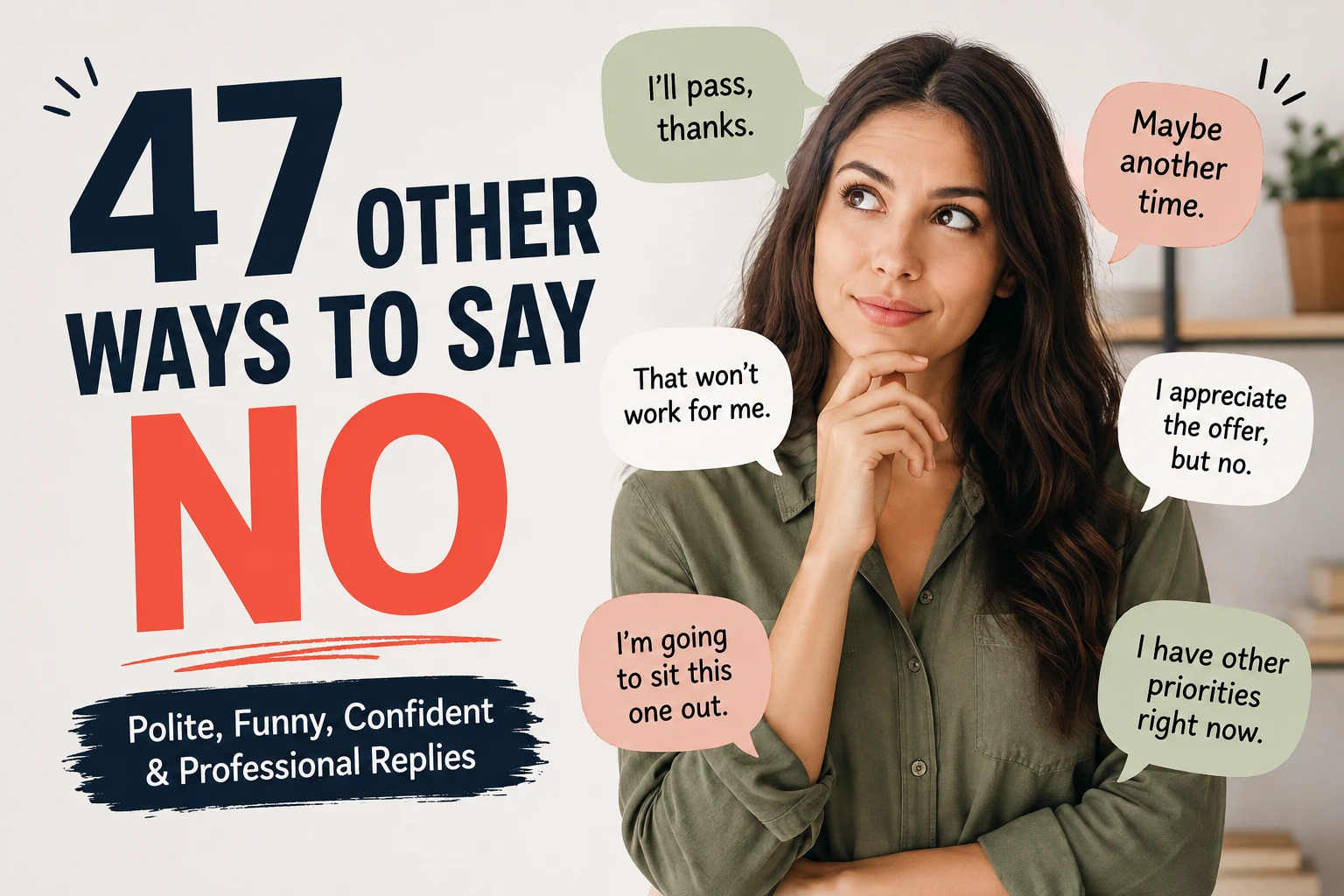
Saying “no” isn’t always easy. Whether you’re turning down an invitation, declining a request at work, or setting personal boundaries, finding the right words can make all the difference. Many people worry about sounding rude, disappointing others, or creating awkward situations, so they often look for better ways to express a refusal with kindness and confidence.
That’s where knowing other ways to say “no” becomes valuable. Instead of using the same simple response every time, you can choose phrases that match the situation and your relationship with the other person. A thoughtful response helps you communicate respectfully while staying true to your own needs. In this guide, you’ll discover a variety of alternatives that range from polite and professional to playful and confident. These expressions will help you decline requests naturally while maintaining positive relationships.
What Does “Other Ways to Say No” Mean?
“Other ways to say no” refers to different expressions you can use instead of simply saying “no.” These alternatives allow you to decline requests, invitations, offers, or suggestions in a way that sounds more natural, respectful, or appropriate for the situation.
For example, if a coworker asks you to take on extra work when you’re already busy, saying “I appreciate you asking, but I can’t commit right now” sounds more thoughtful than a blunt “No.” Likewise, if a friend invites you out, a warm response like “Maybe another time” can soften the refusal while still being honest.
Choosing the right words helps you protect your time, set healthy boundaries, and communicate with confidence without sounding harsh.
Polite and Appreciative Alternatives
1. Thank you for asking, but I have to pass.
Reply: “Thank you for asking, but I have to pass.”
Example:
A coworker invites you to join an optional weekend event.
You reply, “Thank you for asking, but I have to pass this time.”
This shows appreciation while politely declining.
2. I appreciate the offer, but I can’t.
Reply: “I appreciate the offer, but I can’t.”
Example:
A friend offers you an extra responsibility for a group project.
You say, “I appreciate the offer, but I can’t take on anything else right now.”
A respectful way to set limits.
3. Maybe another time.
Reply: “Maybe another time.”
Example:
A friend invites you to dinner when you already have plans.
You respond, “Maybe another time. I already have plans tonight.”
Friendly and positive without closing the door completely.
4. I’m afraid I have to decline.
Reply: “I’m afraid I have to decline.”
Example:
A client invites you to an event you cannot attend.
You write, “I’m afraid I have to decline, but thank you for the invitation.”
A polished option for professional situations.
5. I won’t be able to make it.
Reply: “I won’t be able to make it.”
Example:
Your neighbor invites you to a weekend barbecue.
You reply, “I won’t be able to make it, but I hope everyone has a great time.”
Simple, polite, and sincere.
6. That won’t work for me.
Reply: “That won’t work for me.”
Example:
Someone suggests a meeting time that conflicts with your schedule.
You answer, “That won’t work for me. Could we choose another time?”
Firm while encouraging another solution.
7. I need to say no this time.
Reply: “I need to say no this time.”
Example:
A friend asks you for another favor during a busy week.
You respond, “I need to say no this time because my schedule is full.”
Honest and respectful.
8. I appreciate your understanding.
Reply: “I appreciate your understanding.”
Example:
You decline an invitation because of family commitments.
You say, “I won’t be able to attend. I appreciate your understanding.”
This ends the conversation on a positive note.
9. Unfortunately, I’m unavailable.
Reply: “Unfortunately, I’m unavailable.”
Example:
Your manager asks if you can attend a meeting while you’re on leave.
You reply, “Unfortunately, I’m unavailable that day.”
Professional and concise.
10. Thank you, but I’ll have to decline.
Reply: “Thank you, but I’ll have to decline.”
Example:
Someone offers you a position that doesn’t fit your goals.
You respond, “Thank you, but I’ll have to decline. I truly appreciate the opportunity.”
A graceful way to refuse an offer.
Flirty and Playful Alternatives
11. I’d love to, but not today.
Reply: “I’d love to, but not today.”
Example:
Someone asks if you want to grab coffee after work.
You smile and say, “I’d love to, but not today. Maybe another afternoon.”
Keeps the conversation light and friendly.
12. You’re tempting me, but I’ll pass.
Reply: “You’re tempting me, but I’ll pass.”
Example:
A friend invites you out when you’re trying to stay home.
You laugh and say, “You’re tempting me, but I’ll pass tonight.”
Playful without sounding rude.
13. Nice try, but I’m going to say no.
Reply: “Nice try, but I’m going to say no.”
Example:
Your sibling jokingly asks you to do their chores.
You reply, “Nice try, but I’m going to say no.”
Works well with people who enjoy humor.
14. I’ll take a rain check.
Reply: “I’ll take a rain check.”
Example:
A friend invites you to a movie, but you’re exhausted.
You say, “I’ll take a rain check. Let’s plan something next week.”
Suggests you’d like to meet another time.
15. I’m going to sit this one out.
Reply: “I’m going to sit this one out.”
Example:
Your coworkers invite you to karaoke after work.
You reply, “I’m going to sit this one out, but have fun.”
A casual way to decline.
16. I’ll cheer you on from here.
Reply: “I’ll cheer you on from here.”
Example:
Friends ask you to join a dance competition.
You laugh and say, “I’ll cheer you on from here instead.”
Shows support while declining.
17. That’s sweet, but I’ll pass.
Reply: “That’s sweet, but I’ll pass.”
Example:
Someone offers you another slice of cake.
You smile and say, “That’s sweet, but I’ll pass.”
Warm and appreciative.
18. I’ll let you enjoy that without me.
Reply: “I’ll let you enjoy that without me.”
Example:
Friends invite you to watch a horror movie you don’t enjoy.
You respond, “I’ll let you enjoy that without me.”
Lighthearted and friendly.
19. I think I’ll skip this one.
Reply: “I think I’ll skip this one.”
Example:
Your classmates decide to play soccer after school.
You say, “I think I’ll skip this one and head home.”
A relaxed and natural response.
20. I’ll have to pass this time around.
Reply: “I’ll have to pass this time around.”
Example:
A friend asks if you want to join a weekend road trip.
You reply, “I’ll have to pass this time around, but thanks for inviting me.”
A versatile phrase for both casual and semi formal conversations.
Confident and Self Respect Alternatives
21. No, thank you.
Reply: “No, thank you.”
Example:
A salesperson offers you an extended warranty you don’t need.
You politely respond, “No, thank you. I’m all set.”
Short, respectful, and effective.
22. I’m choosing to focus on other priorities.
Reply: “I’m choosing to focus on other priorities.”
Example:
A coworker asks you to volunteer for another committee.
You reply, “I’m choosing to focus on other priorities right now.”
This clearly communicates your boundaries.
23. That doesn’t fit into my schedule.
Reply: “That doesn’t fit into my schedule.”
Example:
A friend invites you to a last minute event.
You say, “That doesn’t fit into my schedule, but thanks for thinking of me.”
Professional and honest.
24. I’m going to pass on this opportunity.
Reply: “I’m going to pass on this opportunity.”
Example:
You’re offered a freelance project that doesn’t match your expertise.
You respond, “I’m going to pass on this opportunity, but I appreciate the offer.”
Confident without sounding dismissive.
25. I’m not available for that.
Reply: “I’m not available for that.”
Example:
Someone asks you to work on your day off.
You reply, “I’m not available for that this weekend.”
Simple, direct, and respectful.
26. That isn’t something I can commit to.
Reply: “That isn’t something I can commit to.”
Example:
A friend asks you to organize an event.
You answer, “That isn’t something I can commit to right now.”
This avoids overpromising.
27. I’ll have to decline.
Reply: “I’ll have to decline.”
Example:
A company invites you to participate in a survey.
You respond, “Thank you, but I’ll have to decline.”
A timeless and professional phrase.
28. I’m protecting my time right now.
Reply: “I’m protecting my time right now.”
Example:
Someone asks for another favor during a busy week.
You say, “I’m protecting my time right now, so I won’t be able to help.”
A healthy way to establish boundaries.
29. That’s not the right choice for me.
Reply: “That’s not the right choice for me.”
Example:
Friends encourage you to try something you’re uncomfortable with.
You reply, “That’s not the right choice for me, but I hope you have fun.”
Respectful and self assured.
30. I’m comfortable saying no.
Reply: “I’m comfortable saying no.”
Example:
Someone continues to pressure you after you’ve already declined.
You calmly say, “I’m comfortable saying no, and I hope you understand.”
A strong response when your boundaries need to be respected.
Funny and Savage Alternatives
31. Not even a little bit.
Reply: “Not even a little bit.”
Example:
Your friend jokingly asks if you want to wake up at five in the morning for a hike.
You laugh and say, “Not even a little bit.”
Best used with close friends.
32. I’ll pass faster than a speeding train.
Reply: “I’ll pass faster than a speeding train.”
Example:
Someone invites you to sing karaoke in front of a crowd.
You reply, “I’ll pass faster than a speeding train.”
A humorous way to decline.
33. That’s going to be a hard no from me.
Reply: “That’s going to be a hard no from me.”
Example:
A friend suggests watching a scary movie at midnight.
You smile and say, “That’s going to be a hard no from me.”
Playful and direct.
34. I’m allergic to that idea.
Reply: “I’m allergic to that idea.”
Example:
Your sibling wants you to clean their room.
You joke, “I’m allergic to that idea.”
A lighthearted excuse among family and friends.
35. I’ll respectfully pretend I didn’t hear that.
Reply: “I’ll respectfully pretend I didn’t hear that.”
Example:
A friend suggests an outrageous prank.
You laugh and reply, “I’ll respectfully pretend I didn’t hear that.”
Funny without being offensive.
36. That sounds like someone else’s adventure.
Reply: “That sounds like someone else’s adventure.”
Example:
Friends invite you to go skydiving.
You say, “That sounds like someone else’s adventure.”
A creative and friendly refusal.
37. I’d rather not volunteer for that.
Reply: “I’d rather not volunteer for that.”
Example:
Your coworkers joke about who should stay late.
You quickly respond, “I’d rather not volunteer for that.”
Works well in casual conversations.
38. I’m going to protect my peace instead.
Reply: “I’m going to protect my peace instead.”
Example:
Someone invites you into unnecessary drama.
You reply, “I’m going to protect my peace instead.”
A modern phrase that sets healthy boundaries.
39. That sounds like a great idea for someone else.
Reply: “That sounds like a great idea for someone else.”
Example:
A friend wants you to join an exhausting challenge.
You respond, “That sounds like a great idea for someone else.”
Humorous while remaining polite.
40. I’ll admire it from a safe distance.
Reply: “I’ll admire it from a safe distance.”
Example:
Your friends invite you on a thrilling amusement park ride.
You laugh and say, “I’ll admire it from a safe distance.”
A playful way to decline something outside your comfort zone.
Curious, Thoughtful, and Mature Alternatives
41. I don’t think that’s the right fit for me.
Reply: “I don’t think that’s the right fit for me.”
Example:
A friend recommends joining a club that doesn’t match your interests.
You reply, “I don’t think that’s the right fit for me, but I appreciate the suggestion.”
This response is honest while remaining respectful.
42. I’ll have to think differently about that.
Reply: “I’ll have to think differently about that.”
Example:
A colleague suggests a plan you don’t agree with.
You say, “I’ll have to think differently about that. Let’s explore another option.”
A mature way to express disagreement.
43. I’m going to pass, but thank you.
Reply: “I’m going to pass, but thank you.”
Example:
Someone offers you a role in a volunteer project.
You respond, “I’m going to pass, but thank you for considering me.”
Simple, kind, and suitable for almost any situation.
44. I need to prioritize other commitments.
Reply: “I need to prioritize other commitments.”
Example:
Your manager asks if you can take on another assignment.
You reply, “I need to prioritize other commitments at the moment.”
A professional response that communicates your limits.
45. That isn’t the direction I want to take.
Reply: “That isn’t the direction I want to take.”
Example:
A friend encourages you to make a decision you’re unsure about.
You say, “That isn’t the direction I want to take, but I appreciate your advice.”
Confident without sounding harsh.
46. I respect the offer, but I’ll decline.
Reply: “I respect the offer, but I’ll decline.”
Example:
A business partner presents an opportunity that doesn’t suit your goals.
You respond, “I respect the offer, but I’ll decline. Thank you for thinking of me.”
Ideal for professional and formal conversations.
47. It’s best if I say no this time.
Reply: “It’s best if I say no this time.”
Example:
A relative asks for another favor during a busy week.
You reply, “It’s best if I say no this time because I need to focus on my own responsibilities.”
A balanced response that sets healthy boundaries.
Real Life Situations
When Your Crush Asks You Out but You’re Not Interested
Being honest while staying kind helps avoid misunderstandings.
Best Reply:
“Thank you, but I don’t think we’re the right match. I wish you the best.”
When a Friend Invites You to an Event
You want to decline without hurting their feelings.
Best Reply:
“Maybe another time. I already have plans, but thanks for inviting me.”
When Someone Asks for a Favor You’re Unable to Do
It’s okay to protect your time.
Best Reply:
“I appreciate you asking, but I can’t commit to that right now.”
When You’re Offered Extra Work
Avoid taking on more than you can handle.
Best Reply:
“I need to prioritize my current responsibilities, so I’ll have to decline.”
When You’re Simply Not Interested
You don’t need a long explanation.
Best Reply:
“Thank you for thinking of me, but I’ll pass this time.”
What to Avoid
1. Over Explaining
You don’t have to justify every “no.” A short and honest response is enough.
2. Apologizing Too Much
A brief apology is fine, but repeatedly saying sorry can make your response sound uncertain.
3. Giving False Excuses
If the truth comes out later, it can damage trust. Honest responses are usually the best.
4. Being Too Harsh
Directness is good, but avoid wording that sounds cold or dismissive.
5. Leaving the Other Person Confused
Make your answer clear. Mixed signals often create awkward follow up conversations.
6. Saying Yes When You Mean No
Agreeing out of guilt often leads to stress and resentment. Respect your own boundaries.
Pro Tips
Match Your Tone to the Situation
Use formal language in professional settings and relaxed language with friends and family.
Be Clear and Respectful
A confident “no” doesn’t need a long explanation. Speak honestly and politely.
Remember That Boundaries Are Healthy
Saying no isn’t selfish. It allows you to protect your time, energy, and priorities while maintaining genuine relationships.
Bonus Quick One Liners
- No, thank you.
- I’ll pass.
- Maybe another time.
- That won’t work for me.
- I appreciate the offer.
- I’m unavailable.
- I’ll sit this one out.
- I’m focusing on other priorities.
- That’s not for me.
- Thanks, but I’ll decline.
Conclusion
Learning other ways to say “no“ gives you the confidence to communicate honestly without sounding rude or insensitive. Whether you’re declining an invitation, turning down a request, or setting personal boundaries, choosing the right words helps you maintain positive relationships while respecting your own needs. The best responses are clear, genuine, and appropriate for the situation. As you practice these alternatives, saying no will become more natural, allowing you to protect your time and energy without unnecessary guilt. Remember, every respectful “no” creates space for the things that truly matter.
Discover more
other ways to say i believe in you