
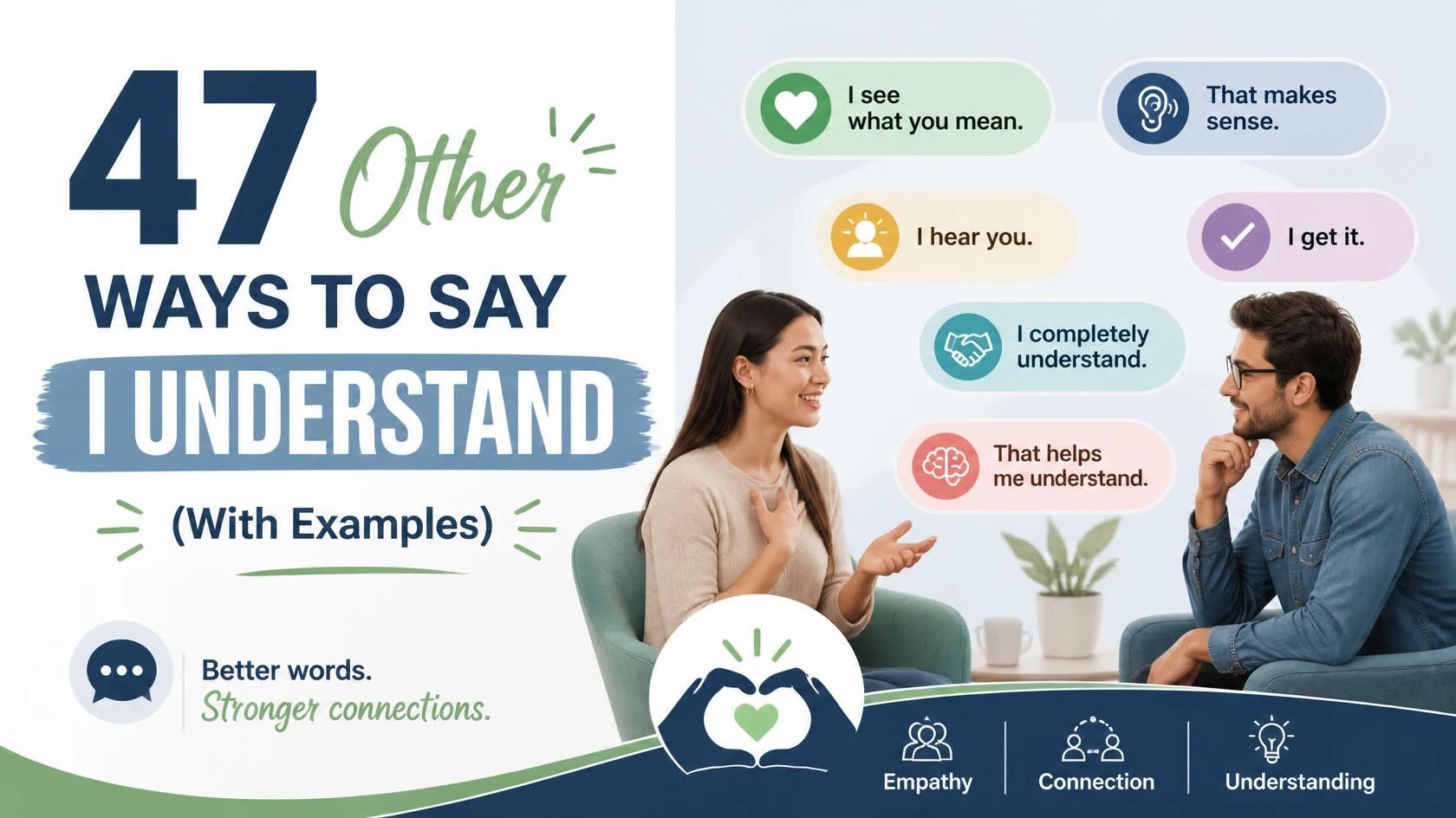
Have you ever found yourself typing “I understand” again and again and felt like it sounded a little too plain? Whether you are replying to a friend, responding to a customer, comforting someone, or having a serious conversation, the words you choose can completely change the feeling behind your message.
The phrase “I understand” is simple and useful, but sometimes it does not fully express what you mean. You may want to sound more caring, professional, supportive, confident, or even playful depending on the situation.
That is why many people search for other ways to say “I understand”. A thoughtful alternative can show empathy, build trust, and make your conversations feel more genuine. In this guide, you will find natural alternatives with real-life examples to help you communicate better in any situation.
What Does “I Understand” Mean?
The phrase “I understand” means that you recognize, accept, or have knowledge of someone’s thoughts, feelings, situation, or explanation.
It can mean different things depending on the context.
For example:
- “I understand why you are upset.”
This means you recognize someone’s feelings and can see their point of view.
- “I understand the instructions.”
This means you have understood the information or directions given to you.
People use “I understand” in everyday conversations, workplaces, relationships, and difficult discussions. However, the phrase can sometimes sound too short or emotionless, especially when someone is sharing something personal.
Using alternatives like “I see your point,” “That makes sense,” or “I completely understand where you’re coming from” can make your response feel warmer and more thoughtful.
1. Polite & Appreciative Alternatives
These responses are perfect when you want to sound respectful, kind, and supportive. They work well in professional conversations, friendships, and meaningful discussions.
1. I See Your Point
Reply: “I see your point.”
Example:
A coworker explains why they prefer a different approach for a project. Instead of simply saying “I understand,” you acknowledge their perspective politely.
2. That Makes Sense
Reply: “That makes sense.”
Example:
A friend explains why they cancelled their plans, and you respond in a way that shows you respect their reason.
3. I Completely Understand
Reply: “I completely understand.”
Example:
Someone shares a difficult situation with you, and you want them to know you are genuinely listening.
4. I Understand Where You’re Coming From
Reply: “I understand where you’re coming from.”
Example:
A friend explains their opinion during a disagreement, and you show that you recognize their feelings even if you think differently.
5. I Appreciate Your Explanation
Reply: “I appreciate your explanation.”
Example:
A colleague takes time to explain a decision, and you respond professionally while showing gratitude.
6. I Hear You
Reply: “I hear you.”
Example:
Someone talks about their frustrations, and you let them know their feelings are being acknowledged.
7. Thank You For Explaining
Reply: “Thank you for explaining that.”
Example:
A teacher, manager, or friend provides details about something confusing, and you appreciate their effort.
8. I Follow You
Reply: “I follow you.”
Example:
During a discussion, someone explains their idea, and you confirm that you understand their message.
9. I Get What You Mean
Reply: “I get what you mean.”
Example:
A friend shares their thoughts about a situation, and you respond in a natural, conversational way.
10. That’s Clear Now
Reply: “That’s clear now.”
Example:
Someone explains instructions or information that was confusing before, and you confirm that you understand.
Flirty & Playful Alternatives
These alternatives are perfect when you want your response to feel relaxed, charming, and a little more personal. They work well in casual texting, friendships, and conversations where you want to show interest while keeping things natural.
11. I Know What You Mean
Reply: “I know what you mean.”
Example:
Someone shares a small frustration about their day, and you respond in a way that shows you relate to their feelings.
12. I Get You
Reply: “I get you.”
Example:
Your friend explains why they made a certain choice, and you reply casually to show that you understand their perspective.
13. I Totally Get It
Reply: “I totally get it.”
Example:
Someone says they need some time alone after a stressful week, and you respond in a supportive way.
14. I Feel You
Reply: “I feel you.”
Example:
A friend complains about a difficult situation, and you want to show that you can relate emotionally.
15. I’m With You On That
Reply: “I’m with you on that.”
Example:
Someone shares an opinion you agree with, and you show support without making the conversation too serious.
16. I Know Exactly What You Mean
Reply: “I know exactly what you mean.”
Example:
Your friend describes a common experience, and you respond by showing that you have been through something similar.
17. I See Where You’re Coming From
Reply: “I see where you’re coming from.”
Example:
Someone explains their feelings about a personal decision, and you respond with understanding and maturity.
18. I Can Relate
Reply: “I can relate.”
Example:
Someone talks about feeling nervous before an important event, and you share that you have felt the same way.
19. I’m Following You
Reply: “I’m following you.”
Example:
Someone is explaining a story or idea over text, and you let them know you understand what they are saying.
20. I Know The Feeling
Reply: “I know the feeling.”
Example:
A friend talks about being tired after a long day, and you respond by showing empathy.
Confident & Self-Respect Alternatives
These alternatives help you sound calm, mature, and emotionally intelligent. They are useful when you want to acknowledge someone’s point without losing your own confidence.
21. I Respect Your Perspective
Reply: “I respect your perspective.”
Example:
Someone disagrees with your opinion, and you respond politely while showing that you value their viewpoint.
22. I Understand Your Position
Reply: “I understand your position.”
Example:
A colleague explains their side during a discussion, and you acknowledge their thoughts professionally.
23. Your Point Is Clear
Reply: “Your point is clear.”
Example:
Someone presents an argument or explanation, and you confirm that you understand their message.
24. I Acknowledge That
Reply: “I acknowledge that.”
Example:
During a serious conversation, someone explains their concerns, and you recognize what they have said.
25. I Can See Your Reasoning
Reply: “I can see your reasoning.”
Example:
A person explains why they made a certain decision, and you show that you understand their logic.
26. I Understand Your Concerns
Reply: “I understand your concerns.”
Example:
A customer or teammate explains a problem, and you respond professionally while recognizing their worries.
27. I Take Your Point
Reply: “I take your point.”
Example:
Someone offers advice or criticism, and you show that you have considered what they said.
28. I Recognize What You Mean
Reply: “I recognize what you mean.”
Example:
Someone explains a complicated idea, and you confirm that you understand the message behind it.
29. I Understand Your Reasoning
Reply: “I understand your reasoning.”
Example:
A friend explains why they made a difficult choice, and you acknowledge their thought process.
30. I Can Appreciate That
Reply: “I can appreciate that.”
Example:
Someone shares their effort or struggle, and you respond by recognizing their experience.
Funny & Savage Alternatives
These alternatives are perfect when you want to add humor, confidence, or a little playful attitude to your response. They are best used with friends or people you are comfortable joking with.
31. I Get The Picture
Reply: “I get the picture.”
Example:
Your friend explains a funny situation, and you respond by showing that you understand what happened.
32. Message Received
Reply: “Message received.”
Example:
A friend gives you a reminder about something important, and you reply in a playful but clear way.
33. Loud And Clear
Reply: “Loud and clear.”
Example:
Someone gives you a simple instruction, and you confirm that you understood it completely.
34. Say No More
Reply: “Say no more, I understand.”
Example:
Your friend hints at a situation, and you immediately understand what they mean without needing more explanation.
35. Got The Assignment
Reply: “Got the assignment.”
Example:
Your friend explains what needs to be done, and you jokingly respond as if you are accepting a mission.
36. I Catch Your Drift
Reply: “I catch your drift.”
Example:
Someone explains an indirect message, and you show that you understand the hidden meaning.
37. The Point Has Been Made
Reply: “The point has been made.”
Example:
A friend repeats the same advice several times, and you jokingly tell them that you already understand.
38. Crystal Clear
Reply: “Crystal clear.”
Example:
Someone explains rules or plans, and you respond confidently to show there is no confusion.
39. I Got You
Reply: “I got you.”
Example:
A friend asks for help or explains what they need, and you reassure them that you understand.
40. No Explanation Needed
Reply: “No explanation needed.”
Example:
A close friend shares a situation you already understand, and you respond in a playful and supportive way.
Curious, Thoughtful & Mature Alternatives
These alternatives are useful when you want to sound emotionally aware, caring, and genuinely interested. They work well during deep conversations, serious discussions, and moments where someone needs support.
41. I Understand How You Feel
Reply: “I understand how you feel.”
Example:
Someone shares their emotions about a difficult experience, and you respond with empathy.
42. I Can See Why You Feel That Way
Reply: “I can see why you feel that way.”
Example:
A friend explains why they reacted emotionally, and you acknowledge their feelings without judging them.
43. That’s Completely Understandable
Reply: “That’s completely understandable.”
Example:
Someone apologizes for being unavailable because of personal reasons, and you respond with kindness.
44. I Understand Your Situation
Reply: “I understand your situation.”
Example:
A person explains their challenges, and you show that you recognize what they are dealing with.
45. I Can Relate To Your Experience
Reply: “I can relate to your experience.”
Example:
Someone talks about facing a challenge you have also experienced, and you share a sense of connection.
46. I See Things From Your Side
Reply: “I see things from your side.”
Example:
During a disagreement, you show that you are willing to consider another person’s perspective.
47. I Understand Your Feelings And Perspective
Reply: “I understand your feelings and perspective.”
Example:
Someone explains both their emotions and reasons behind a decision, and you respond in a thoughtful way.
Real Life Situations: Best Ways To Say “I Understand”
Knowing different alternatives is helpful, but the real skill is choosing the right words for the right moment. A phrase that works in a casual chat may not work in a serious conversation. Here are some common situations and the best responses to use.
1. When Your Crush Says Something Personal
Situation:
Someone you like shares their feelings, worries, or personal thoughts with you.
Best Replies:
- “I understand where you’re coming from.”
- “I can relate to that.”
- “I see why you feel that way.”
Example:
Your crush tells you they have been feeling stressed about their future. Instead of giving a quick response, you show that you genuinely care about their feelings.
2. When A Friend Makes A Joke Or Complains
Situation:
Your friend is sharing a funny problem or exaggerating a situation.
Best Replies:
- “I feel you.”
- “I know exactly what you mean.”
- “Say no more, I got you.”
Example:
Your friend complains about a long day at work or school, and you respond casually to show that you understand their struggle.
3. When Someone Explains Something Too Quickly
Situation:
Someone gives you information, instructions, or advice and you want to confirm that you understand.
Best Replies:
- “That’s clear now.”
- “I follow you.”
- “Message received.”
Example:
A teammate explains your role in a project, and you confirm that you understand what needs to be done.
4. When Someone Disagrees With You
Situation:
You do not share the same opinion, but you want to remain respectful.
Best Replies:
- “I understand your perspective.”
- “I see your point.”
- “I can appreciate that.”
Example:
A friend has a different opinion about a topic, and instead of arguing, you acknowledge their viewpoint while keeping your own opinion.
5. When You Are Not Interested In Continuing A Conversation
Situation:
Someone is discussing something you do not want to engage with further.
Best Replies:
- “I understand what you mean.”
- “I appreciate you explaining that.”
- “I see where you’re coming from.”
Example:
Someone shares an idea you do not agree with, and you respond politely without creating unnecessary conflict.
What To Avoid When Saying “I Understand”
Using the right words matters, but the way you use them matters even more. Here are some common mistakes people make.
1. Saying “I Understand” Without Showing Any Emotion
Sometimes “I understand” can sound cold or automatic.
Instead of only saying:
“I understand.”
Try:
“I understand how you feel.”
This makes your response warmer and more personal.
2. Using The Wrong Tone
A serious conversation requires empathy, while a casual conversation allows more playful responses.
For example:
- Professional: “I understand your concerns.”
- Casual: “I get you.”
Using the wrong tone can make your message feel unnatural.
3. Pretending To Understand When You Don’t
Do not say “I understand” just to end a conversation.
If something is unclear, try:
“Could you explain that a little more?”
Honest communication builds stronger relationships.
4. Overusing The Same Phrase
Repeating “I understand” in every conversation can make your responses feel robotic.
Try using different alternatives based on the situation.
5. Making Someone Feel Dismissed
There is a difference between understanding someone and simply acknowledging them.
Avoid short replies like:
“Okay.”
Instead, show that you actually listened.
Pro Tips For Using Alternatives Naturally
1. Match Your Words With The Emotion Behind The Conversation
If someone is sharing a problem, choose a caring response:
- “I understand how you feel.”
- “I can see why that affected you.”
If someone is sharing information, choose a clearer response:
- “That makes sense.”
- “I follow you.”
2. Confidence Comes From Being Genuine
You do not need complicated phrases to sound mature. A simple and honest response often feels more meaningful than a formal one.
Sometimes:
“I hear you.”
can have more impact than a long explanation.
3. Consider Your Relationship With The Person
The best phrase depends on who you are talking to.
With friends:
- “I get you.”
- “I feel you.”
At work:
- “I understand your concerns.”
- “I appreciate your explanation.”
In emotional conversations:
- “I see where you’re coming from.”
- “I can relate.”
Conclusion
The phrase “I understand” may be simple, but the way you express understanding can change the entire tone of a conversation. Whether you want to sound professional, caring, playful, or confident, choosing the right words helps people feel respected and heard. Good communication is not only about responding. It is about making people feel that their thoughts and feelings matter.
Discover more