
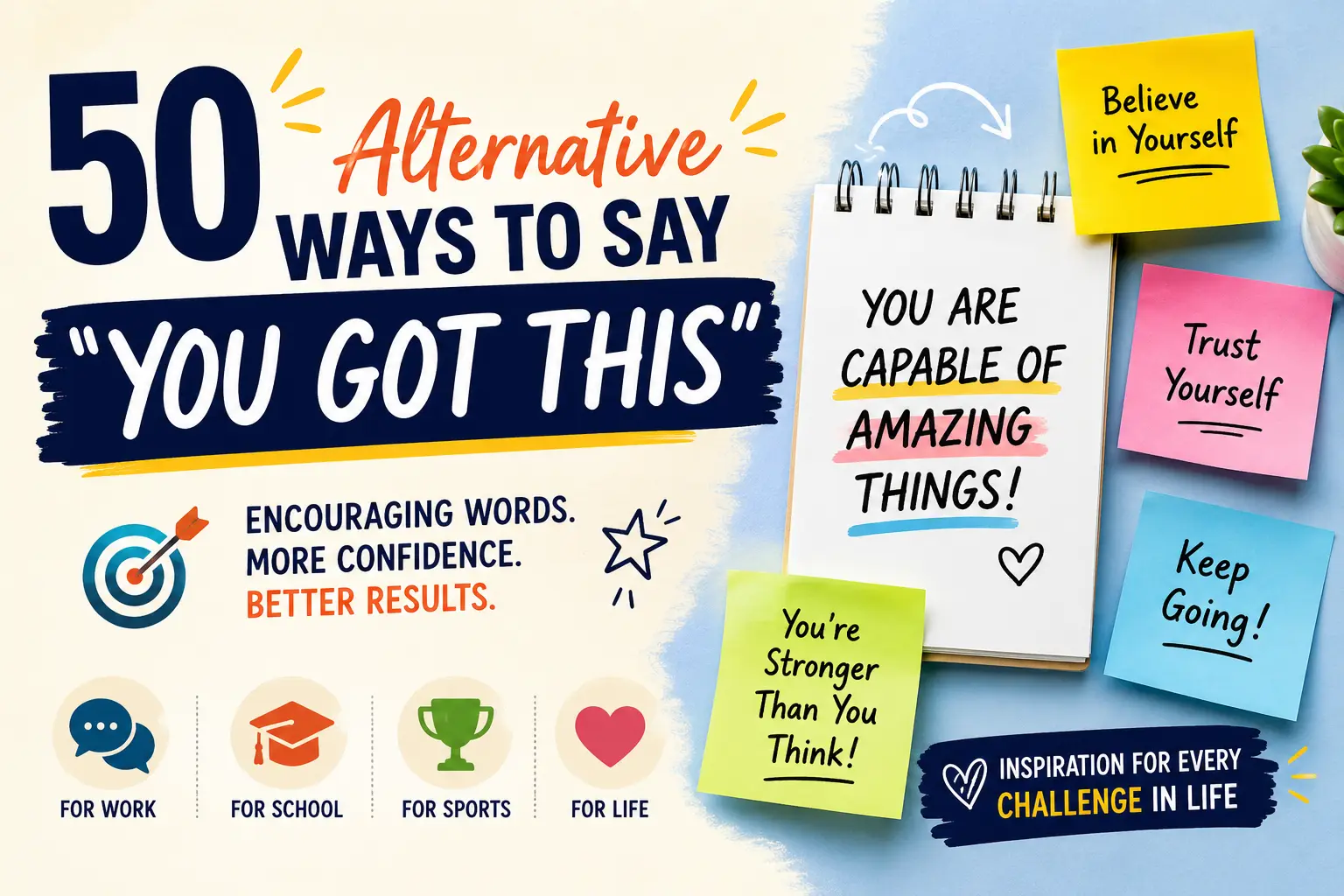
Everyone needs a little encouragement now and then. Whether a friend is preparing for an important exam, a coworker is about to give a presentation, or a loved one is facing a difficult challenge, the right words can make a real difference. That’s why the phrase “You got this” has become one of the most popular ways to inspire confidence.
Although it’s simple and uplifting, hearing the same expression over and over can start to feel repetitive. Fortunately, there are plenty of creative and meaningful alternatives that sound just as encouraging. In fact, choosing a different phrase can make your support feel more genuine and personal. Whether you’re sending a quick text, writing a thoughtful message, or cheering someone on in person, using the right words helps boost confidence and brighten someone’s day. In this guide, you’ll discover 50 powerful alternatives to “You got this,” complete with meanings, examples, and tips for using each one naturally.
What Does “You Got This” Mean?
The phrase “You got this” is a casual way of telling someone that you believe in their ability to succeed. It reassures them that they have the skills, knowledge, or confidence needed to handle a challenge.
People often use this expression before important moments, such as exams, interviews, presentations, competitions, or even difficult conversations. More importantly, it reminds someone that they are capable, even if they’re feeling nervous or uncertain.
For example:
“You’ve studied for weeks. You got this!”
In this case, the speaker is encouraging the person to trust their preparation instead of worrying about the outcome.
Because it’s short, positive, and easy to understand, “You got this” has become a favorite motivational phrase in everyday conversations.
When to Use “You Got This”
There are many situations where encouraging words can boost someone’s confidence. Instead of staying silent, offering a few supportive words can help someone feel calmer and more prepared.
Here are some common occasions where this phrase or one of its alternatives works perfectly:
- Before a job interview
- Prior to an important exam
- Before giving a speech or presentation
- During a sports competition
- Before a driving test
- While learning a new skill
- Before a first date
- During a stressful project at work
- When someone feels overwhelmed
- Before chasing a personal goal
Examples
Friend: “I’m really nervous about tomorrow’s interview.”
You: “I believe in you. You’re going to do great.”
Coworker: “I’m presenting in front of the leadership team today.”
You: “Stay confident. You’ve prepared for this.”
Student: “I don’t think I’ll pass this exam.”
You: “Trust yourself. You’ve worked hard, and you’re ready.”
Professional and Workplace Alternatives
1. I Believe in You
Meaning:
This phrase expresses complete confidence in someone’s abilities and reminds them that they’re capable of succeeding.
Tone: Encouraging, sincere, supportive
Example Sentence:
“I believe in you. You’ve prepared well, and I know you’ll do an excellent job.”
Explanation:
Unlike a simple good luck message, this expression focuses on the person’s strengths. As a result, it feels more personal and meaningful.
Best Used When:
Before interviews, presentations, important meetings, or career milestones.
2. You’ve Got Everything It Takes
Meaning:
This expression reminds someone that they already possess the knowledge, skills, and determination needed to succeed.
Tone: Motivational, confident
Example Sentence:
“You’ve got everything it takes to lead this project successfully.”
Explanation:
Instead of focusing on the challenge itself, this phrase highlights the person’s abilities. Consequently, it encourages self-confidence and reduces self-doubt.
Best Used When:
Workplace projects, leadership roles, exams, and competitions.
3. I Know You’ll Do Great
Meaning:
This phrase communicates genuine confidence in someone’s future success.
Tone: Warm, optimistic
Example Sentence:
“I know you’ll do great during your presentation today.”
Explanation:
Because it sounds natural and heartfelt, it’s one of the easiest alternatives to use in everyday conversations.
Best Used When:
Supporting friends, coworkers, classmates, or family members.
4. You’ve Prepared for This
Meaning:
This phrase reminds someone that their hard work has already prepared them for the challenge ahead.
Tone: Calm, reassuring
Example Sentence:
“Take a deep breath. You’ve prepared for this, so trust yourself.”
Explanation:
Rather than focusing on fear, this expression shifts attention to preparation. Therefore, it helps reduce anxiety before an important event.
Best Used When:
Exams, presentations, interviews, and public speaking.
5. You’re More Than Ready
Meaning:
This alternative reassures someone that they are fully prepared and capable.
Tone: Positive, confident
Example Sentence:
“You’re more than ready for today’s meeting. Go show them what you can do.”
Explanation:
This phrase boosts confidence by emphasizing readiness instead of uncertainty. In addition, it sounds professional without feeling overly formal.
Best Used When:
Business meetings, interviews, and workplace presentations.
6. Trust Yourself
Meaning:
This expression encourages someone to rely on their own judgment, experience, and abilities.
Tone: Empowering, thoughtful
Example Sentence:
“Trust yourself. You know more than you think.”
Explanation:
Sometimes people already have the skills they need but lack confidence. This phrase reminds them to believe in themselves.
Best Used When:
Helping someone overcome nervousness or self-doubt.
7. Go Show Them What You Can Do
Meaning:
This phrase motivates someone to confidently demonstrate their abilities.
Tone: Energetic, inspiring
Example Sentence:
“Go show them what you can do. I know you’ll impress everyone.”
Explanation:
Instead of simply wishing someone luck, this expression encourages them to take action with confidence.
Best Used When:
Competitions, interviews, presentations, and performances.
8. Your Hard Work Will Pay Off
Meaning:
This alternative reminds someone that consistent effort often leads to success.
Tone: Supportive, optimistic
Example Sentence:
“Don’t worry. Your hard work will pay off.”
Explanation:
Since it highlights dedication rather than talent alone, this phrase feels authentic and motivating.
Best Used When:
Before exams, project deadlines, and career opportunities.
9. You’re Ready for This Challenge
Meaning:
This phrase assures someone that they have what it takes to overcome a difficult situation.
Tone: Professional, encouraging
Example Sentence:
“You’re ready for this challenge. Stay focused and trust your abilities.”
Explanation:
Acknowledging that something is challenging while expressing confidence makes this encouragement feel genuine and realistic.
Best Used When:
Leadership roles, promotions, major presentations, or personal milestones.
10. Success Is Within Your Reach
Meaning:
This expression reminds someone that achieving their goal is possible with confidence and determination.
Tone: Inspirational, uplifting
Example Sentence:
“Keep believing in yourself. Success is within your reach.”
Explanation:
This phrase inspires optimism without sounding exaggerated. Moreover, it encourages someone to stay focused on the finish line.
Friendly and Casual Alternatives
11. You’re Going to Crush It
Meaning:
This phrase tells someone you believe they’ll perform exceptionally well.
Tone: Casual, enthusiastic, encouraging
Example Sentence:
“Stop worrying about your interview. You’re going to crush it!”
Explanation:
Because it’s energetic and modern, this expression instantly boosts confidence. It also sounds natural in everyday conversations.
Best Used When:
Talking to friends, classmates, teammates, or close coworkers.
12. I’ve Got Faith in You
Meaning:
This expression shows complete trust in someone’s abilities.
Tone: Warm, supportive, sincere
Example Sentence:
“I’ve got faith in you. Everything you’ve worked for is about to pay off.”
Explanation:
Rather than focusing on the challenge, this phrase emphasizes your belief in the person. As a result, it feels heartfelt and genuine.
Best Used When:
Supporting friends, family members, or loved ones before an important event.
13. You’ve Got This in the Bag
Meaning:
This idiom suggests success is almost guaranteed.
Tone: Playful, confident
Example Sentence:
“Relax. You’ve got this in the bag after all that preparation.”
Explanation:
Since it’s a common English idiom, it creates a relaxed and optimistic mood. However, it’s best used in informal conversations.
Best Used When:
Before exams, competitions, or friendly challenges.
14. You’re Going to Do Amazing
Meaning:
You confidently expect someone to perform extremely well.
Tone: Positive, caring
Example Sentence:
“I know you’re nervous, but you’re going to do amazing.”
Explanation:
This alternative sounds warm and personal. In addition, it reassures someone without putting too much pressure on them.
Best Used When:
Encouraging friends, siblings, or your partner.
15. I Can’t Wait to Hear How It Goes
Meaning:
This phrase assumes things will turn out well.
Tone: Optimistic, friendly
Example Sentence:
“Good luck today! I can’t wait to hear how it goes.”
Explanation:
Instead of directly saying “good luck,” this expression shows confidence while expressing excitement.
Best Used When:
Interviews, first dates, exams, or presentations.
16. You’ve Been Working Toward This
Meaning:
This reminds someone that they’ve earned their opportunity through hard work.
Tone: Thoughtful, reassuring
Example Sentence:
“You’ve been working toward this for months. Believe in yourself.”
Explanation:
By focusing on preparation, this phrase helps reduce anxiety. Furthermore, it reminds people how far they’ve already come.
Best Used When:
Long-term goals, promotions, or academic achievements.
17. You’ll Be Fantastic
Meaning:
You confidently predict an excellent performance.
Tone: Cheerful, supportive
Example Sentence:
“You’ll be fantastic on stage tonight.”
Explanation:
Although it’s simple, this phrase feels warm and encouraging. Consequently, it’s suitable for many different situations.
Best Used When:
Performances, speeches, presentations, or competitions.
18. Take a Deep Breath and Shine
Meaning:
You encourage someone to stay calm and do their best.
Tone: Gentle, motivating
Example Sentence:
“Take a deep breath and shine. This is your moment.”
Explanation:
Combining relaxation with encouragement makes this phrase especially comforting before stressful events.
Best Used When:
Public speaking, interviews, and important presentations.
19. You’re Stronger Than You Think
Meaning:
This reminds someone they have more strength than they realize.
Tone: Inspirational, caring
Example Sentence:
“You’re stronger than you think. Keep believing in yourself.”
Explanation:
Instead of focusing only on success, this phrase builds emotional confidence. Therefore, it’s especially helpful during difficult moments.
Best Used When:
Personal challenges, stressful situations, or life transitions.
20. Keep Your Head High
Meaning:
You encourage someone to remain confident and positive.
Tone: Supportive, motivational
Example Sentence:
“Keep your head high because you’ve earned this opportunity.”
Explanation:
This timeless expression promotes confidence while encouraging resilience. Moreover, it works in both personal and professional settings.
Best Used When:
Exams, interviews, competitions, or career milestones.
Funny and Playful Alternatives
21. Go Make Us Proud
Meaning:
You jokingly encourage someone to succeed.
Tone: Funny, supportive
Example Sentence:
“Go make us proud… and don’t forget who believed in you first!”
Explanation:
This lighthearted phrase eases nervousness while still offering genuine encouragement.
Best Used When:
Friends, teammates, siblings, or coworkers.
22. Don’t Forget Me When You’re Famous
Meaning:
You humorously predict someone’s future success.
Tone: Playful, upbeat
Example Sentence:
“You’re going to nail this. Just don’t forget me when you’re famous!”
Explanation:
Because it’s humorous, this expression keeps the conversation fun while showing confidence in the other person.
Best Used When:
Creative projects, performances, interviews, or competitions.
23. Go Break Some Records
Meaning:
You encourage someone to exceed expectations.
Tone: Energetic, fun
Example Sentence:
“Today’s your day. Go break some records!”
Explanation:
This phrase inspires ambition while adding a playful twist.
Best Used When:
Sports events, fitness goals, or workplace achievements.
24. You’ve Already Won Me Over
Meaning:
You jokingly say they’ve already impressed you.
Tone: Sweet, playful
Example Sentence:
“You’ve already won me over. Now go impress everyone else!”
Explanation:
This response combines humor with encouragement, making it feel more personal.
Best Used When:
Close friends or romantic partners.
25. Go Be Awesome
Meaning:
You encourage someone to simply be themselves and succeed.
Tone: Casual, uplifting
Example Sentence:
“Go be awesome. You’ve got this!”
Explanation:
Short and memorable, this phrase feels natural in texts and conversations. Additionally, it works in almost any situation.
Best Used When:
Everyday encouragement for friends, coworkers, and family.
26. Show Them Why You’re Amazing
Meaning:
You remind someone of their strengths and abilities.
Tone: Enthusiastic, encouraging
Example Sentence:
“Go show them why you’re amazing!”
Explanation:
This phrase inspires confidence without sounding overly serious. As a bonus, it feels energetic and positive.
Best Used When:
Presentations, interviews, competitions, and auditions.
27. Leave Them Speechless
Meaning:
You encourage someone to impress everyone with their performance.
Tone: Bold, playful
Example Sentence:
“Leave them speechless. I know you can!”
Explanation:
This expression adds excitement while motivating someone to perform at their best.
Best Used When:
Public speaking, performances, or competitions.
28. You’re About to Surprise Everyone
Meaning:
You predict that someone will exceed expectations.
Tone: Optimistic, playful
Example Sentence:
“You’re about to surprise everyone with how well you do.”
Explanation:
Rather than focusing on pressure, this phrase builds anticipation and excitement.
Best Used When:
Exams, interviews, or sporting events.
29. Go Show Off Those Skills
Meaning:
You encourage someone to confidently demonstrate their talents.
Tone: Friendly, humorous
Example Sentence:
“You’ve practiced enough. Now go show off those skills!”
Explanation:
This playful alternative celebrates someone’s hard work while encouraging confidence.
Best Used When:
Creative performances, work presentations, or competitions.
30. Time to Shine
Meaning:
This expression tells someone it’s their opportunity to succeed.
Tone: Positive, cheerful
Example Sentence:
“It’s your time to shine. Go enjoy every moment!”
Explanation:
Although it’s simple, this phrase feels uplifting and memorable. Consequently, it’s one of the most versatile alternatives to “You got this.”
Heartfelt and Supportive Alternatives
31. I’m Rooting for You
Meaning:
This phrase lets someone know you’re wholeheartedly supporting them.
Tone: Warm, caring, encouraging
Example Sentence:
“I’m rooting for you. I know all your hard work is going to pay off.”
Explanation:
This expression creates a strong emotional connection. Moreover, it reminds the person that they have someone cheering them on.
Best Used When:
Supporting friends, family members, or teammates before an important event.
32. No Matter What Happens, I’m Proud of You
Meaning:
You show that your support doesn’t depend on the outcome.
Tone: Heartfelt, reassuring
Example Sentence:
“No matter what happens today, I’m proud of you for giving it your best.”
Explanation:
Instead of creating pressure, this phrase offers unconditional encouragement. As a result, it helps someone stay calm and confident.
Best Used When:
Before exams, interviews, competitions, or personal challenges.
33. You’ve Earned This Opportunity
Meaning:
You remind someone that they deserve their success because of their effort.
Tone: Respectful, motivating
Example Sentence:
“You’ve earned this opportunity through your dedication and hard work.”
Explanation:
This alternative shifts the focus to everything they’ve already accomplished. Therefore, it naturally builds confidence.
Best Used When:
Career promotions, scholarships, interviews, and leadership opportunities.
34. Keep Moving Forward
Meaning:
You encourage someone to stay focused and continue making progress.
Tone: Calm, inspiring
Example Sentence:
“Keep moving forward. Every step brings you closer to your goal.”
Explanation:
This phrase emphasizes persistence rather than perfection. Consequently, it works well during long-term challenges.
Best Used When:
Personal goals, career growth, and difficult situations.
35. Believe in Your Strength
Meaning:
You encourage someone to trust their inner abilities.
Tone: Inspirational, uplifting
Example Sentence:
“Believe in your strength because you’ve overcome challenges before.”
Explanation:
This expression reminds people of their resilience. In addition, it helps replace fear with confidence.
Best Used When:
Life changes, stressful moments, or emotional challenges.
36. You’re Capable of Amazing Things
Meaning:
You remind someone that they have incredible potential.
Tone: Positive, empowering
Example Sentence:
“You’re capable of amazing things. Don’t let self-doubt stop you.”
Explanation:
This phrase focuses on possibilities instead of limitations. As a result, it encourages a positive mindset.
Best Used When:
Mentoring students, coaching employees, or encouraging loved ones.
37. Your Best Is More Than Enough
Meaning:
You reassure someone that giving their best effort is what truly matters.
Tone: Gentle, comforting
Example Sentence:
“Remember, your best is more than enough. Just give it your all.”
Explanation:
Rather than increasing pressure, this message helps reduce anxiety. Therefore, it’s especially comforting before important events.
Best Used When:
Exams, interviews, presentations, or competitions.
38. One Step at a Time
Meaning:
You encourage someone to focus on steady progress instead of the entire challenge.
Tone: Calm, supportive
Example Sentence:
“Take it one step at a time. You’ll get through this.”
Explanation:
Breaking a challenge into smaller steps makes it feel more manageable. Consequently, this phrase offers reassurance without overwhelming the listener.
Best Used When:
Long projects, recovery, or stressful situations.
39. Stay Confident and Keep Going
Meaning:
You encourage someone to remain confident throughout the journey.
Tone: Motivational, optimistic
Example Sentence:
“Stay confident and keep going. You’re closer than you think.”
Explanation:
This phrase combines encouragement with perseverance. Additionally, it reminds someone not to give up when things become difficult.
Best Used When:
Work projects, academic goals, and personal growth.
40. I Know You’ll Make It
Meaning:
You express complete confidence in someone’s success.
Tone: Hopeful, supportive
Example Sentence:
“I know you’ll make it because you’ve worked incredibly hard.”
Explanation:
This heartfelt message communicates genuine belief in someone’s abilities. As a result, it often provides an instant confidence boost.
Best Used When:
Career goals, university applications, and personal achievements.
41. You’ve Come Too Far to Doubt Yourself
Meaning:
This phrase reminds someone of all the progress they’ve already made.
Tone: Motivational, reassuring
Example Sentence:
“You’ve come too far to doubt yourself now. Go finish strong!”
Explanation:
By focusing on past achievements, this expression helps replace fear with confidence. It encourages someone to keep moving forward instead of second-guessing themselves.
Best Used When:
Long-term projects, exams, promotions, or personal goals.
42. The Hard Part Is Already Behind You
Meaning:
You remind someone that the preparation is complete and now it’s time to perform.
Tone: Calm, encouraging
Example Sentence:
“The hard part is already behind you. Now just do your best.”
Explanation:
This phrase reduces anxiety by shifting attention from preparation to execution.
Best Used When:
Before interviews, presentations, or competitions.
43. You’ve Got Every Reason to Feel Confident
Meaning:
You reassure someone that their confidence is well deserved.
Tone: Positive, supportive
Example Sentence:
“You’ve got every reason to feel confident after all your hard work.”
Explanation:
Instead of offering empty praise, this expression points to real achievements and preparation.
Best Used When:
Professional and academic settings.
44. Today Is Your Day
Meaning:
You encourage someone to embrace the opportunity ahead.
Tone: Cheerful, uplifting
Example Sentence:
“Go out there with confidence. Today is your day!”
Explanation:
This simple phrase creates excitement while reminding someone to enjoy the moment.
Best Used When:
Interviews, performances, competitions, or celebrations.
45. You’ve Already Done the Hard Work
Meaning:
This reminds someone that success comes from the effort they’ve already invested.
Tone: Reassuring, thoughtful
Example Sentence:
“You’ve already done the hard work. Now trust yourself and enjoy the experience.”
Explanation:
It helps reduce stress by emphasizing preparation rather than pressure.
Best Used When:
Exams, certifications, and workplace presentations.
46. Your Moment Has Arrived
Meaning:
You tell someone it’s finally time to showcase their abilities.
Tone: Inspirational, confident
Example Sentence:
“Your moment has arrived. Go make the most of it.”
Explanation:
This phrase builds anticipation and motivates someone to seize the opportunity.
Best Used When:
Career milestones, performances, and competitions.
47. You Were Made for This
Meaning:
You express strong belief that someone is perfectly suited for the challenge.
Tone: Inspirational, empowering
Example Sentence:
“You’ve trained for this for years. You were made for this.”
Explanation:
Because it highlights natural ability and preparation, this phrase feels especially encouraging.
Best Used When:
Sports, leadership roles, interviews, and major life events.
48. Trust the Process
Meaning:
You encourage someone to rely on the effort and preparation they’ve already put in.
Tone: Calm, motivational
Example Sentence:
“Trust the process. Everything you’ve practiced will come together.”
Explanation:
Rather than worrying about results, this expression encourages patience and confidence.
Best Used When:
Learning new skills, fitness goals, academics, and careers.
49. You’re Ready to Take This On
Meaning:
You reassure someone that they’re fully prepared for the challenge ahead.
Tone: Professional, supportive
Example Sentence:
“You’re ready to take this on. Believe in your abilities.”
Explanation:
This phrase sounds polished and encouraging, making it suitable for both personal and professional conversations.
Best Used When:
Workplace projects, interviews, leadership opportunities, and exams.
50. Go Show the World What You’re Made Of
Meaning:
You inspire someone to confidently demonstrate their talent and determination.
Tone: Inspirational, empowering
Example Sentence:
“Go show the world what you’re made of. I know you’ll do something amazing.”
Explanation:
This powerful closing phrase inspires confidence while encouraging someone to embrace their full potential.
Best Used When:
Major milestones, competitions, graduation, career opportunities, and life-changing moments
Before a Job Interview
Best Alternative: You’re More Than Ready.
This phrase reminds the person that their preparation matters more than their nerves. It also sounds professional and encouraging.
Before an Important Exam
Best Alternative: Trust Yourself.
Students often doubt themselves before exams. However, this reminder helps them focus on everything they’ve already learned.
Before Giving a Presentation
Best Alternative: Go Show Them What You Can Do.
This expression encourages confidence and shifts attention toward their abilities instead of their fears.
Before a Sports Competition
Best Alternative: Time to Shine.
It’s short, energetic, and perfect for motivating someone before they compete.
Supporting a Friend During a Difficult Time
Best Alternative: I’m Rooting for You.
Rather than focusing only on success, this phrase reminds your friend they’re not facing challenges alone.
What to Avoid
Even the most encouraging words can lose their impact if they’re used incorrectly. Keep these common mistakes in mind:
- Repeating the same phrase in every conversation.
- Making unrealistic promises like “There’s no way you’ll fail.”
- Ignoring someone’s emotions when they’re genuinely nervous.
- Using encouragement that feels forced or insincere.
- Comparing someone’s journey to another person’s success.
- Offering advice when the person simply needs emotional support.
Pro Tips
✔ Choose words that match the situation. Professional settings often call for calm encouragement, while casual conversations can be more playful.
✔ Mention specific strengths whenever possible. Personalized encouragement feels far more genuine than generic compliments.
✔ Remember that timing matters. Sometimes a short, sincere message right before a big moment is more powerful than a long speech.
Conclusion
Finding alternative ways to say “You got this” allows you to encourage others in a more meaningful and personal way. Whether you’re supporting a friend before an interview, cheering on a coworker during a presentation, or motivating a loved one through a difficult challenge, the right words can boost confidence and reduce stress. Instead of relying on the same expression every time, try these creative alternatives to make your encouragement feel fresh, genuine, and memorable. After all, a few heartfelt words can inspire someone to believe in themselves when they need it most.
Discover more