

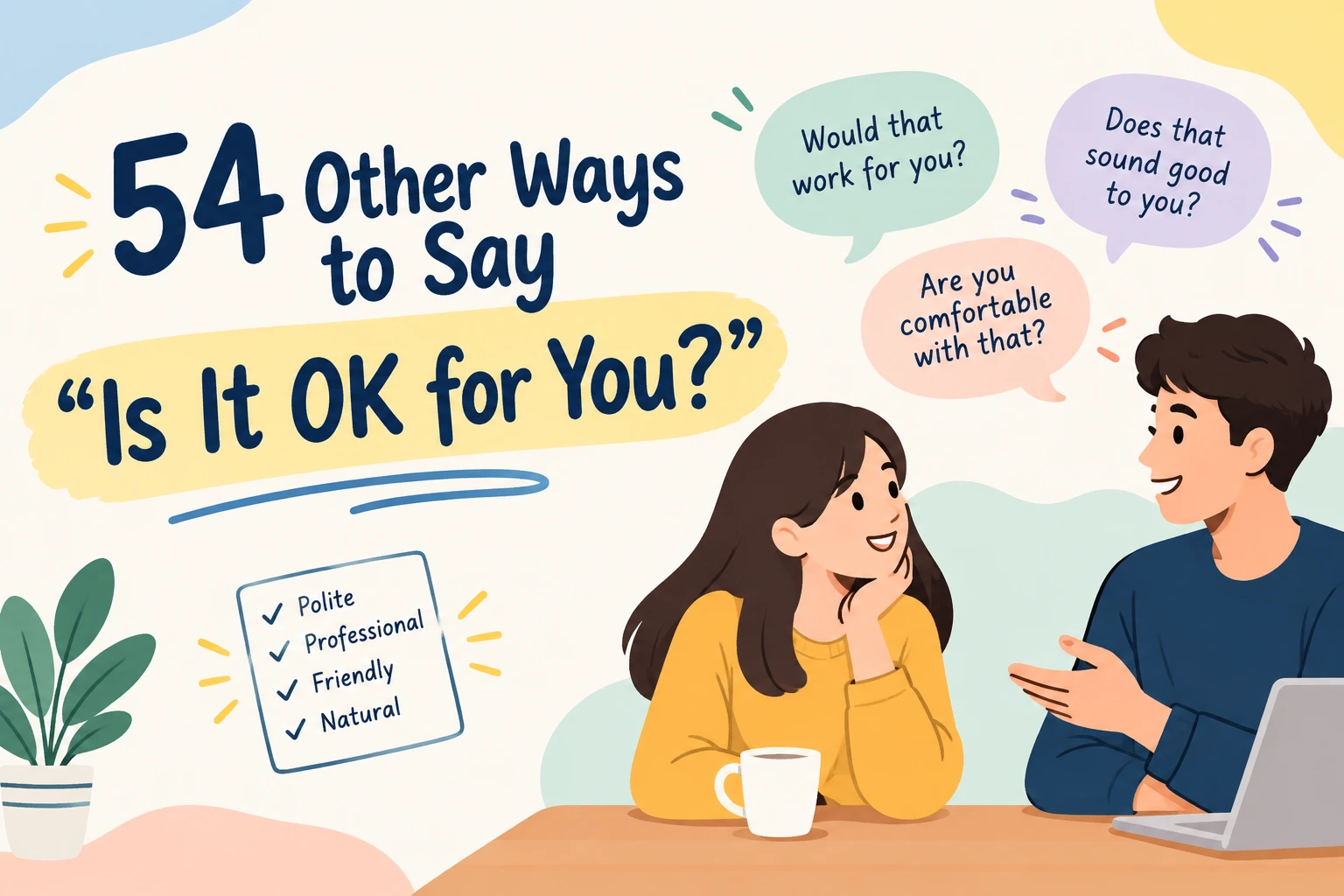
Asking someone “Is it OK for you?” sounds simple, but sometimes it does not quite express what you mean. Maybe you want to ask if a certain time works for them, check whether they are comfortable with something, or make sure your plans are not causing any trouble.
That is why people often look for other ways to say “Is it OK for you?” The right wording can make your message sound more polite, thoughtful, confident, casual, or even playful.
For example, asking a friend “Does that work for you?” feels natural, while asking a colleague “Would that be convenient for you?” sounds more professional. In a personal conversation, you may want something warmer and more considerate.
Below are 54 natural alternatives, along with real-life examples, so you can quickly find the right phrase for your situation.
2. What Does “Is It OK for You?” Mean?
“Is it OK for you?” is a way of asking whether someone agrees with something, feels comfortable with it, or can accept a particular plan.
The meaning can change slightly depending on the situation.
For example, if you ask:
“Is 6 PM OK for you?”
you are asking whether that time is convenient.
If you say:
“Is it OK for you if I bring a friend?”
you are asking for permission or checking whether the person is comfortable with the idea.
The phrase is common in everyday conversations, texting, friendships, relationships, school, and work. However, there are many ways to make the same question sound more natural.
Polite and Appreciative
1. “Does that work for you?”
One of the most natural alternatives. It works in both casual and professional conversations.
Reply: “Does that work for you?”
Example:
You are scheduling a meeting with a classmate and suggest meeting at 4 PM. You want to make sure the time suits them.
2. “Would that be okay with you?”
This sounds polite and considerate.
Reply: “Would that be okay with you?”
Example:
You need to change your plans slightly and want to check whether the other person is comfortable with the change.
3. “Would that be convenient for you?”
This is a good choice for professional situations.
Reply: “Would that be convenient for you?”
Example:
You are arranging a meeting with a professor and want to suggest a specific time respectfully.
4. “Is that suitable for you?”
This sounds slightly formal but remains clear.
Reply: “Is that suitable for you?”
Example:
You are confirming an appointment and want to make sure the proposed date works.
5. “Would you be comfortable with that?”
This is especially useful when the decision involves someone’s comfort.
Reply: “Would you be comfortable with that?”
Example:
You want to invite another person to a group activity and first check whether they are comfortable with the idea.
6. “Would that be alright with you?”
A warm and polite alternative.
Reply: “Would that be alright with you?”
Example:
You need to borrow something from a friend and want to ask before taking it.
7. “Is that fine with you?”
Simple, friendly, and easy to use.
Reply: “Is that fine with you?”
Example:
You and your friend are deciding where to meet, and you suggest a café near your house.
8. “Would you be okay with that?”
This feels natural in everyday conversation.
Reply: “Would you be okay with that?”
Example:
You want to change your part of a group project and check with your teammate first.
9. “I hope that works for you.”
This sounds thoughtful without being overly formal.
Reply: “I hope that works for you.”
Example:
You have chosen a meeting time based on your schedule and want to make sure it does not create a problem for the other person.
10. “Please let me know if that works for you.”
A useful option for emails and professional messages.
Reply: “Please let me know if that works for you.”
Example:
You email a client with two possible meeting times and invite them to confirm one.
11. “Would that be acceptable to you?”
This has a formal and respectful tone.
Reply: “Would that be acceptable to you?”
Example:
You are discussing an arrangement at work and want to confirm that everyone agrees with it.
Flirty and Playful
These options work better when you already have a comfortable relationship with the person.
12. “Does that sound good to you?”
Friendly with a little warmth.
Reply: “Does that sound good to you?”
Example:
You suggest getting ice cream after class and want to know whether the person likes the idea.
13. “Are you good with that?”
Casual and relaxed.
Reply: “Are you good with that?”
Example:
You tell someone you will meet them at their favorite café and want to check that the plan works.
14. “Would you be up for that?”
This feels casual and slightly playful.
Reply: “Would you be up for that?”
Example:
You are chatting with someone you like and suggest watching a movie together.
15. “How does that sound?”
An easygoing way to ask for their reaction.
Reply: “How does that sound?”
Example:
You suggest going for a walk after dinner and want to see whether they like the idea.
16. “Would that make you happy?”
This can sound warm and playful in the right context.
Reply: “Would that make you happy?”
Example:
Your friend has been talking about their favorite restaurant, so you suggest going there for dinner.
17. “Are we good with that plan?”
Casual and confident.
Reply: “Are we good with that plan?”
Example:
You and someone you like have just finished making plans for the weekend.
18. “Think you can work with that?”
This has a teasing, relaxed tone.
Reply: “Think you can work with that?”
Example:
You suggest a slightly earlier meeting time and jokingly challenge your friend to make it work.
19. “Does that sound like a plan?”
Friendly and natural.
Reply: “Does that sound like a plan?”
Example:
You suggest grabbing coffee tomorrow afternoon and want to confirm the idea.
20. “Would that make things easier for you?”
This combines thoughtfulness with warmth.
Reply: “Would that make things easier for you?”
Example:
Someone is busy, so you offer to meet closer to their location.
21. “Are you comfortable with that?”
This is caring without being overly romantic.
Reply: “Are you comfortable with that?”
Example:
You are making plans with someone for the first time and want to make sure they are genuinely comfortable.
22. “Does that work for you, or should I come up with something better?”
Playful while still giving the other person a choice.
Reply: “Does that work for you, or should I come up with something better?”
Example:
You suggest a restaurant but are perfectly happy to hear another idea.
Confident and Self-Respecting
These phrases show that you care about the other person’s opinion without sounding overly uncertain.
23. “Does that work on your end?”
Short, professional, and confident.
Reply: “Does that work on your end?”
Example:
You are coordinating a project and need to confirm a deadline with a teammate.
24. “Let me know if that works for you.”
This is direct and gives the other person room to respond.
Reply: “Let me know if that works for you.”
Example:
You suggest a meeting time and do not want to keep sending messages back and forth.
25. “Are you comfortable moving forward with that?”
This works well when discussing a decision.
Reply: “Are you comfortable moving forward with that?”
Example:
You and a teammate have agreed on an approach and want to confirm that everyone is ready to proceed.
26. “Would you prefer something different?”
This shows confidence while keeping the conversation open.
Reply: “Would you prefer something different?”
Example:
You suggest a meeting location but are willing to consider another option.
27. “Does that fit your schedule?”
A clear alternative when talking about timing.
Reply: “Does that fit your schedule?”
Example:
You are arranging a study session and want to make sure the proposed time is practical.
28. “Can you work with that?”
Direct and straightforward.
Reply: “Can you work with that?”
Example:
You give your teammate a deadline and want to know whether they can realistically meet it.
29. “Are you happy with that arrangement?”
Useful when discussing plans or agreements.
Reply: “Are you happy with that arrangement?”
Example:
You and your friend have divided responsibilities for an event and want to confirm that everyone is satisfied.
30. “Would you like to make any changes?”
This is confident because you have already presented a plan.
Reply: “Would you like to make any changes?”
Example:
You have created a schedule for your group and want to give everyone a chance to suggest adjustments.
31. “Does that meet your needs?”
Professional and direct.
Reply: “Does that meet your needs?”
Example:
You have prepared something for a client and want to confirm that it addresses their requirements.
32. “If that works for you, we can go ahead.”
This sounds decisive while still being considerate.
Reply: “If that works for you, we can go ahead.”
Example:
You have agreed on the details of a project and are ready to begin once the other person confirms.
33. “I’m happy with that if you are.”
Balanced and natural.
Reply: “I’m happy with that if you are.”
Example:
You and a friend are choosing a restaurant, and you are fine with their suggestion.
Funny and Savage
Use these with people who understand your humor. The goal is playful teasing, not making someone feel uncomfortable.
34. “Are we calling that a yes?”
A funny way to ask for confirmation.
Reply: “Are we calling that a yes?”
Example:
Your friend gives you a vague answer after you suggest a weekend plan.
35. “So, are we officially good with this?”
A casual, slightly dramatic option.
Reply: “So, are we officially good with this?”
Example:
You and your friends have spent twenty minutes deciding where to eat.
36. “Can I get a thumbs-up on this?”
Playful and easygoing.
Reply: “Can I get a thumbs-up on this?”
Example:
You send your friend a plan for the weekend and want a quick confirmation.
37. “No complaints?”
Short and teasing.
Reply: “No complaints?”
Example:
You have chosen the movie for movie night and jokingly ask your friends whether anyone objects.
38. “Are we pretending this is a good idea?”
This is best used with close friends.
Reply: “Are we pretending this is a good idea?”
Example:
Your friend suggests an obviously chaotic but funny weekend plan.
39. “You good with this, or are we starting another debate?”
Funny when someone is known for changing their mind.
Reply: “You good with this, or are we starting another debate?”
Example:
You and your friend finally agree on where to eat after arguing about it for ten minutes.
40. “Can I get the official approval?”
A playful way to ask for permission.
Reply: “Can I get the official approval?”
Example:
You want to post a funny picture of your friend and ask them first.
41. “Are we all signing off on this?”
This sounds mock-professional and works well with friends.
Reply: “Are we all signing off on this?”
Example:
Your group of friends is finalizing plans for a trip.
42. “Any objections before I make this official?”
A fun way to ask for agreement.
Reply: “Any objections before I make this official?”
Example:
You have picked a restaurant for dinner and give everyone one last chance to object.
43. “Does this plan pass inspection?”
Light and humorous.
Reply: “Does this plan pass inspection?”
Example:
You send your friend a detailed plan for your weekend and joke about needing their approval.
Curious, Thoughtful, or Mature
These alternatives are useful when you genuinely want to understand someone’s feelings or preferences.
44. “How do you feel about that?”
This focuses on their feelings rather than simply asking for approval.
Reply: “How do you feel about that?”
Example:
You suggest a major change to your plans and want to know how the other person genuinely feels.
45. “Would that make you comfortable?”
A considerate choice when personal comfort matters.
Reply: “Would that make you comfortable?”
Example:
You are discussing plans with someone who may have concerns and want to make sure they feel at ease.
46. “What do you think about that?”
Natural and open-ended.
Reply: “What do you think about that?”
Example:
You have an idea for a group project and want everyone’s opinion before moving forward.
47. “Would you prefer another option?”
This shows that you are willing to listen.
Reply: “Would you prefer another option?”
Example:
You suggest one meeting location but want to know if the other person has a better preference.
48. “Does this feel right to you?”
A thoughtful option for more meaningful decisions.
Reply: “Does this feel right to you?”
Example:
You and a friend are discussing an important decision and want to make sure neither person feels pressured.
49. “Are you comfortable going ahead with this?”
This clearly checks for genuine agreement.
Reply: “Are you comfortable going ahead with this?”
Example:
You are planning an important change to a shared project and want everyone to feel comfortable before proceeding.
50. “Is there anything you’d like to change?”
This invites honest feedback.
Reply: “Is there anything you’d like to change?”
Example:
You have created plans for a group event and want everyone’s input.
51. “Would you rather do something else?”
Casual but considerate.
Reply: “Would you rather do something else?”
Example:
You suggest going to a café, but you want your friend to feel free to choose another activity.
52. “What would work best for you?”
This puts the focus on the other person’s needs.
Reply: “What would work best for you?”
Example:
You are arranging a meeting with someone who has a busy schedule.
53. “Would you like to talk about it first?”
A mature option when the subject may need discussion.
Reply: “Would you like to talk about it first?”
Example:
You have made a decision that affects someone else and want to give them a chance to discuss it.
54. “Are you genuinely okay with that?”
This is useful when you want an honest answer rather than a polite “yes.”
Reply: “Are you genuinely okay with that?”
Example:
Your friend agrees to a plan unusually quickly, so you check whether they actually feel comfortable with it.
4. Real-Life Situations: What Should You Say?
When Your Crush Says It
If someone you like asks whether something is okay with you, you can keep your response warm without making it too intense.
Best reply:
“Yeah, that sounds good to me.”
It is simple, positive, and leaves the conversation open.
When a Friend Jokes About a Plan
If your friend suggests something ridiculous and asks whether you are okay with it, humor works well.
Best reply:
“Are we pretending this is a good idea?”
It keeps the teasing going without making the conversation serious.
When Someone Asks Too Early
If someone you barely know asks for your approval about a personal matter, you can slow things down.
Best reply:
“I’d like to think about it first. Can we talk about it later?”
This gives you space without being rude.
When You Are Not Interested
You do not have to say “yes” simply because someone is asking politely.
Best reply:
“I appreciate you asking, but I’m not comfortable with that.”
It is clear, respectful, and protects your boundaries.
When You Want Their Honest Opinion
Sometimes “Is it OK?” is too vague. If you genuinely want to know how they feel, ask directly.
Best reply:
“How do you really feel about it?”
This encourages a more honest conversation instead of getting an automatic “sure.”
5. What to Avoid
1. Asking for approval repeatedly
If someone has already said they are comfortable, you do not need to keep asking the same question.
2. Sounding overly apologetic
You can be considerate without constantly saying “Is that okay?” or “Sorry, is that okay?” Confidence and respect can exist together.
3. Ignoring their actual answer
If someone says they are uncomfortable, take their answer seriously. Asking is only useful when you are willing to listen.
4. Using jokes at the wrong time
Funny replies are great with close friends, but serious conversations require a more thoughtful tone.
5. Being too vague
If you are asking about a time, place, plan, or decision, be specific. “Does 5 PM work for you?” is much clearer than “Is that okay?”
6. Assuming silence means agreement
No response does not always mean yes. If something genuinely matters, give the person a chance to answer clearly.
6. Pro Tips
Match your wording to the situation
Use “Does that work for you?” for everyday plans, “Would that be convenient for you?” for professional situations, and “How do you feel about that?” when emotions or personal preferences matter.
Be considerate without sounding uncertain
There is a difference between respecting someone’s opinion and constantly seeking approval. Ask once, listen carefully, and move forward based on their answer.
Give people an easy way to disagree
Phrases like “Would you prefer something different?” make it easier for someone to be honest. That often leads to better communication than simply asking whether something is “okay.”
7. Conclusion
There is nothing wrong with saying “Is it OK for you?” but sometimes a more specific phrase makes your message sound much better.
Whether you want to sound polite, professional, playful, confident, funny, or thoughtful, the right alternative depends on what you are actually asking.
The most natural communication is not about finding the fanciest words. It is about being clear, respectful, and genuine.
Ask clearly, listen honestly, and never be afraid to give people—and yourself—the space to say what really works.
Discover more