
Sometimes, you want to end a message on a positive note, but “looking forward to speaking with you” can start to feel a little repetitive. Whether you are replying to a potential employer, texting someone you like, or confirming a conversation with a friend, the right words can make your message sound much more natural.
That is why many people search for other ways to say “looking forward to speaking with you.” A small change in wording can make you sound warmer, more confident, professional, playful, or relaxed.
The best response depends on who you are talking to and what kind of relationship you have. You would not speak to a hiring manager the same way you text your crush.
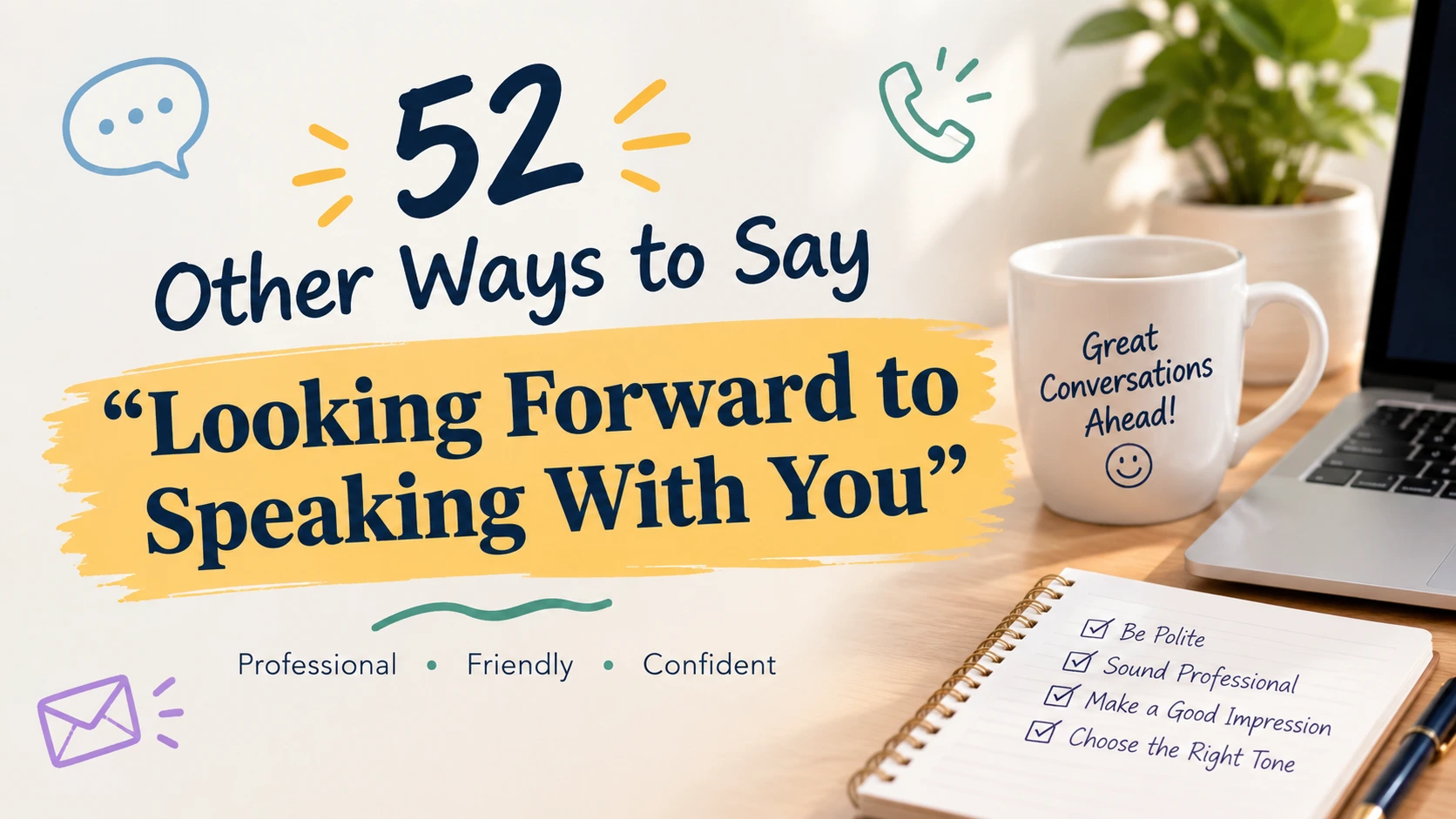
Here are 52 alternatives, complete with real-life examples, so you can choose the one that actually fits the moment.
2. What Does “Looking Forward to Speaking With You” Mean?
“Looking forward to speaking with you” means that you are happy or excited about having a conversation with someone in the future.
It usually communicates positive anticipation. You are telling the other person that you expect the conversation to happen and that you are pleased about it.
For example, after scheduling a job interview, you might write:
“I appreciate the opportunity and look forward to speaking with you on Monday.”
In a personal conversation, the same idea can sound more casual:
“Can’t wait to talk to you later!”
The phrase is especially common in professional emails, interviews, networking conversations, appointments, and formal communication. However, there are plenty of more natural alternatives for texting, dating, friendships, and everyday conversations.
The key is to match your wording to the situation.
Polite and Appreciative
1. “I’m looking forward to our conversation.”
This sounds warm, professional, and sincere.
Example:
Reply: “I’m looking forward to our conversation.”
You have just scheduled a meeting with a mentor and want to show that you appreciate their time.
2. “I’m glad we’ll have a chance to talk.”
This feels friendly without being overly casual.
Example:
Reply: “I’m glad we’ll have a chance to talk.”
A colleague has arranged a call with you to discuss a new project.
3. “I’m looking forward to connecting with you.”
This is a polished option for professional situations.
Example:
Reply: “Thanks for reaching out. I’m looking forward to connecting with you.”
You are replying to someone who contacted you about a potential work opportunity.
4. “It’ll be great to speak with you.”
This sounds positive and welcoming.
Example:
Reply: “It’ll be great to speak with you tomorrow.”
You are confirming a scheduled conversation with someone you have not spoken with before.
5. “I appreciate the opportunity to speak with you.”
This is especially useful for interviews or professional meetings.
Example:
Reply: “Thank you for the invitation. I appreciate the opportunity to speak with you.”
A recruiter has invited you for an interview.
6. “I’m happy we’ll get to chat.”
This is warmer and more conversational.
Example:
Reply: “I’m happy we’ll get to chat this weekend.”
A friend you have not seen recently has suggested catching up.
7. “I’m excited to hear your thoughts.”
This works well when the conversation has a specific purpose.
Example:
Reply: “I’m excited to hear your thoughts on the project.”
You have sent your idea to a teammate and are waiting to discuss it.
8. “I’m pleased we’ll have the chance to talk.”
This has a polite and slightly formal tone.
Example:
Reply: “I’m pleased we’ll have the chance to talk about the position.”
You are responding to an interview invitation.
9. “Thank you. I’m looking forward to our chat.”
This combines appreciation with enthusiasm.
Example:
Reply: “Thank you for arranging everything. I’m looking forward to our chat.”
Someone has organized a meeting and you want to acknowledge their effort.
10. “I’ll be happy to speak with you.”
This is polite without sounding overly formal.
Example:
Reply: “I’ll be happy to speak with you on Thursday.”
A client has asked to schedule a call about a service.
Flirty and Playful
These alternatives work best when there is already some mutual comfort. Keep the tone natural rather than forcing a romantic vibe.
11. “I can’t wait to talk to you.”
Simple, warm, and slightly flirty.
Example:
Reply: “I can’t wait to talk to you later.”
Someone you like has told you they will call after work.
12. “I’m already looking forward to our chat.”
This adds a little extra enthusiasm.
Example:
Reply: “I’m already looking forward to our chat tonight.”
Your crush has suggested calling you after dinner.
13. “I have a feeling this is going to be a fun conversation.”
This creates playful anticipation.
Example:
Reply: “I have a feeling this is going to be a fun conversation.”
You have been joking with someone online and finally plan to talk on the phone.
14. “I’m curious to hear what you have to say.”
This can be subtly flirty while remaining natural.
Example:
Reply: “I’m curious to hear what you have to say when we finally talk.”
Someone has teased you about having a story to tell.
15. “Now I’m actually excited for our call.”
This feels spontaneous and genuine.
Example:
Reply: “Okay, now I’m actually excited for our call.”
The conversation has become more interesting after they revealed something unexpected.
16. “I’ll be waiting for that call.”
This works when the conversation already has a playful tone.
Example:
Reply: “Alright, I’ll be waiting for that call.”
Someone says they will call you later that evening.
17. “You’ve got my attention. Talk soon.”
This sounds confident and playful.
Example:
Reply: “You’ve got my attention. Talk soon.”
Someone sends you an intriguing message and promises to explain everything on a call.
18. “Something tells me we’re going to have a good chat.”
This is relaxed and lightly flirtatious.
Example:
Reply: “Something tells me we’re going to have a good chat tonight.”
You have been getting along well with someone and are about to have your first long conversation.
19. “I’m looking forward to hearing your voice.”
This is more personal, so use it when the relationship already supports that tone.
Example:
Reply: “It’s been a while. I’m looking forward to hearing your voice.”
You are reconnecting with someone you already know well.
20. “Don’t keep me waiting too long.”
This adds playful teasing.
Example:
Reply: “Sounds good. Don’t keep me waiting too long.”
Someone says they will call you later but gives no exact time.
Confident and Self-Respecting
These responses show interest without making you sound overly eager.
21. “Sounds good. I’ll talk to you then.”
Short, confident, and effortless.
Example:
Reply: “Sounds good. I’ll talk to you then.”
You have just confirmed a meeting time.
22. “I’m glad we’ve got a time set.”
This shows interest while staying composed.
Example:
Reply: “I’m glad we’ve got a time set. Talk to you Friday.”
You have finally scheduled a conversation after several messages.
23. “Looking forward to seeing where the conversation goes.”
This sounds thoughtful and confident.
Example:
Reply: “I’m looking forward to seeing where the conversation goes.”
You are meeting someone to discuss a possible collaboration.
24. “I’m interested to hear what you have to say.”
This communicates curiosity without excessive enthusiasm.
Example:
Reply: “I’m interested to hear what you have to say about the proposal.”
A colleague has suggested a different approach to your project.
25. “I’ll be ready to chat when the time comes.”
This is calm and self-assured.
Example:
Reply: “Thursday works for me. I’ll be ready to chat when the time comes.”
You are confirming an appointment.
26. “Sounds like a plan. Talk soon.”
Simple and confident.
Example:
Reply: “Sounds like a plan. Talk soon.”
A friend has made plans to call you later.
27. “I’m open to the conversation.”
This is useful when you want to remain interested without overcommitting.
Example:
Reply: “I’m open to the conversation. Let’s see how things go.”
Someone has asked whether you would be willing to discuss a potential partnership.
28. “I’m interested. Let’s talk.”
Direct and confident.
Example:
Reply: “I’m interested. Let’s talk tomorrow.”
Someone has presented you with an idea you want to understand better.
29. “I’ll speak with you then.”
Professional and composed.
Example:
Reply: “Tuesday at 3 works for me. I’ll speak with you then.”
You are confirming a formal appointment.
30. “I’m looking forward to a productive conversation.”
This works particularly well in professional settings.
Example:
Reply: “Thanks for setting this up. I’m looking forward to a productive conversation.”
You are preparing for a business meeting.
Funny and Savage
These are better for friends or people who already understand your sense of humor. Avoid them in formal emails unless you know the other person well.
31. “Well, now you’ve got to make it worth the wait.”
Playfully challenges the other person.
Example:
Reply: “Friday, huh? Now you’ve got to make it worth the wait.”
Your friend has scheduled a conversation several days from now.
32. “I’ll try to contain my excitement.”
This is classic dry humor.
Example:
Reply: “You’ll call tomorrow? I’ll try to contain my excitement.”
A friend is teasing you about being overly interested in a conversation.
33. “I’ll pencil you into my extremely busy schedule.”
This works as playful sarcasm.
Example:
Reply: “Saturday evening? Sure, I’ll pencil you into my extremely busy schedule.”
Your friend jokes that you are always too busy to talk.
34. “Try not to make me regret agreeing to this.”
A funny response for someone you already joke with.
Example:
Reply: “Alright, call me tonight. Try not to make me regret agreeing to this.”
Your friend promises to tell you a ridiculous story.
35. “Let’s see if you’re as interesting on the phone.”
This is teasing and playful.
Example:
Reply: “Okay, let’s talk tonight. Let’s see if you’re as interesting on the phone.”
You have been having a funny conversation through text.
36. “I suppose I can make time for you.”
This sounds mock-serious.
Example:
Reply: “Eight o’clock? I suppose I can make time for you.”
A close friend asks if you are free for a call.
37. “Fine, I’ll allow it.”
Short, dramatic, and humorous.
Example:
Reply: “You want to call me later? Fine, I’ll allow it.”
A friend asks permission to interrupt your evening with a phone call.
38. “Let’s hope this conversation lives up to the hype.”
This is playful without being too harsh.
Example:
Reply: “You’ve been building this story up all day. Let’s hope this conversation lives up to the hype.”
Your friend claims they have unbelievable news.
39. “I’ll prepare myself for whatever this is.”
This works when you expect something unexpected.
Example:
Reply: “You said we need to talk? I’ll prepare myself for whatever this is.”
A friend sends a mysterious message before calling.
40. “Okay, now I need to know what all the excitement is about.”
This turns curiosity into humor.
Example:
Reply: “You’ve made this sound so dramatic. Now I need to know what all the excitement is about.”
Someone has teased you about a surprise conversation.
Curious, Thoughtful, or Mature
These responses work when you want to sound emotionally intelligent, genuinely interested, or considerate.
41. “I’m interested in hearing your perspective.”
This shows that you value the other person’s opinion.
Example:
Reply: “I’m interested in hearing your perspective before we make a decision.”
You and a teammate have different opinions about a project.
42. “I’d like to hear more about that.”
Natural and open-minded.
Example:
Reply: “That sounds interesting. I’d like to hear more about that when we talk.”
Someone briefly mentions an idea you want to understand.
43. “I’m looking forward to understanding your point of view.”
This is thoughtful and respectful.
Example:
Reply: “I know we see things differently, so I’m looking forward to understanding your point of view.”
You are preparing for a meaningful discussion with someone who disagrees with you.
44. “I’m glad we’ll have time to discuss this properly.”
This is useful for serious conversations.
Example:
Reply: “I’m glad we’ll have time to discuss this properly tomorrow.”
You have an important issue to discuss but do not want to rush it over text.
45. “I’m interested in continuing the conversation.”
This is mature and flexible.
Example:
Reply: “I enjoyed our conversation earlier, and I’m interested in continuing it.”
You had a meaningful discussion and want to talk more.
46. “I’d appreciate the chance to talk this through.”
This works when something needs clarification.
Example:
Reply: “I’d appreciate the chance to talk this through before we decide anything.”
You and another person need to resolve a misunderstanding.
47. “I’m glad we’ll get a chance to catch up.”
Warm and natural for friends.
Example:
Reply: “It’s been ages. I’m glad we’ll get a chance to catch up.”
You are reconnecting with an old friend.
48. “I’m curious to see what we’ll discover from the conversation.”
This sounds thoughtful and optimistic.
Example:
Reply: “We have a lot to discuss, and I’m curious to see what we’ll discover from the conversation.”
You are preparing for a brainstorming session.
49. “I value the opportunity to talk with you.”
This communicates genuine appreciation.
Example:
Reply: “Thank you for making time. I value the opportunity to talk with you.”
A professional has agreed to give you advice.
50. “I’m looking forward to continuing where we left off.”
Perfect when you already have an ongoing conversation.
Example:
Reply: “I really enjoyed our last discussion. I’m looking forward to continuing where we left off.”
You are meeting a mentor again after a previous conversation.
51. “I’m glad we’ll have the chance to clear things up.”
This is useful when there has been confusion.
Example:
Reply: “I’m glad we’ll have the chance to clear things up when we talk.”
You and a friend misunderstood each other through text.
52. “I’m looking forward to a meaningful conversation.”
This sounds sincere and mature.
Example:
Reply: “Thank you for making the time. I’m looking forward to a meaningful conversation.”
You are about to discuss an important personal or professional matter.
4. Real-Life Situations: What Should You Say?
When Your Crush Says It
If someone you like says, “I’m looking forward to speaking with you,” you can show interest without overdoing it.
Best reply:
“Now I’m looking forward to it too.”
It is warm, natural, and gives the other person something positive to respond to.
When a Friend Jokes About Calling You
If your friend says they are looking forward to talking, you can match their humor.
Best reply:
“I’ll try to contain my excitement.”
The playful sarcasm keeps the conversation light.
When Someone Says It Too Early
If you barely know the person, there is no need to sound overly enthusiastic.
Best reply:
“Sounds good. I’ll talk to you then.”
It is polite, calm, and leaves room for the relationship to develop naturally.
When You Are Interested but Want to Stay Confident
You can show enthusiasm without making the conversation feel one-sided.
Best reply:
“I’m interested to hear what you have to say.”
It communicates curiosity while keeping your tone composed.
When You Are Not Interested
You do not have to pretend to be excited just to be polite.
Best reply:
“Thanks for reaching out. I appreciate it, but I don’t think a conversation would be the right fit for me.”
This is respectful, clear, and avoids giving someone false expectations.
5. What to Avoid
1. Overdoing the enthusiasm
You do not need five exclamation marks to show that you are happy about a conversation. Simple language often sounds more genuine.
2. Using flirty replies with the wrong person
A playful response can be fun with someone you know, but it may feel inappropriate in a professional conversation.
3. Sounding too formal in casual conversations
Saying “I sincerely anticipate our forthcoming verbal communication” may technically work, but nobody talks like that naturally.
Keep your wording appropriate to the relationship.
4. Pretending to be interested
If you are not interested in talking, do not create false expectations just to avoid an uncomfortable moment.
Polite honesty is usually better.
5. Trying too hard to sound clever
A funny response should still sound like something you would actually say.
If the joke feels forced, a simple “Sounds good, talk soon” is often better.
6. Ignoring the context
The best response depends on the situation. A job interview, first date, close friend, customer, and family member all call for different tones.
6. Pro Tips
Match their energy
If someone is formal, stay professional. If they are relaxed and playful, you can loosen up too.
Show interest without chasing
You can be enthusiastic while still sounding confident. “I’d love to chat” can feel warmer and more natural than repeatedly saying how excited you are.
Let the situation guide your words
The relationship matters more than the exact phrase. Choose language that sounds like you and fits the conversation.
7. Conclusion
Finding other ways to say “looking forward to speaking with you” is not about using complicated vocabulary. It is about choosing words that match the moment.
A professional conversation may need a polished response. A friend may deserve something funny. Someone you like might call for a warmer or more playful answer.
The best response is the one that sounds natural coming from you.
Discover more
other ways to say i just want to make sure