

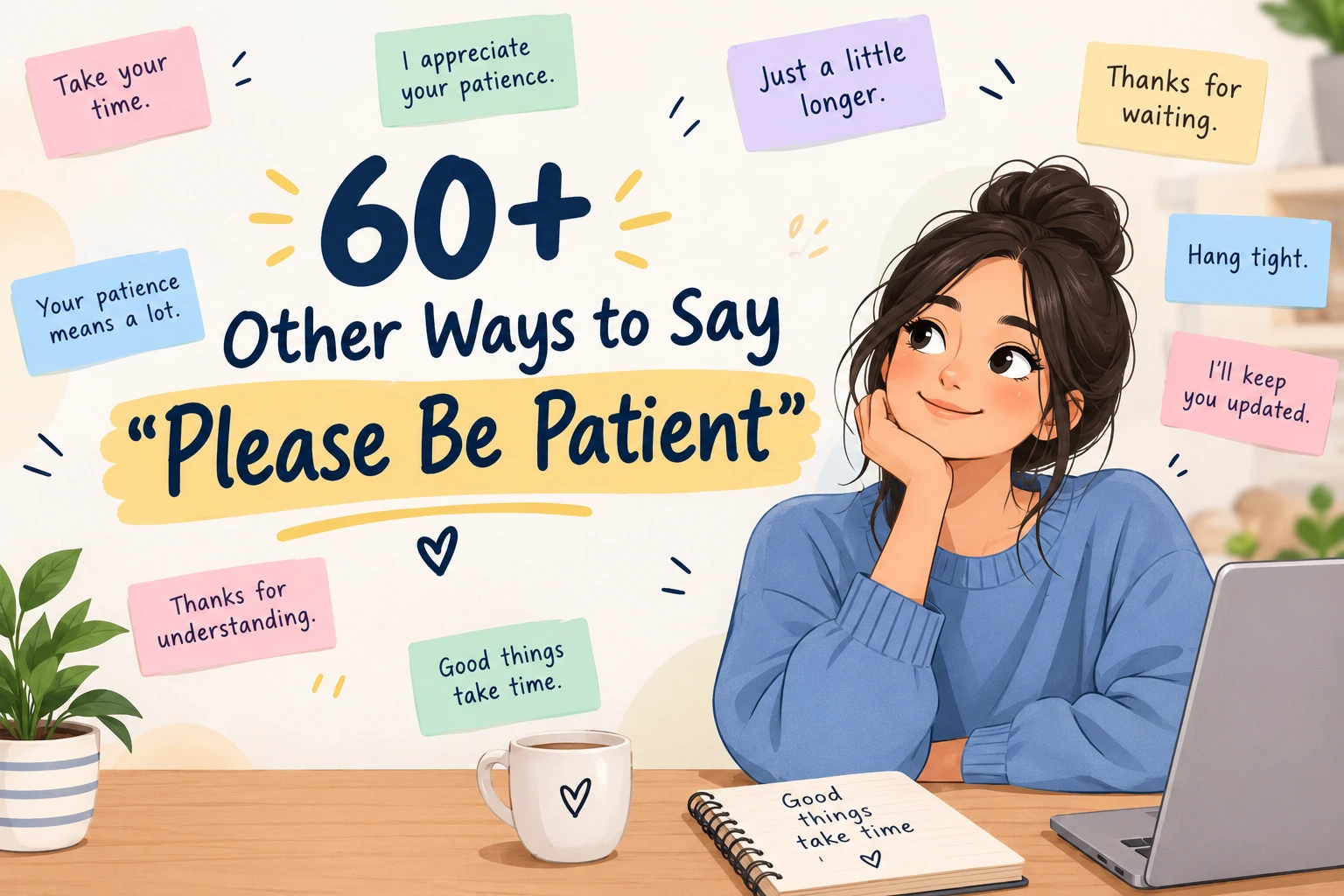
Waiting is rarely easy. Whether someone is waiting for a reply, an order, an important decision, or an update, being told to “please be patient” can sometimes sound a little blunt or repetitive. The good news is that there are many better ways to communicate the same message.
You might want to sound more polite when speaking with a customer, more reassuring when talking to a friend, or more professional in an email. In some situations, you may even want to add a little humor to make the wait feel less frustrating.
Finding the right alternative can make a big difference. Instead of simply telling someone to wait, you can acknowledge their feelings, explain the situation, and reassure them that progress is being made.
Here are 60 natural ways to ask someone to wait calmly and give the situation a little more time.
What Does “Please Be Patient” Mean?
“Please be patient” means asking someone to wait calmly and avoid becoming frustrated while something takes time.
People commonly use this phrase when they cannot provide an immediate answer, when a process is taking longer than expected, or when someone needs more time to complete something.
For example:
“Please be patient while we review your application.”
Or:
“Please be patient. I’ll get back to you as soon as I can.”
The phrase is polite, but depending on the situation, it can sometimes sound formal or slightly dismissive.
Using a more specific alternative can make your message warmer and more helpful.
1. Polite and Appreciative
These phrases work well when you want to ask someone to wait respectfully while showing that you appreciate their understanding.
1. “Thank you for your patience.”
Reply: “Thank you for your patience while we work on this.”
Example:
A customer is waiting for an issue to be resolved, so you acknowledge their patience instead of simply telling them to wait.
Why use it:
This sounds appreciative and professional rather than demanding.
2. “We appreciate your understanding.”
Reply: “We appreciate your understanding while we sort this out.”
Example:
A service is temporarily delayed, and you want to acknowledge that customers may be inconvenienced.
Why use it:
It puts the focus on appreciation rather than the delay itself.
3. “Thank you for waiting.”
Reply: “Thank you for waiting while I checked the details.”
Example:
You need extra time to find information before giving someone an accurate answer.
Why use it:
It is simple, friendly, and suitable for everyday conversations.
4. “I appreciate your patience.”
Reply: “I really appreciate your patience while I work through this.”
Example:
A colleague is waiting for you to finish an important task.
Why use it:
This feels personal and sincere without being overly formal.
5. “Thanks for bearing with me.”
Reply: “Thanks for bearing with me while I figure this out.”
Example:
You are trying to solve a technical problem while someone waits.
Why use it:
It sounds warm and conversational.
6. “Thank you for giving me some time.”
Reply: “Thank you for giving me some time to look into this.”
Example:
Someone asks you an important question, but you need time to research the answer.
Why use it:
It clearly communicates that you need time without sounding dismissive.
7. “I appreciate you giving me a little time.”
Reply: “I appreciate you giving me a little time to finish this.”
Example:
You are completing an assignment and need a little longer before submitting it.
Why use it:
This works especially well when speaking to someone you know.
8. “Thank you for understanding.”
Reply: “Thank you for understanding that this may take a little longer.”
Example:
A project has been delayed, and you want to explain the situation politely.
Why use it:
It reassures the other person that their cooperation matters.
9. “Your patience is appreciated.”
Reply: “Your patience is greatly appreciated during this process.”
Example:
A company is handling a large number of requests and needs additional time.
Why use it:
This is formal and works well in professional communication.
10. “We’re grateful for your patience.”
Reply: “We’re grateful for your patience as we work toward a solution.”
Example:
A support team is handling a complicated customer issue.
Why use it:
It sounds thoughtful and reassuring.
2. Flirty and Playful
These alternatives are best for casual conversations where you want to make waiting feel lighter.
11. “Give me a little time.”
Reply: “Give me a little time, and I promise it’ll be worth it.”
Example:
You are planning a small surprise for a friend and do not want to reveal it yet.
Why use it:
It creates curiosity while keeping the request friendly.
12. “Hold that thought.”
Reply: “Hold that thought. I’ll explain everything in a second.”
Example:
A friend asks a question while you are still gathering your thoughts.
Why use it:
It is casual and keeps the conversation moving.
13. “Just give me a minute.”
Reply: “Just give me a minute and I’ll be ready.”
Example:
Your friend is waiting for you to finish getting ready.
Why use it:
Perfect for short, everyday delays.
14. “Hang in there.”
Reply: “Hang in there. We’re almost done.”
Example:
Your friend is waiting for a long task to finish.
Why use it:
It sounds encouraging rather than commanding.
15. “Bear with me for a moment.”
Reply: “Bear with me for a moment while I get everything organized.”
Example:
You are preparing information before continuing a group discussion.
Why use it:
It politely asks for time while acknowledging the other person’s wait.
16. “Give me just a little longer.”
Reply: “Give me just a little longer and I’ll have it ready.”
Example:
You are finishing something someone needs from you.
Why use it:
It gives a clearer sense that the wait is temporary.
17. “Almost there.”
Reply: “Almost there. Just give me another minute.”
Example:
Your friend is waiting while you finish a small task.
Why use it:
It is reassuring and informal.
18. “Good things take time.”
Reply: “Good things take time, right?”
Example:
You are working on something special and do not want to rush the final result.
Why use it:
It turns waiting into something positive.
19. “Let me work my magic.”
Reply: “Give me a little time and let me work my magic.”
Example:
You are helping a friend solve a problem and want to make the situation playful.
Why use it:
This adds humor to an otherwise ordinary request.
20. “Trust the process.”
Reply: “Trust the process. We’re getting there.”
Example:
A friend is worried because a project is taking longer than expected.
Why use it:
It reassures them that progress is happening.
3. Confident and Self-Respecting
These alternatives are useful when you need time without sounding apologetic or uncertain.
21. “I need a little more time.”
Reply: “I need a little more time to give you a proper answer.”
Example:
Someone asks you a difficult question and you do not want to answer without thinking.
Why use it:
It is direct, honest, and confident.
22. “I’ll get back to you shortly.”
Reply: “I’ll get back to you shortly once I’ve confirmed the details.”
Example:
A colleague asks for information that you need to verify first.
Why use it:
It communicates responsibility and a clear next step.
23. “Let me finish this properly.”
Reply: “Let me finish this properly before I send it over.”
Example:
You are working on an important document and want to review it before sharing it.
Why use it:
It shows that you care about quality rather than rushing.
24. “I’d rather take my time than rush it.”
Reply: “I’d rather take my time than rush the decision.”
Example:
You are making an important choice and want to think carefully.
Why use it:
This communicates confidence in your decision-making process.
25. “I’ll respond when I have the right information.”
Reply: “I’ll respond when I have the right information.”
Example:
Someone wants an immediate answer, but you need to verify the facts first.
Why use it:
It sets a clear and reasonable boundary.
26. “I’m still working on it.”
Reply: “I’m still working on it, but I’m making progress.”
Example:
A teammate asks about the status of your part of a project.
Why use it:
It provides reassurance without making promises you cannot keep.
27. “I’ll let you know as soon as I can.”
Reply: “I’ll let you know as soon as I have an update.”
Example:
You are waiting for a decision before giving someone more information.
Why use it:
It is clear, responsible, and professional.
28. “I don’t want to rush this.”
Reply: “I don’t want to rush this and give you an incomplete answer.”
Example:
You are preparing an important response and need time to consider all the details.
Why use it:
It frames the delay as a commitment to quality.
29. “I’m taking the time to get this right.”
Reply: “I’m taking the time to get this right.”
Example:
You are working on an important presentation and want to review everything carefully.
Why use it:
It sounds confident and purposeful.
30. “I’ll update you when there’s something concrete.”
Reply: “I’ll update you when there’s something concrete to share.”
Example:
A project is still developing, and you do not want to provide incomplete information.
Why use it:
It prevents unnecessary updates while keeping expectations clear.
4. Funny and Savage
These options work best with people who understand your sense of humor. They make waiting sound less frustrating.
31. “Patience, young grasshopper.”
Reply: “Patience, young grasshopper. The answer is coming.”
Example:
Your friend keeps asking for the answer while you are still working on it.
Why use it:
A playful way to tell someone to wait without sounding serious.
32. “The suspense is part of the experience.”
Reply: “The suspense is part of the experience.”
Example:
Your friend keeps asking what surprise you have planned.
Why use it:
It turns the waiting period into a joke.
33. “Your patience is being tested.”
Reply: “Your patience is definitely being tested today.”
Example:
A computer takes forever to finish an update while your friend waits.
Why use it:
A humorous acknowledgment of an annoying delay.
34. “Rome wasn’t built in a day.”
Reply: “Rome wasn’t built in a day. Give me a little time.”
Example:
You are working on a large project and someone wants to see it immediately.
Why use it:
A familiar saying that makes your request sound lighter.
35. “The waiting game has officially begun.”
Reply: “The waiting game has officially begun.”
Example:
You and your friend are waiting for an important announcement.
Why use it:
Adds humor to a situation where everyone is already waiting.
36. “Good things are loading.”
Reply: “Good things are loading. Please stand by.”
Example:
You are preparing a surprise announcement for your friends.
Why use it:
A playful modern expression that works well in texts.
37. “Your patience level is about to be upgraded.”
Reply: “Your patience level is about to be upgraded.”
Example:
A friend complains that you are taking too long to finish getting ready.
Why use it:
It turns their frustration into a playful joke.
38. “I promise I haven’t forgotten.”
Reply: “I promise I haven’t forgotten. I’m just taking longer than expected.”
Example:
You have not yet completed something you promised to send.
Why use it:
It combines humor with genuine reassurance.
39. “The answer is cooking.”
Reply: “The answer is cooking. Give it a little time.”
Example:
Your friend asks you for a solution while you are still figuring things out.
Why use it:
A casual metaphor that makes the delay feel less serious.
40. “Please allow my brain to load.”
Reply: “Please allow my brain to load before asking another question.”
Example:
Your friend asks you several questions before you have even had time to think.
Why use it:
A funny response for close friends and casual chats.
5. Curious, Thoughtful, and Mature
These phrases focus on reassurance, clarity, and understanding rather than simply asking someone to wait.
41. “Can you give me some time to think?”
Reply: “Can you give me some time to think about it?”
Example:
Someone asks you to make an important decision immediately.
Why use it:
It politely creates space for thoughtful decision-making.
42. “Let’s give this the time it deserves.”
Reply: “Let’s give this the time it deserves before making a decision.”
Example:
A group is considering an important proposal and needs more time to discuss it.
Why use it:
This sounds mature and thoughtful.
43. “There’s no need to rush.”
Reply: “There’s no need to rush. Let’s make sure we get it right.”
Example:
You and a friend are making plans and want to avoid making a careless choice.
Why use it:
It shifts attention from speed to quality.
44. “Let’s take this one step at a time.”
Reply: “Let’s take this one step at a time and see how things develop.”
Example:
A project has several stages, and you want everyone to focus on the current one.
Why use it:
It sounds calm and reassuring.
45. “We’re making progress.”
Reply: “We’re making progress, even if it’s taking a little longer than expected.”
Example:
A team is working through a complicated problem.
Why use it:
It reassures people without pretending everything is finished.
46. “I understand that you’re waiting.”
Reply: “I understand that you’re waiting, and I appreciate your patience.”
Example:
A customer is frustrated about a delayed response.
Why use it:
Acknowledging their experience can make your message more empathetic.
47. “I know the wait can be frustrating.”
Reply: “I know the wait can be frustrating, but we’re working on it.”
Example:
A service issue is taking longer than expected.
Why use it:
It validates the person’s frustration rather than ignoring it.
48. “We’re taking the necessary time.”
Reply: “We’re taking the necessary time to make sure everything is accurate.”
Example:
A team needs additional time to review an important report.
Why use it:
It sounds professional and emphasizes accuracy.
49. “Let’s not rush the decision.”
Reply: “Let’s not rush the decision before we have all the information.”
Example:
A group is about to make a major choice without knowing all the facts.
Why use it:
This is especially useful in professional or serious discussions.
50. “I’ll keep you informed.”
Reply: “I’ll keep you informed as soon as there are any updates.”
Example:
A colleague is waiting for the outcome of a project or request.
Why use it:
It reassures them that they will not be left wondering.
10 More Alternatives for Different Situations
51. “Please allow a little more time.”
Meaning: A formal request for additional time.
Tone: Formal, professional
“Please allow a little more time while we complete the review.”
Why use it:
Ideal for formal emails, customer service, and official communication.
52. “We’re working as quickly as possible.”
Meaning: You are already making an effort to resolve the situation quickly.
Tone: Professional, reassuring
“We’re working as quickly as possible to resolve the issue.”
Why use it:
Useful when someone is concerned about a delay.
53. “We’ll have an update soon.”
Meaning: New information should be available shortly.
Tone: Reassuring, professional
“We’ll have an update soon once the review is complete.”
Why use it:
Good when you want to give reassurance without promising an exact time.
54. “Please give us a little more time.”
Meaning: You are directly asking for additional time.
Tone: Polite, professional
“Please give us a little more time to resolve the issue.”
Why use it:
A straightforward replacement for “please be patient.”
55. “We’re almost ready.”
Meaning: The task or process is close to completion.
Tone: Friendly, reassuring
“We’re almost ready. Thank you for waiting.”
Why use it:
Best when you genuinely expect the wait to end soon.
56. “I’ll be with you shortly.”
Meaning: You will attend to the person soon.
Tone: Polite, professional
“I’ll be with you shortly. Thank you for waiting.”
Why use it:
Useful in customer service, reception, or situations where someone is waiting for assistance.
57. “Let’s give it a little more time.”
Meaning: The situation may improve if you wait longer.
Tone: Calm, thoughtful
“Let’s give it a little more time before we decide what to do next.”
Why use it:
A natural option for personal conversations and decision-making.
58. “We just need a little more time.”
Meaning: The task is progressing but is not finished.
Tone: Reassuring, direct
“We just need a little more time to finish everything.”
Why use it:
Useful when you want to reassure someone without overexplaining.
59. “Thank you for sticking with us.”
Meaning: You appreciate someone’s continued patience and support.
Tone: Warm, appreciative
“Thank you for sticking with us while we work through this issue.”
Why use it:
Particularly effective for customer communication or long-running situations.
60. “We’ll get there.”
Meaning: The situation will eventually be resolved.
Tone: Encouraging, confident
“We’ll get there. It may take a little time, but we’re making progress.”
Why use it:
A warm way to reassure someone without making unrealistic promises.
Real-Life Situations: Which Response Should You Use?
When a Customer Is Waiting
Avoid simply saying, “Please be patient.” It can sound repetitive or dismissive.
Best reply: “Thank you for your patience. We’re working to resolve this as quickly as possible.”
This acknowledges the customer’s time and provides reassurance.
When a Friend Is Getting Impatient
You can keep the conversation casual.
Best reply: “Hang in there. I’m almost done.”
It is short, friendly, and does not make the situation more serious than it needs to be.
When Someone Wants an Immediate Answer
If you genuinely need time to think, do not feel pressured to answer immediately.
Best reply: “Can you give me some time to think about it?”
This is honest and gives you room to make a thoughtful decision.
When a Project Is Taking Longer Than Expected
Avoid making a promise you cannot guarantee.
Best reply: “We’re making progress, but we need a little more time to get everything right.”
This is transparent and professional.
When You Are Not Ready to Share Something
If you are preparing a surprise or simply want to keep something private for now, a playful response can work.
Best reply: “Hold that thought. You’ll find out soon enough.”
It creates curiosity without revealing the information.
What to Avoid When Asking Someone to Be Patient
1. Avoid Sounding Dismissive
Saying “Just wait” can make someone feel like their concern does not matter.
Instead, acknowledge their situation and explain what is happening.
2. Do Not Make False Promises
Avoid saying “It will only take five minutes” unless you actually know that.
Unrealistic time estimates can create even more frustration.
3. Do Not Blame the Other Person
Avoid phrases such as “You need to calm down.”
Instead, focus on what you can do to help.
4. Avoid Repeating the Same Message
If someone has already waited a long time, repeatedly saying “Please be patient” may only increase their frustration.
Give them a useful update whenever possible.
5. Do Not Over-Apologize
A sincere apology can be helpful, but repeating apologies without providing information can make communication feel empty.
Explain the situation and provide the next step.
6. Match Your Tone to the Situation
A funny phrase may work perfectly with a close friend but sound inappropriate in a customer-service email.
Always consider your audience.
Pro Tips for Asking Someone to Wait
1. Acknowledge Before You Ask
Instead of simply saying, “Please wait,” try:
“I understand this is taking longer than expected. Thank you for your patience.”
Acknowledgment makes people feel heard.
2. Give a Useful Update
If possible, tell the person what is happening.
“We’re reviewing the information now, and I’ll update you once we have a confirmed answer.”
Specific information is usually more reassuring than a vague request to wait.
3. Never Confuse Patience With Silence
If someone is waiting for an important response, staying completely silent can create unnecessary frustration.
When there is meaningful progress, communicate it.
Conclusion
There are many better ways to say “please be patient,” and the best choice depends on the situation. You can sound appreciative, professional, confident, playful, or thoughtful without making the other person feel dismissed.
The most effective approach is simple: acknowledge the wait, communicate honestly, and give people a reason to feel reassured.
Whether you are writing a professional email, responding to a customer, texting a friend, or handling a difficult conversation, the right words can make waiting feel much easier.
Patience is easier to give when people feel heard, respected, and informed.
Discover more