
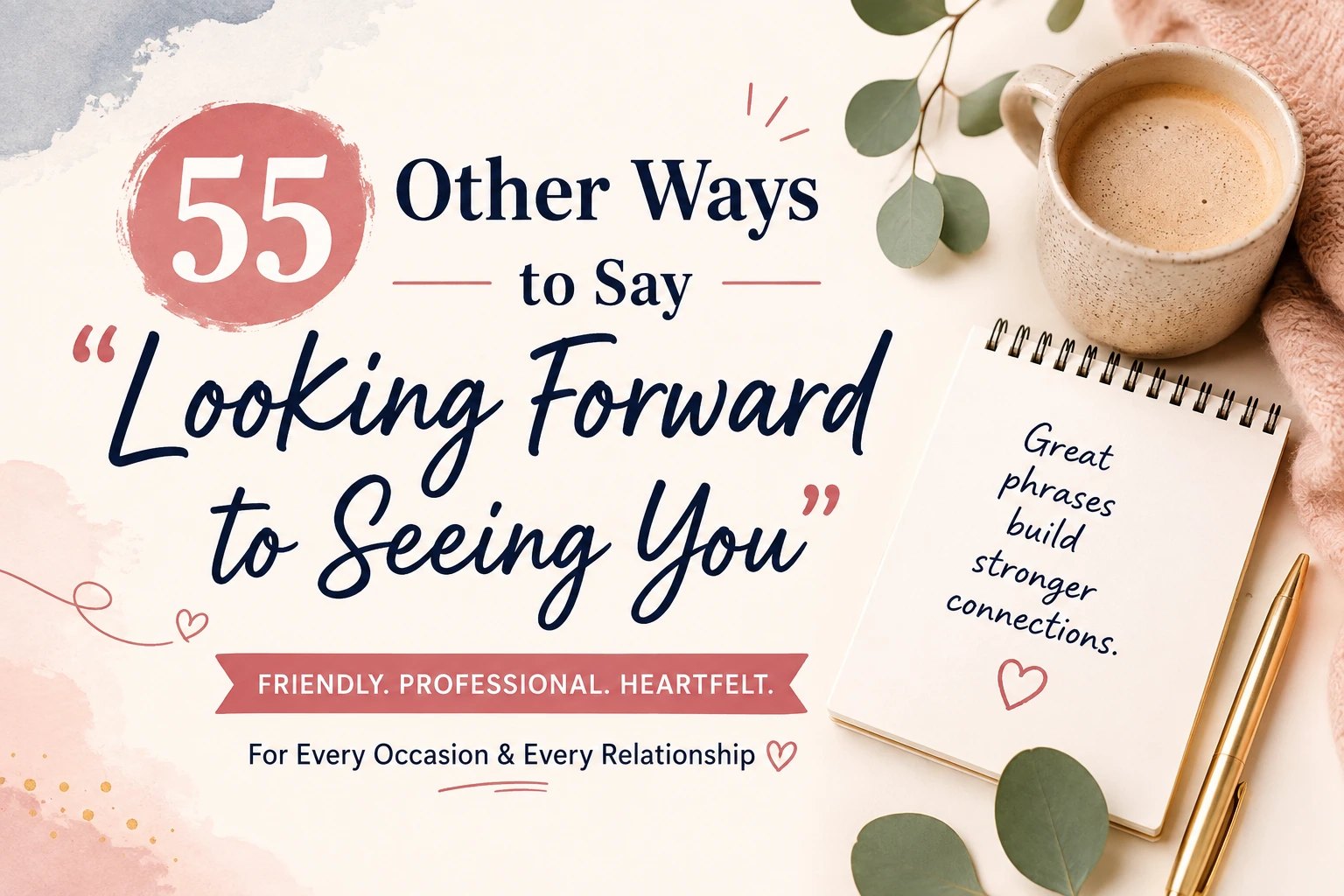
There is something special about knowing you are going to see someone you care about. Whether it is a friend you have not met in months, a family member coming to visit, a colleague you are meeting for an important project, or someone you are excited to spend time with, “looking forward to seeing you” is a warm way to express anticipation.
Still, using the same phrase in every message can start to feel predictable. Sometimes you want to sound more casual, enthusiastic, professional, thoughtful, or playful. That is where alternative expressions can help.
The right words can make a simple message feel more personal. From friendly phrases such as “Can’t wait to catch up” to professional options such as “I look forward to our meeting,” there is an expression for almost every situation. Here are 55 natural alternatives, along with examples to help you choose the perfect one.
What Does “Looking Forward to Seeing You” Mean?
“Looking forward to seeing you” means you feel happy, excited, or positive about meeting someone in the future.
It communicates anticipation and shows that you are pleased about an upcoming meeting or visit.
For example:
“I’m looking forward to seeing you at the conference next week.”
The phrase can be used in many situations. It may sound warm and personal when talking to a friend, while a slightly more formal version can work well in professional emails.
The exact meaning can also change depending on the relationship. “Can’t wait to see you” sounds more enthusiastic, while “I look forward to meeting with you” sounds more professional.
Polite and Appreciative Alternatives
These expressions are ideal for professional emails, friendly messages, family conversations, and situations where you want to sound warm without being overly casual.
1. “I look forward to seeing you.”
Reply: “I look forward to seeing you.”
Example: You finish a professional email about an upcoming meeting with a colleague.
Why use it: It is polished, natural, and appropriate for many formal situations.
2. “I’m excited to see you.”
Reply: “I’m excited to see you next weekend.”
Example: You are messaging a friend about an upcoming visit.
Why use it: It expresses genuine enthusiasm while remaining simple.
3. “It will be great to see you.”
Reply: “It will be great to see you again.”
Example: You are reconnecting with someone you have not seen for a while.
Why use it: Warm and friendly without sounding overly emotional.
4. “I’m glad we’ll get to see each other.”
Reply: “I’m glad we’ll get to see each other soon.”
Example: You and an old friend finally arrange a meeting.
Why use it: It emphasizes appreciation for the opportunity to reconnect.
5. “I’m pleased we’ll be meeting soon.”
Reply: “I’m pleased we’ll be meeting soon.”
Example: You are responding to a colleague who has scheduled a professional meeting.
Why use it: A polished option for workplace communication.
6. “I’m happy we’ll have the chance to meet.”
Reply: “I’m happy we’ll have the chance to meet next week.”
Example: You are preparing to meet a new professional contact.
Why use it: Courteous and positive without sounding too informal.
7. “It’ll be wonderful to see you.”
Reply: “It’ll be wonderful to see you again.”
Example: A relative is visiting after being away for a long time.
Why use it: Warm and heartfelt, particularly for people you care about.
8. “I’m really glad we have plans.”
Reply: “I’m really glad we have plans for Saturday.”
Example: You are confirming plans with a close friend.
Why use it: Natural and conversational.
9. “I’m looking forward to our time together.”
Reply: “I’m looking forward to our time together this weekend.”
Example: You are planning a day out with someone close to you.
Why use it: A slightly more personal alternative to the original phrase.
10. “I’m happy we’ll be catching up soon.”
Reply: “I’m happy we’ll be catching up soon.”
Example: You are talking to an old friend after a long gap.
Why use it: Friendly and especially suitable for reconnecting.
11. “I’m looking forward to reconnecting.”
Reply: “I’m looking forward to reconnecting next week.”
Example: You are preparing to meet someone you worked with previously.
Why use it: Professional, thoughtful, and appropriate when reconnecting.
Flirty and Playful Alternatives
These phrases are best suited to casual conversations with someone you already know well. They can add enthusiasm without making the message overly serious.
12. “I can’t wait to see you.”
Reply: “I can’t wait to see you.”
Example: You are texting someone about plans for the weekend.
Why use it: One of the most natural ways to show excitement.
13. “Counting down until I see you.”
Reply: “I’m already counting down until I see you.”
Example: You are chatting with someone before an upcoming meet-up.
Why use it: Playful and enthusiastic.
14. “I’m excited for our plans.”
Reply: “I’m seriously excited for our plans.”
Example: You have arranged to spend time together soon.
Why use it: Shows anticipation without repeating the usual phrase.
15. “Can’t wait for our catch-up.”
Reply: “Can’t wait for our catch-up this weekend.”
Example: Two friends have finally found time to meet.
Why use it: Casual, warm, and easygoing.
16. “I’m already looking forward to it.”
Reply: “I’m already looking forward to it.”
Example: Someone reminds you about plans you made together.
Why use it: Short and naturally enthusiastic.
17. “See you soon. I’m excited.”
Reply: “See you soon. I’m excited.”
Example: You are ending a conversation before meeting someone.
Why use it: Simple and direct.
18. “I’m ready for our next adventure.”
Reply: “I’m ready for our next adventure.”
Example: You and a friend are planning another day out together.
Why use it: Adds personality to a normal message.
19. “Our plans can’t come soon enough.”
Reply: “Our plans can’t come soon enough.”
Example: You are especially excited about an upcoming outing.
Why use it: Expresses strong anticipation in a playful way.
20. “I’m already excited about seeing you.”
Reply: “I’m already excited about seeing you.”
Example: You are talking about an upcoming meeting with someone you enjoy spending time with.
Why use it: Warm and enthusiastic without being complicated.
21. “See you soon. I’m looking forward to it.”
Reply: “See you soon. I’m definitely looking forward to it.”
Example: You are wrapping up a casual conversation before an arranged meet-up.
Why use it: Natural, positive, and easy to send as a text.
Confident and Self-Respectful Alternatives
These phrases communicate enthusiasm without sounding overly dependent or intense.
22. “I’ll see you soon.”
Reply: “I’ll see you soon.”
Example: You have already made plans and are ending the conversation.
Why use it: Calm, confident, and straightforward.
23. “I’m glad we have a plan.”
Reply: “I’m glad we have a plan. See you Saturday.”
Example: You have finally scheduled a meeting with a friend.
Why use it: Shows interest without overdoing the excitement.
24. “I’m happy we’re making this happen.”
Reply: “I’m happy we’re finally making this happen.”
Example: You and a friend have been trying to arrange a meeting for weeks.
Why use it: Confident and appreciative.
25. “I’m pleased we could arrange this.”
Reply: “I’m pleased we could arrange this. I’ll see you then.”
Example: You are confirming a professional appointment.
Why use it: Polished and self-assured.
26. “I’m glad we’ll have a chance to talk.”
Reply: “I’m glad we’ll have a chance to talk in person.”
Example: You have an important conversation planned.
Why use it: Focuses on the value of the meeting rather than simply the meeting itself.
27. “I’m ready for our meeting.”
Reply: “I’m ready for our meeting and looking forward to the discussion.”
Example: You are preparing for a professional meeting.
Why use it: Confident and workplace-friendly.
28. “It’ll be good to catch up.”
Reply: “It’ll be good to catch up after all this time.”
Example: You are meeting an old classmate.
Why use it: Relaxed and confident.
29. “I’m glad we’re finally meeting.”
Reply: “I’m glad we’re finally meeting in person.”
Example: You have only communicated with someone online before.
Why use it: Positive and natural.
30. “I’m looking forward to the conversation.”
Reply: “I’m looking forward to the conversation.”
Example: You are preparing to meet someone for a meaningful discussion.
Why use it: More professional and focused than simply saying you are excited to see them.
31. “I’ll be glad to see you there.”
Reply: “I’ll be glad to see you there.”
Example: You are attending the same event as a colleague.
Why use it: Friendly while maintaining a composed tone.
Funny and Lighthearted Alternatives
These expressions are best for casual conversations where a little humor fits naturally.
32. “Finally, our calendars agreed.”
Reply: “Finally, our calendars agreed. See you Saturday.”
Example: You and your friend have struggled to find a free day.
Why use it: A funny way to celebrate finally making plans.
33. “The wait is almost over.”
Reply: “The wait is almost over. See you soon.”
Example: You are meeting a friend after a long break.
Why use it: Adds a little drama and humor.
34. “I’ve marked the calendar.”
Reply: “I’ve marked the calendar. This meeting is officially happening.”
Example: You finally schedule plans after several failed attempts.
Why use it: Playful and casual.
35. “See you soon, assuming my schedule behaves.”
Reply: “See you soon, assuming my schedule behaves.”
Example: You are joking with a friend about your busy week.
Why use it: Adds humor without changing the meaning.
36. “The countdown begins.”
Reply: “The countdown begins. See you soon.”
Example: You are excited about an upcoming trip or meet-up.
Why use it: Dramatic in a fun, harmless way.
37. “I’ll try to contain my excitement.”
Reply: “I’ll try to contain my excitement until Saturday.”
Example: You are joking about being excited for your plans.
Why use it: Works well with friends who enjoy playful exaggeration.
38. “Our reunion is officially happening.”
Reply: “Our reunion is officially happening.”
Example: You are finally meeting an old friend after months apart.
Why use it: Makes a simple meet-up sound like an event.
39. “Guess who’s getting a visit?”
Reply: “Guess who’s getting a visit soon?”
Example: You are teasing a friend about an upcoming visit.
Why use it: Playful and attention-grabbing.
40. “See you soon, superstar.”
Reply: “See you soon, superstar.”
Example: You are saying goodbye to a close friend before meeting again.
Why use it: Lighthearted and affectionate without being overly serious.
41. “I’ll see you on the other side.”
Reply: “I’ll see you on the other side of this busy week.”
Example: You and a friend are both busy and have plans afterward.
Why use it: A humorous way to acknowledge a packed schedule.
Curious, Thoughtful, and Mature Alternatives
These expressions work well when you want to sound sincere, considerate, and emotionally thoughtful.
42. “I’m looking forward to catching up.”
Reply: “I’m really looking forward to catching up and hearing how you’ve been.”
Example: You are reconnecting with an old friend.
Why use it: Shows that you value the conversation, not just the meeting.
43. “I’m looking forward to spending some time together.”
Reply: “I’m looking forward to spending some time together.”
Example: You have arranged a relaxed afternoon with someone close to you.
Why use it: Warm and personal without sounding exaggerated.
44. “It will be nice to talk in person.”
Reply: “It will be nice to talk in person after all these messages.”
Example: You have been communicating with someone online and will finally meet.
Why use it: Thoughtful and natural.
45. “I’m glad we’ll have time to catch up.”
Reply: “I’m glad we’ll have some time to catch up properly.”
Example: You are meeting a friend after a busy period.
Why use it: Communicates genuine interest in reconnecting.
46. “I’m looking forward to our conversation.”
Reply: “I’m looking forward to our conversation next week.”
Example: You have arranged a meaningful discussion with someone.
Why use it: Appropriate for both personal and professional situations.
47. “I’m grateful we’ll have the opportunity to meet.”
Reply: “I’m grateful we’ll have the opportunity to meet.”
Example: You are meeting someone whose time you genuinely value.
Why use it: Thoughtful and appreciative.
48. “I’m glad we’ll get some time together.”
Reply: “I’m glad we’ll get some time together during the holidays.”
Example: Family members are arranging a visit.
Why use it: Warm and sincere.
49. “I’m looking forward to reconnecting with you.”
Reply: “I’m looking forward to reconnecting with you after so long.”
Example: You are arranging a reunion with a former classmate.
Why use it: It emphasizes the relationship and the time spent apart.
50. “It will be lovely to catch up.”
Reply: “It will be lovely to catch up when you’re back.”
Example: A friend is returning from a long trip.
Why use it: Warm, mature, and naturally conversational.
51. “I’m looking forward to hearing from you in person.”
Reply: “I’m looking forward to hearing your thoughts in person.”
Example: You are preparing for an important discussion.
Why use it: Focuses on meaningful communication rather than simply meeting.
52. “I’m glad we’ll have the chance to reconnect.”
Reply: “I’m glad we’ll have the chance to reconnect after all this time.”
Example: You reconnect with someone from your past.
Why use it: Reflective and sincere.
53. “I’m looking forward to sharing some time together.”
Reply: “I’m looking forward to sharing some time together soon.”
Example: You are arranging a relaxed visit with someone you know well.
Why use it: Gentle and thoughtful.
54. “It will be great to catch up properly.”
Reply: “It will be great to catch up properly when we meet.”
Example: You have only exchanged quick messages recently.
Why use it: Suggests that you value a proper conversation.
55. “I’m genuinely looking forward to our meeting.”
Reply: “I’m genuinely looking forward to our meeting next week.”
Example: You are preparing for an important professional or personal meeting.
Why use it: Sincere, confident, and polished.
Real-Life Situations: Which Response Should You Use?
When a Friend Says They Cannot Wait to See You
Match their enthusiasm without making the response feel forced.
Best reply:
“Same here. It’ll be great to catch up.”
This sounds warm and natural.
When You Are Meeting Someone Professionally
A professional setting calls for a more polished response.
Best reply:
“I’m looking forward to our meeting and the conversation ahead.”
It communicates enthusiasm while remaining professional.
When You Have Not Seen Someone for a Long Time
A more personal expression can make the message meaningful.
Best reply:
“I’m really looking forward to reconnecting after all this time.”
This recognizes the history between you.
When You Want to Sound Casual
Keep things short and natural.
Best reply:
“Can’t wait to catch up.”
It works especially well in texts and casual conversations.
When You Want to Keep Things Calm and Confident
You do not need to sound extremely excited to show that you care.
Best reply:
“It’ll be good to see you. See you then.”
It is friendly, confident, and relaxed.
What to Avoid
1. Overusing the Same Phrase
Repeating “looking forward to seeing you” in every email or text can make your communication feel predictable.
2. Being Too Enthusiastic for the Situation
“Counting down every second” may be fun with a close friend but can sound inappropriate in a professional email.
3. Using Formal Language in Casual Conversations
Expressions such as “I am pleased that we shall have the opportunity to meet” can sound unnecessarily stiff in a normal text.
4. Sounding Insincere
Choose an expression that reflects how you genuinely feel. You do not need to exaggerate your excitement.
5. Ignoring the Context
Think about who you are talking to, why you are meeting, and what kind of relationship you have before choosing your wording.
6. Making the Message Too Long
Sometimes the strongest response is simply:
“Can’t wait to see you.”
Clear, natural language usually works best.
Pro Tips for Choosing the Right Expression
1. Match the Energy
If the other person is enthusiastic, you can respond warmly. If the conversation is professional, keep your wording polished and measured.
2. Make It Specific
Instead of saying only “I’m looking forward to seeing you,” mention what you are looking forward to:
“I’m looking forward to catching up over coffee.”
Specific details make your message feel more genuine.
3. Let the Relationship Guide You
A close friend may appreciate humor. A colleague may prefer professionalism. Someone you have not seen in years may appreciate a more thoughtful expression.
Bonus: Quick One-Liners
- “Can’t wait to see you.”
- “See you soon.”
- “It’ll be great to see you.”
- “Looking forward to catching up.”
- “I’m excited to see you.”
- “I’m glad we’ll get to meet.”
- “See you then. I’m looking forward to it.”
- “It’ll be lovely to see you.”
- “I’m already looking forward to it.”
- “I’m glad we’re making this happen.”
Conclusion
Finding other ways to say “looking forward to seeing you” can make your messages sound more natural, personal, and appropriate for the situation. A professional meeting might call for “I’m looking forward to our conversation,” while a friend may appreciate “Can’t wait to catch up.” If you are reconnecting with someone after a long time, “I’m looking forward to reconnecting” adds a more thoughtful touch.
The goal is not to replace a perfectly good phrase just for the sake of variety. Instead, choose words that genuinely reflect your relationship and the occasion.
The best message is not the fanciest one; it is the one that sounds like you.
Discover more
other ways to say i’m here for you