

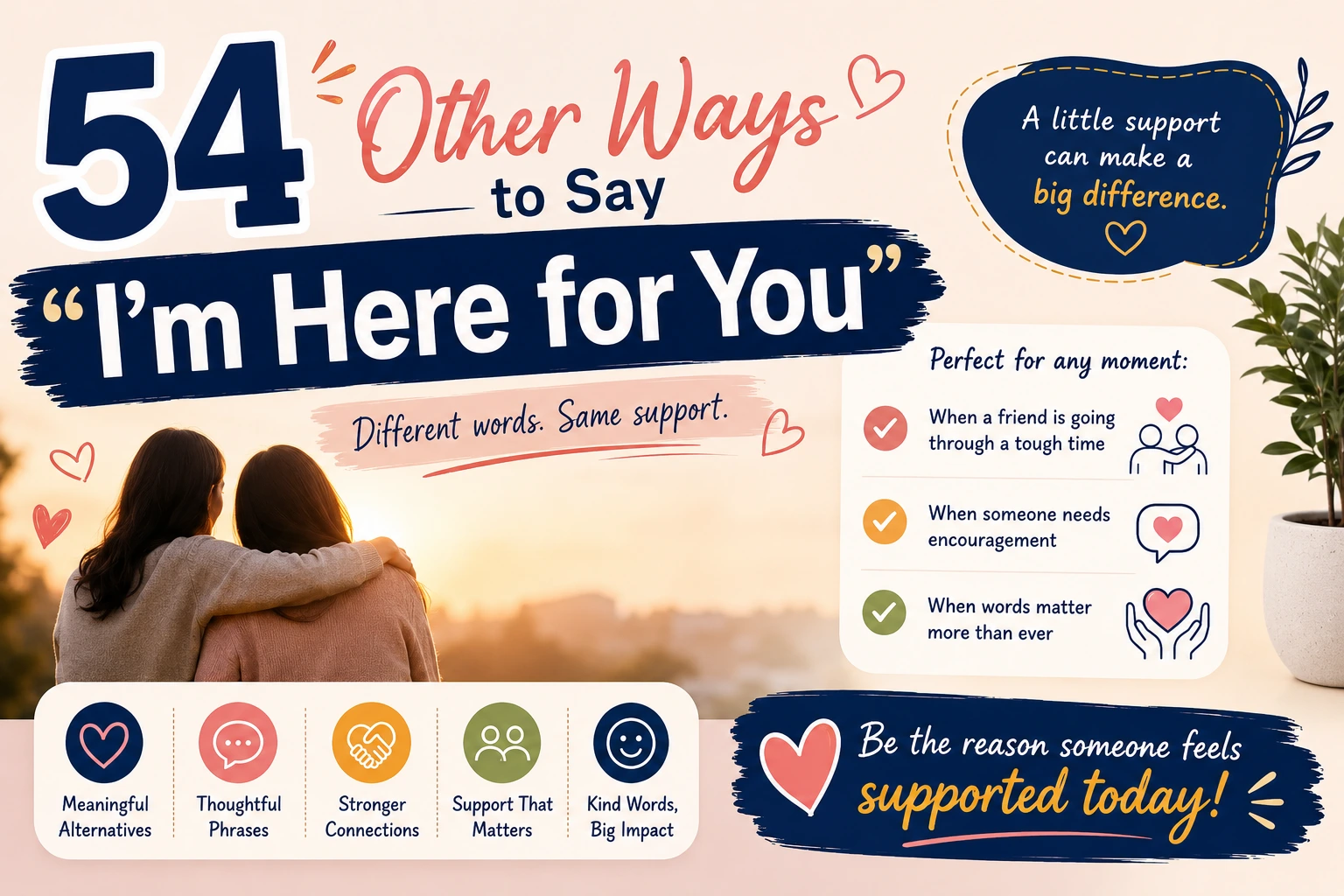
Sometimes, people do not need advice, solutions, or a perfect speech. They simply need to know that someone cares and will not disappear when life gets difficult. “I’m here for you” is a simple way to offer that support, but saying the same words repeatedly can make the message feel less personal.
That is why finding thoughtful alternatives can make a real difference. You might want to comfort a close friend, support a family member, reassure a classmate, or let someone know that they do not have to handle everything alone. The right words can make your support feel genuine rather than routine.
From warm and appreciative expressions to casual, confident, and thoughtful alternatives, this list gives you plenty of ways to communicate care naturally. The best choice depends on the person, the situation, and what they need to hear at that moment.
What Does “I’m Here for You” Mean?
“I’m here for you” means you can rely on me for support, understanding, or companionship when you need it.
It does not necessarily mean that you can solve someone’s problem. Instead, it communicates that you are willing to listen, help where possible, or simply stay supportive during a difficult moment.
For example:
“I know things are difficult right now, but I’m here for you.”
The phrase can be used with friends, family members, classmates, coworkers, or anyone you genuinely want to support.
However, the same words can sometimes feel generic. A more specific message, such as “You can talk to me whenever you need to” or “I’ll help however I can,” can make your support feel more sincere and personal.
Polite and Appreciative Alternatives
These expressions are warm, respectful, and suitable for friends, family, classmates, and professional relationships.
1. “You can count on me.”
Reply: “You can count on me.”
Example: A friend is nervous about an important exam, so you reassure them that they have your support.
Why use it: It communicates reliability without sounding overly emotional.
2. “I’m always willing to listen.”
Reply: “I’m always willing to listen if you need someone to talk to.”
Example: A classmate has been dealing with a stressful week and wants someone who will hear them out.
Why use it: This makes your support clear without pressuring them to talk.
3. “I’m happy to support you.”
Reply: “I’m happy to support you however I can.”
Example: A friend is starting something challenging and feels uncertain about the next step.
Why use it: It sounds positive, considerate, and sincere.
4. “Please know that you have my support.”
Reply: “Please know that you have my support.”
Example: You want to encourage someone before an important decision.
Why use it: This is polished enough for thoughtful or professional communication.
5. “You can reach out whenever you need.”
Reply: “You can reach out whenever you need someone.”
Example: A friend is going through a stressful period and may need someone to talk to later.
Why use it: It gives them space while keeping the door open.
6. “I’m here whenever you need me.”
Reply: “I’m here whenever you need me.”
Example: A family member is having a difficult day.
Why use it: It is simple, familiar, and reassuring.
7. “I’m glad you told me.”
Reply: “I’m glad you told me. You don’t have to keep everything to yourself.”
Example: Someone finally opens up about something that has been bothering them.
Why use it: It validates their decision to share.
8. “You don’t have to face this alone.”
Reply: “You don’t have to face this alone.”
Example: A friend feels overwhelmed by several responsibilities.
Why use it: This emphasizes companionship and emotional support.
9. “I’m willing to help.”
Reply: “I’m willing to help however I reasonably can.”
Example: Someone needs practical assistance with a difficult task.
Why use it: It combines kindness with realistic boundaries.
10. “I’ve got your back.”
Reply: “Don’t worry, I’ve got your back.”
Example: Your friend feels nervous about presenting a project.
Why use it: It is casual, supportive, and confident.
11. “You have someone in your corner.”
Reply: “Remember that you have someone in your corner.”
Example: A friend is doubting themselves after a disappointing result.
Why use it: It gives reassurance without trying to minimize their feelings.
Playful and Casual Alternatives
These options work best with close friends and people who appreciate relaxed conversation.
12. “I’m on your team.”
Reply: “Whatever happens, I’m on your team.”
Example: Your friend is worried about making a difficult decision.
Why use it: It communicates loyalty in a simple, casual way.
13. “Consider me your support crew.”
Reply: “Consider me your support crew.”
Example: A friend has a stressful week ahead.
Why use it: It adds personality to an otherwise serious message.
14. “You know where to find me.”
Reply: “You know where to find me if you need anything.”
Example: You want to remind someone that they can contact you without making them feel pressured.
Why use it: It sounds relaxed and natural.
15. “I’m just a message away.”
Reply: “I’m just a message away if you need to talk.”
Example: A friend is staying home while dealing with a stressful situation.
Why use it: It makes support feel accessible.
16. “I’m in your corner.”
Reply: “I’m in your corner, no matter how complicated things get.”
Example: A friend is facing an uncertain situation.
Why use it: It sounds loyal and encouraging.
17. “I’m not going anywhere.”
Reply: “Take your time. I’m not going anywhere.”
Example: Someone needs time before they feel ready to talk.
Why use it: It reassures them without demanding an immediate response.
18. “You’ve got backup.”
Reply: “Whatever you need, you’ve got backup.”
Example: A friend is preparing for something difficult.
Why use it: Short, confident, and casual.
19. “Team you, always.”
Reply: “Team you, always.”
Example: Your friend needs encouragement before tackling a challenge.
Why use it: It is brief, upbeat, and supportive.
20. “I’m in your corner if you need me.”
Reply: “I’m in your corner if you need me.”
Example: Someone is unsure about asking for help.
Why use it: It offers support while allowing them to decide when to reach out.
21. “You know I’ve got you.”
Reply: “You know I’ve got you.”
Example: A close friend is worried about handling a difficult responsibility.
Why use it: It sounds natural between people who already have a strong friendship.
Confident and Self-Respectful Alternatives
These phrases offer support while maintaining healthy boundaries. They are especially useful when you want to be dependable without promising more than you can realistically provide.
22. “I’ll help where I can.”
Reply: “I’ll help where I can.”
Example: Someone asks for assistance with a complicated situation.
Why use it: It is supportive while remaining realistic.
23. “You can rely on me for what I can reasonably do.”
Reply: “You can rely on me for what I can reasonably do.”
Example: A friend needs practical support, but you also have your own responsibilities.
Why use it: It communicates care without making unlimited promises.
24. “I’ll stand by you.”
Reply: “I’ll stand by you while you work through this.”
Example: A friend is facing a difficult decision.
Why use it: It conveys steady support without claiming that you can fix everything.
25. “I’m willing to walk through this with you.”
Reply: “I’m willing to walk through this with you, one step at a time.”
Example: Someone feels overwhelmed by a complicated situation.
Why use it: It emphasizes patience and practical support.
26. “Let me know what would actually help.”
Reply: “Let me know what would actually help.”
Example: A friend is struggling and you do not want to make assumptions about what they need.
Why use it: It puts their needs at the center of the conversation.
27. “I’ll do what I reasonably can.”
Reply: “I’ll do what I reasonably can to help.”
Example: Someone asks you for assistance with a problem.
Why use it: It is honest, supportive, and grounded.
28. “You can lean on me when you need to.”
Reply: “You can lean on me when you need to.”
Example: A friend has been trying to manage everything independently.
Why use it: It encourages them to accept support without making them feel incapable.
29. “I’ll support your decision.”
Reply: “I’ll support your decision, even if it isn’t the choice I would make.”
Example: A friend is deciding between two reasonable options.
Why use it: It demonstrates respect for their independence.
30. “I respect what you’re going through.”
Reply: “I respect what you’re going through, and I’m willing to listen.”
Example: Someone needs to explain a difficult situation without being judged.
Why use it: It creates a respectful and understanding tone.
31. “You can talk to me without worrying about judgment.”
Reply: “You can talk to me without worrying about judgment.”
Example: A friend is hesitant to explain a mistake they made.
Why use it: It creates a safer, more open conversation.
Funny and Lighthearted Alternatives
Humor can make supportive messages feel less heavy, but these options are best reserved for situations where the person is comfortable joking.
32. “Your unofficial support department is open.”
Reply: “Your unofficial support department is open for business.”
Example: A friend has had a frustrating day and needs someone to listen.
Why use it: It adds humor without dismissing the person’s feelings.
33. “I’m available for emotional customer service.”
Reply: “I’m available for emotional customer service today.”
Example: Your friend needs to vent about a frustrating situation.
Why use it: It makes a supportive message playful and casual.
34. “Your backup human has arrived.”
Reply: “Your backup human has arrived.”
Example: A friend asks for help with an overwhelming task.
Why use it: It is silly but reassuring among close friends.
35. “Support mode: activated.”
Reply: “Support mode: activated.”
Example: Your friend tells you they are having a rough day.
Why use it: It keeps the tone light while showing that you are paying attention.
36. “I’m clocked in as your support person.”
Reply: “I’m officially clocked in as your support person.”
Example: A friend needs someone to listen after a stressful day.
Why use it: It works well when humor is already part of your friendship.
37. “I brought backup.”
Reply: “Don’t worry, I brought backup.”
Example: A friend is nervous about handling an upcoming challenge.
Why use it: Short, playful, and encouraging.
38. “Consider me your emergency contact for bad days.”
Reply: “Consider me your emergency contact for bad days.”
Example: A close friend has been having a difficult week.
Why use it: It turns a serious sentiment into a memorable line.
39. “The support squad has entered the chat.”
Reply: “The support squad has officially entered the chat.”
Example: Your friend tells the group chat about a frustrating situation.
Why use it: It is particularly suitable for casual texting.
40. “I’m ready for the full story.”
Reply: “I’m ready for the full story whenever you want to tell it.”
Example: A friend hints that something happened but is not ready to explain.
Why use it: It combines curiosity with patience.
41. “I’m here with snacks and questionable advice.”
Reply: “I’m here with snacks and questionable advice whenever you’re ready.”
Example: A friend needs some company after a stressful day.
Why use it: It offers comfort without pretending that you have every answer.
Curious, Thoughtful, and Mature Alternatives
These expressions are ideal when someone is dealing with something meaningful and you want to respond with empathy rather than clichés.
42. “Would you like to talk about it?”
Reply: “Would you like to talk about it, or would you rather have some space?”
Example: You notice that someone seems upset but do not want to pressure them.
Why use it: It gives them control over what they need.
43. “What would feel most helpful right now?”
Reply: “What would feel most helpful right now?”
Example: Someone is overwhelmed, and you want to offer useful support rather than guessing.
Why use it: It is thoughtful and centered on their needs.
44. “I’m listening.”
Reply: “I’m listening. Take your time.”
Example: Someone is trying to explain something difficult.
Why use it: It is brief but reassuring.
45. “You can take your time.”
Reply: “You can take your time. There’s no need to explain everything at once.”
Example: A friend is struggling to put their thoughts into words.
Why use it: It creates patience and reduces pressure.
46. “You don’t have to explain everything.”
Reply: “You don’t have to explain everything before you’re ready.”
Example: Someone feels pressured to explain why they are upset.
Why use it: It respects their privacy and boundaries.
47. “I care about what you’re going through.”
Reply: “I care about what you’re going through, even if I don’t have all the answers.”
Example: You want to support someone without pretending you completely understand their situation.
Why use it: It sounds sincere and emotionally mature.
48. “I’m willing to listen without trying to fix everything.”
Reply: “I’m willing to listen without trying to fix everything.”
Example: A friend simply wants to talk rather than receive advice.
Why use it: It shows that you understand listening can be more helpful than immediately offering solutions.
49. “You can tell me as much or as little as you want.”
Reply: “You can tell me as much or as little as you want.”
Example: Someone is unsure whether they want to discuss a personal problem.
Why use it: It communicates respect for their boundaries.
50. “I’m not going to judge you.”
Reply: “You can be honest with me. I’m not going to judge you.”
Example: A friend is worried that you might react negatively to something they want to share.
Why use it: It can make an honest conversation feel easier.
51. “I’m here to listen, not to lecture.”
Reply: “I’m here to listen, not to lecture.”
Example: Someone needs to talk about a mistake without hearing a long speech about what they should have done.
Why use it: It clearly communicates patience and understanding.
52. “Whatever you need, we can figure it out.”
Reply: “Whatever you need, we can figure out the next step together.”
Example: Someone feels overwhelmed by a problem and does not know where to begin.
Why use it: It offers practical companionship without promising to solve everything.
53. “You matter to me.”
Reply: “I want you to know that you matter to me.”
Example: You want to reassure a friend that their feelings and wellbeing are important to you.
Why use it: It is personal, direct, and meaningful.
54. “You don’t have to carry everything by yourself.”
Reply: “You don’t have to carry everything by yourself. Let me know how I can help.”
Example: Someone is trying to manage too many responsibilities alone.
Why use it: It combines emotional reassurance with a practical offer of support.
Real-Life Situations: Which Response Works Best?
When a Friend Is Having a Difficult Day
Avoid immediately giving advice. First, let them know that they have someone willing to listen.
Best response:
“I’m listening. Take your time.”
This is simple and gives them room to talk.
When Someone Does Not Want to Talk Yet
Respecting their space can be more supportive than repeatedly asking questions.
Best response:
“You can take your time. I’m here whenever you’re ready.”
It keeps the door open without creating pressure.
When Someone Asks for Practical Help
A vague offer may not be enough when they need something specific.
Best response:
“Let me know what would actually help.”
This encourages them to tell you what they need.
When a Close Friend Needs Some Humor
If the situation is not extremely serious and humor is normal between you, lighten the message.
Best response:
“Support mode: activated.”
It shows that you are present without making the conversation unnecessarily heavy.
When You Want to Respect Their Independence
Supporting someone does not mean making their decisions for them.
Best response:
“I’ll support your decision.”
This communicates care while respecting their autonomy.
What to Avoid When Saying “I’m Here for You”
1. Do Not Make Promises You Cannot Keep
Avoid saying things like “I’ll always be available” if you realistically cannot be. Genuine support also requires honest boundaries.
2. Do Not Immediately Try to Fix the Problem
Sometimes people want to be heard before they want advice. Ask what kind of support would actually help.
3. Avoid Making Their Feelings About Yourself
Keep the focus on what they are experiencing rather than turning the conversation into a story about your own problems.
4. Do Not Pressure Them to Talk
Saying “You can talk to me” is supportive. Repeatedly asking “What’s wrong?” after they decline is not.
5. Avoid Empty Reassurance
Instead of only saying “Everything will be fine,” offer something more genuine, such as “We can figure out the next step together.”
6. Do Not Treat Every Situation the Same
Someone may need practical help, quiet company, a listening ear, or simply some space. Good support starts with understanding what they actually need.
Pro Tips for Saying “I’m Here for You” Naturally
1. Be Specific
Instead of:
“Let me know if you need anything.”
Try:
“Would it help if I listened, helped with the task, or simply kept you company?”
Specific options can make it easier for someone to accept support.
2. Match Their Communication Style
A serious situation may call for a calm and thoughtful message. A close friend’s ordinary bad day may call for something lighter.
3. Support Without Taking Control
Being there for someone does not mean making every decision for them. Sometimes the most meaningful support is simply listening and respecting their choices.
Bonus: Quick One-Liners
- “You can count on me.”
- “I’ve got your back.”
- “I’m in your corner.”
- “I’m just a message away.”
- “You don’t have to face it alone.”
- “I’m listening.”
- “Take your time.”
- “You can rely on me.”
- “I’m here whenever you need me.”
- “You matter to me.”
Conclusion
“I’m here for you” may be a simple sentence, but its meaning can be powerful when it is genuine. Still, changing the wording can make your support feel more personal and appropriate to the situation.
You can offer reassurance with “You can count on me,” show patience with “Take your time,” respect someone’s independence with “I’ll support your decision,” or make a casual conversation lighter with “Support mode: activated.”
The most important part is not finding the most impressive phrase. It is making sure your words match your actions.
Sometimes, the most meaningful support is simply letting someone know they do not have to face a difficult moment alone.
Discover more