

Sometimes, someone walks back into your life after being away for a while, and a simple “Welcome back” just does not seem to capture the moment. Maybe they returned from a trip, came back to work, rejoined a group chat, returned to school, or simply started talking to you again after disappearing for months.
That is where knowing other ways to say welcome back can make your message feel more genuine.
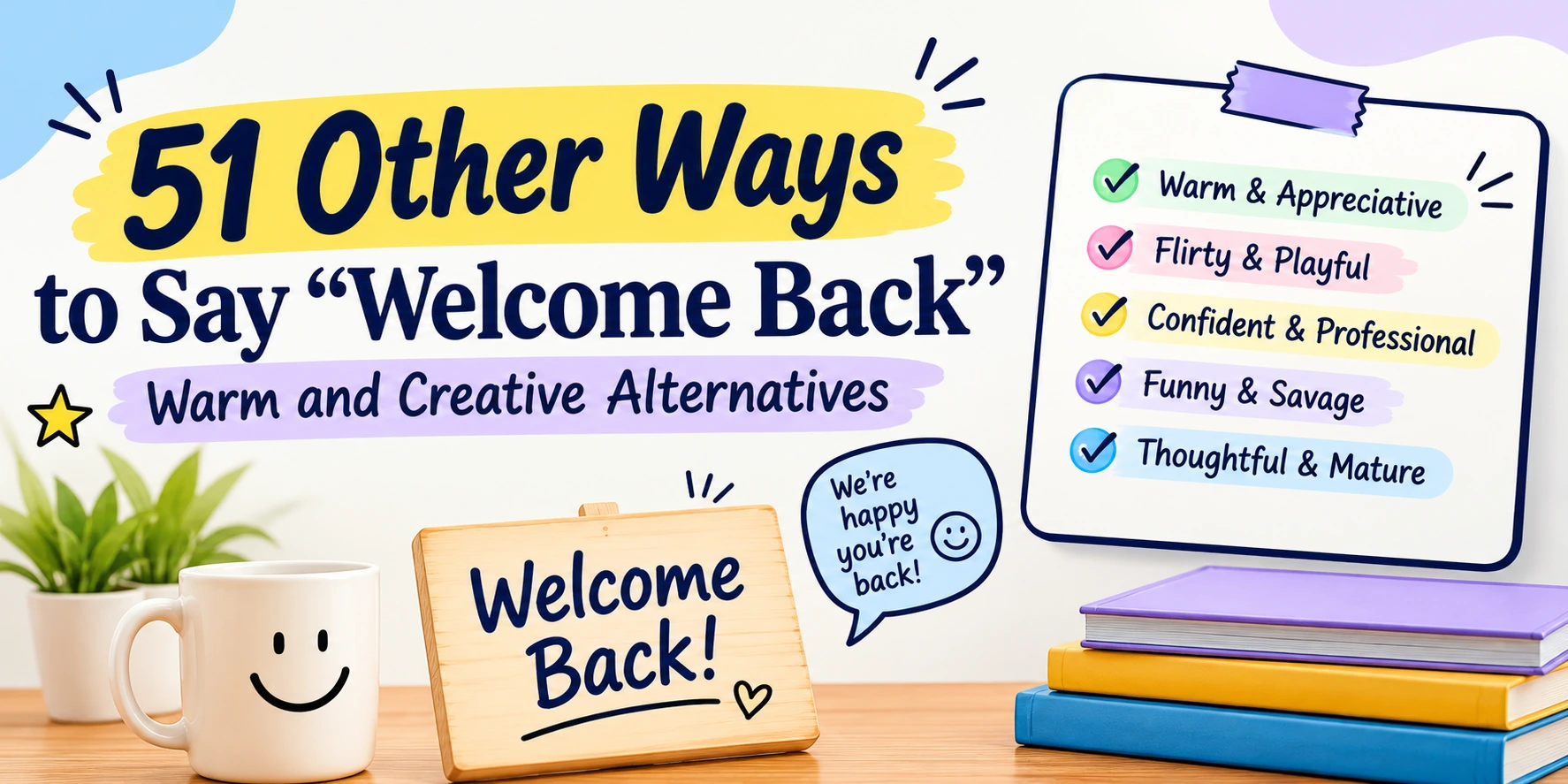
You can keep it warm and respectful, make it funny, add a playful touch, or choose something more mature and thoughtful. The best phrase depends on who has returned and how close you are to them. A coworker may need a polished greeting, while your best friend might deserve a dramatic “Look who finally decided to return.”
Below, you will find 51 natural alternatives, realistic examples, and practical tips to help you choose the right words.
What Does “Welcome Back” Mean?
“Welcome back” is a friendly expression used when someone returns after being away.
You might say it when a friend comes back from vacation, a coworker returns after leave, a student comes back to school, or someone simply starts talking to you again after being absent.
For example:
“Welcome back! How was your trip?”
The phrase communicates more than recognition. It can show that you noticed their absence and are happy to see them again.
However, the tone can change depending on your choice of words. “Good to have you back” sounds warm and sincere, while “Look who’s back” feels playful. “It’s great to have you with us again” is more professional.
So, choosing the right alternative helps your message match the relationship and situation.
1. Polite and Appreciative Alternatives
These phrases work well when you want to sound warm, respectful, and genuinely happy about someone’s return. They are suitable for coworkers, classmates, teachers, friends, relatives, and professional settings.
1. “It’s great to have you back.”
Reply: “It’s great to have you back.”
Example:
Your coworker returns after taking a few weeks off. You greet them at the office and say, “It’s great to have you back. We missed having you around.”
Why use it:
This sounds sincere without being overly formal. It is one of the safest alternatives to “welcome back.”
2. “Good to have you back.”
Reply: “Good to have you back.”
Example:
Your friend returns to your study group after being away for several weeks. You smile and say, “Good to have you back. We saved your spot.”
Why use it:
It is short, friendly, and natural in everyday conversations.
3. “It’s lovely to see you again.”
Reply: “It’s lovely to see you again.”
Example:
A relative returns from a long trip, and you greet them at home: “It’s lovely to see you again. How was everything?”
Why use it:
This sounds warm and slightly more polished than a basic greeting.
4. “So glad to see you again.”
Reply: “So glad to see you again.”
Example:
Your close friend comes back after studying abroad. You say, “So glad to see you again. We have so much to catch up on.”
Why use it:
It works especially well when you genuinely missed the person.
5. “It’s wonderful to have you back.”
Reply: “It’s wonderful to have you back.”
Example:
A team member returns from extended leave. Their manager says, “It’s wonderful to have you back. We hope you had a restful break.”
Why use it:
This is a warm option that also fits professional environments.
6. “We’re happy to have you back.”
Reply: “We’re happy to have you back.”
Example:
A colleague returns to the team after working on another project. You tell them, “We’re happy to have you back on the team.”
Why use it:
This is particularly useful when speaking on behalf of a group.
7. “It’s good to see you again.”
Reply: “It’s good to see you again.”
Example:
You run into an old classmate who has returned to your city. You say, “It’s good to see you again. It’s been ages.”
Why use it:
Simple, sincere, and suitable for almost any situation.
8. “Glad you made it back safely.”
Reply: “Glad you made it back safely.”
Example:
Your friend returns from a long road trip. You text, “Glad you made it back safely. Tell me everything about the trip.”
Why use it:
This is especially thoughtful after travel.
9. “It’s nice having you around again.”
Reply: “It’s nice having you around again.”
Example:
Your sibling returns home after being away at university. You say, “It’s nice having you around again.”
Why use it:
This sounds personal and natural without being overly emotional.
10. “We’re glad to see you again.”
Reply: “We’re glad to see you again.”
Example:
A teacher returns to school after an extended absence. A student says, “We’re glad to see you again. We missed your classes.”
Why use it:
It is respectful and works well in group or professional situations.
11. “Welcome home.”
Reply: “Welcome home.”
Example:
Your brother returns from university for the holidays, and you greet him at the door: “Welcome home. Dinner is almost ready.”
Why use it:
This is warmer and more personal than “welcome back,” especially when someone is returning to their home.
2. Flirty and Playful Alternatives
These phrases work best with someone you already have a comfortable relationship with. They add personality without making the conversation feel too serious.
12. “Look who’s finally back.”
Reply: “Look who’s finally back.”
Example:
Your friend returns to the group chat after disappearing for a week. You text, “Look who’s finally back.”
Why use it:
It is playful and lightly teasing.
13. “Well, look who decided to return.”
Reply: “Well, look who decided to return.”
Example:
Your friend suddenly messages you after being inactive for days. You reply, “Well, look who decided to return.”
Why use it:
This works when you want to tease someone without being genuinely annoyed.
14. “There you are.”
Reply: “There you are.”
Example:
Your friend finally arrives after being away for several weeks. You grin and say, “There you are. We were wondering where you disappeared to.”
Why use it:
Short, playful, and easy to use in casual conversations.
15. “And just like that, you’re back.”
Reply: “And just like that, you’re back.”
Example:
Your friend returns from vacation and immediately joins the group chat. You say, “And just like that, you’re back.”
Why use it:
It gives an ordinary return a little more personality.
16. “The missing person has returned.”
Reply: “The missing person has returned.”
Example:
Your best friend finally responds after ignoring the group chat all weekend. You write, “The missing person has returned.”
Why use it:
A funny choice for close friends.
17. “We were starting to think you’d vanished.”
Reply: “We were starting to think you’d vanished.”
Example:
Your friend returns after a long break from social media. You say, “We were starting to think you’d vanished.”
Why use it:
It is playful without being too dramatic.
18. “Guess who’s back in the building?”
Reply: “Guess who’s back in the building?”
Example:
Your friend returns to campus after spending the semester away. You message the group, “Guess who’s back in the building?”
Why use it:
It creates excitement around someone’s return.
19. “Back where you belong.”
Reply: “Back where you belong.”
Example:
Your best friend returns to your usual hangout after moving temporarily. You say, “Back where you belong.”
Why use it:
This feels affectionate and playful among close friends.
20. “The comeback is official.”
Reply: “The comeback is official.”
Example:
Your friend returns to the gym after taking a long break. You say, “The comeback is official.”
Why use it:
It adds energy and makes the person’s return feel like an event.
21. “Nice of you to return to civilization.”
Reply: “Nice of you to return to civilization.”
Example:
Your friend finally comes back online after a camping trip. You joke, “Nice of you to return to civilization.”
Why use it:
Use this with someone who enjoys sarcastic humor.
3. Confident and Self-Respect Alternatives
These phrases are useful when you want to acknowledge someone’s return without sounding overly emotional or desperate. They work well in friendships, professional settings, and situations where you want to maintain a calm tone.
22. “Good to have you around again.”
Reply: “Good to have you around again.”
Example:
Your classmate returns after missing several weeks. You say, “Good to have you around again. How have you been?”
Why use it:
It is friendly but composed.
23. “Glad to see you’re back.”
Reply: “Glad to see you’re back.”
Example:
Your coworker returns from annual leave. You say, “Glad to see you’re back. Hope you enjoyed your break.”
Why use it:
It shows appreciation without sounding overly familiar.
24. “Good to see you back in action.”
Reply: “Good to see you back in action.”
Example:
Your teammate returns after taking time off from a project. You say, “Good to see you back in action.”
Why use it:
This is confident and energetic.
25. “Looks like you’re back in the game.”
Reply: “Looks like you’re back in the game.”
Example:
Your friend returns to playing football after a break. You say, “Looks like you’re back in the game.”
Why use it:
It works well when someone is returning to an activity or routine.
26. “Back at it, I see.”
Reply: “Back at it, I see.”
Example:
Your classmate starts working on their project again after taking a break. You say, “Back at it, I see.”
Why use it:
This is casual, confident, and concise.
27. “Good to see you back where you belong.”
Reply: “Good to see you back where you belong.”
Example:
Your teammate returns to your club after studying abroad. You say, “Good to see you back where you belong.”
Why use it:
It works when someone’s return feels meaningful to a group.
28. “Glad you’re back with us.”
Reply: “Glad you’re back with us.”
Example:
A team member returns after working remotely for several months. You say, “Glad you’re back with us.”
Why use it:
This is warm while still maintaining a confident tone.
29. “It’s good to have the team together again.”
Reply: “It’s good to have the team together again.”
Example:
Everyone returns after the holidays. The team leader says, “It’s good to have the team together again.”
Why use it:
This is ideal for workplace or group situations.
30. “Welcome to the routine again.”
Reply: “Welcome to the routine again.”
Example:
Your friend returns from a long vacation and goes back to work. You joke, “Welcome to the routine again.”
Why use it:
It is relatable and works well after a break.
31. “Glad you’re back on the scene.”
Reply: “Glad you’re back on the scene.”
Example:
Your friend starts attending social events again after months away. You say, “Glad you’re back on the scene.”
Why use it:
It feels modern, casual, and confident.
4. Funny and Savage Alternatives
If you are talking to someone who can handle teasing, these alternatives can make your greeting memorable. Use them with people who understand your sense of humor.
32. “Oh, you still exist.”
Reply: “Oh, you still exist.”
Example:
Your friend sends a message after disappearing for two weeks. You reply, “Oh, you still exist.”
Why use it:
This is a classic playful tease for close friends.
33. “We had almost forgotten what you looked like.”
Reply: “We had almost forgotten what you looked like.”
Example:
Your friend returns after months away. You joke, “We had almost forgotten what you looked like.”
Why use it:
It exaggerates their absence for comedic effect.
34. “The disappearance act is over, I see.”
Reply: “The disappearance act is over, I see.”
Example:
Your friend finally returns to the group chat. You say, “The disappearance act is over, I see.”
Why use it:
It is sarcastic but still playful.
35. “Finally decided to rejoin society?”
Reply: “Finally decided to rejoin society?”
Example:
Your friend returns from a week of staying home. You text, “Finally decided to rejoin society?”
Why use it:
This works well as a lighthearted joke between close friends.
36. “Breaking news: you’re back.”
Reply: “Breaking news: you’re back.”
Example:
Your friend returns to school after being away for a month. You announce, “Breaking news: you’re back.”
Why use it:
The mock-news style makes a simple greeting funny.
37. “Well, this is an unexpected development.”
Reply: “Well, this is an unexpected development.”
Example:
Someone who rarely visits suddenly shows up at your usual café. You say, “Well, this is an unexpected development.”
Why use it:
This gives the greeting a dry, humorous edge.
38. “Should we throw a welcome-back party?”
Reply: “Should we throw a welcome-back party?”
Example:
Your friend returns from a short trip and walks into the room. You say, “Should we throw a welcome-back party?”
Why use it:
The exaggeration makes the moment playful.
39. “Look what the vacation dragged back.”
Reply: “Look what the vacation dragged back.”
Example:
Your friend returns from a beach holiday. You laugh and say, “Look what the vacation dragged back.”
Why use it:
Use this only with friends who are comfortable with teasing.
40. “The legend has returned.”
Reply: “The legend has returned.”
Example:
Your friend comes back to the gaming group after a long break. You say, “The legend has returned.”
Why use it:
It is dramatic in a deliberately funny way.
41. “We thought you had moved to another planet.”
Reply: “We thought you had moved to another planet.”
Example:
Your friend finally replies after ignoring their phone for days. You say, “We thought you had moved to another planet.”
Why use it:
A fun way to acknowledge a long absence without sounding genuinely angry.
5. Curious, Thoughtful, and Mature Alternatives
Sometimes the best greeting is one that opens the door to a real conversation. These options work when you want to acknowledge someone’s return and show genuine interest.
42. “How does it feel to be back?”
Reply: “How does it feel to be back?”
Example:
Your friend returns home after living abroad for a year. You ask, “How does it feel to be back?”
Why use it:
It naturally encourages a deeper conversation.
43. “How was your time away?”
Reply: “How was your time away?”
Example:
Your coworker returns after several weeks of leave. You ask, “How was your time away? Did you get a chance to relax?”
Why use it:
It shows that you care about their experience rather than simply acknowledging their return.
44. “How have you been?”
Reply: “How have you been?”
Example:
You reconnect with an old friend after several months. You say, “It’s good to see you again. How have you been?”
Why use it:
This is one of the most natural ways to turn a greeting into a conversation.
45. “What have you been up to?”
Reply: “What have you been up to?”
Example:
Your former classmate returns to town. You ask, “What have you been up to since we last talked?”
Why use it:
It sounds relaxed and invites them to share their story.
46. “How was the journey back?”
Reply: “How was the journey back?”
Example:
Your friend arrives home after traveling across the country. You ask, “How was the journey back?”
Why use it:
This is thoughtful when someone has traveled a long distance.
47. “What’s it like being back?”
Reply: “What’s it like being back?”
Example:
Your cousin returns to their hometown after several years away. You ask, “What’s it like being back after all this time?”
Why use it:
This invites a more meaningful response.
48. “What did you miss most?”
Reply: “What did you miss most?”
Example:
Your friend returns from studying abroad. You ask, “What did you miss most while you were away?”
Why use it:
This can lead to a fun and personal conversation.
49. “What’s the first thing you want to do now that you’re back?”
Reply: “What’s the first thing you want to do now that you’re back?”
Example:
Your friend returns from vacation. You ask, “What’s the first thing you want to do now that you’re back?”
Why use it:
It shows interest and gives the conversation somewhere to go.
50. “It must be nice to be back.”
Reply: “It must be nice to be back.”
Example:
Your sibling returns home after a long semester away. You say, “It must be nice to be back with everyone.”
Why use it:
This feels warm and empathetic without being overly emotional.
51. “I hope being back feels good.”
Reply: “I hope being back feels good.”
Example:
Your friend returns to their hometown after a difficult period away. You say, “I hope being back feels good. Take your time settling in.”
Why use it:
This is a thoughtful choice when someone’s return carries more emotional weight.
Real-Life Situations: What Should You Say?
When Your Crush Comes Back
If someone you like returns after being away, you can be warm without making the message too intense.
Best choice:
“It’s really good to see you again. How have you been?”
This keeps the conversation natural and gives them an easy way to respond.
When a Friend Disappears From the Group Chat
This is the perfect opportunity for a little humor.
Best choice:
“Look who’s finally back.”
It is short, playful, and acknowledges their disappearance without making things awkward.
When a Coworker Returns From Leave
Keep things friendly and professional.
Best choice:
“It’s great to have you back. Hope you had a relaxing break.”
This sounds welcoming without being too personal.
When Someone Returns After a Long Time
If you genuinely missed them, let that show.
Best choice:
“So glad to see you again. It’s been a long time.”
This feels sincere and naturally opens the door to catching up.
When You Are Not Very Close to the Person
There is no need to force enthusiasm.
Best choice:
“Good to see you back. Hope everything went well.”
It is polite, warm, and appropriately neutral.
What to Avoid When Saying “Welcome Back”
1. Do Not Force Humor
Not everyone enjoys sarcasm. A joke about someone’s absence can feel rude if you do not know them well.
When in doubt, choose a warm and simple phrase.
2. Avoid Sounding Overly Emotional
If someone has only been away for a few days, saying something extremely dramatic may feel unnatural.
Match the intensity of your message to the situation.
3. Do Not Mention Their Absence Negatively
Phrases such as “Finally!” can sound annoyed rather than happy.
If you are genuinely glad they returned, make that clear.
4. Do Not Use the Same Phrase Every Time
There is nothing wrong with “Welcome back,” but changing your wording occasionally can make your greetings feel more personal.
5. Avoid Sarcasm in Professional Settings
“Look who decided to show up” might be funny with your best friend, but it can sound disrespectful when directed at a manager or coworker.
6. Do Not Forget to Continue the Conversation
A good welcome can become a better conversation with one simple question.
Try adding:
“How was your trip?”
“How have you been?”
or
“How does it feel to be back?”
Pro Tips for Saying “Welcome Back” Naturally
1. Match the Relationship
Think about who you are talking to before choosing your words.
A professional contact deserves something polished. A close friend can handle teasing. Someone you care about may appreciate something more heartfelt.
2. Mention Why They Were Away
Adding a small detail makes your greeting feel personal.
Instead of:
“Good to have you back.”
Try:
“Good to have you back. How was your trip to Lahore?”
The second version feels much more intentional.
3. Let the Conversation Continue
The strongest welcome-back messages do not simply acknowledge someone’s return. They invite conversation.
Try pairing your greeting with a question:
“Welcome back! What did you miss most?”
That gives the other person something interesting to answer.
Bonus: Quick One-Liner Alternatives
Need something short for a text, group chat, or quick conversation? Try these:
- “Good to see you again.”
- “Glad you’re back.”
- “Look who’s back.”
- “Good to have you back.”
- “There you are.”
- “The comeback is official.”
- “Nice to have you around again.”
- “Back in action, I see.”
- “So good to see you.”
- “The legend has returned.”
Conclusion
There are plenty of other ways to say welcome back, and the best one depends on the person, the situation, and the kind of relationship you share. A simple “Good to have you back” can feel warm and sincere, while “Look who’s finally back” adds humor. For deeper conversations, asking “How does it feel to be back?” can show genuine interest.
The goal is not to find the fanciest phrase. It is to choose words that sound natural coming from you.
Whether you are welcoming a friend, coworker, family member, or someone special, a thoughtful greeting can make their return feel noticed.
Discover more
other ways to say don’t get me wrong synonyms