

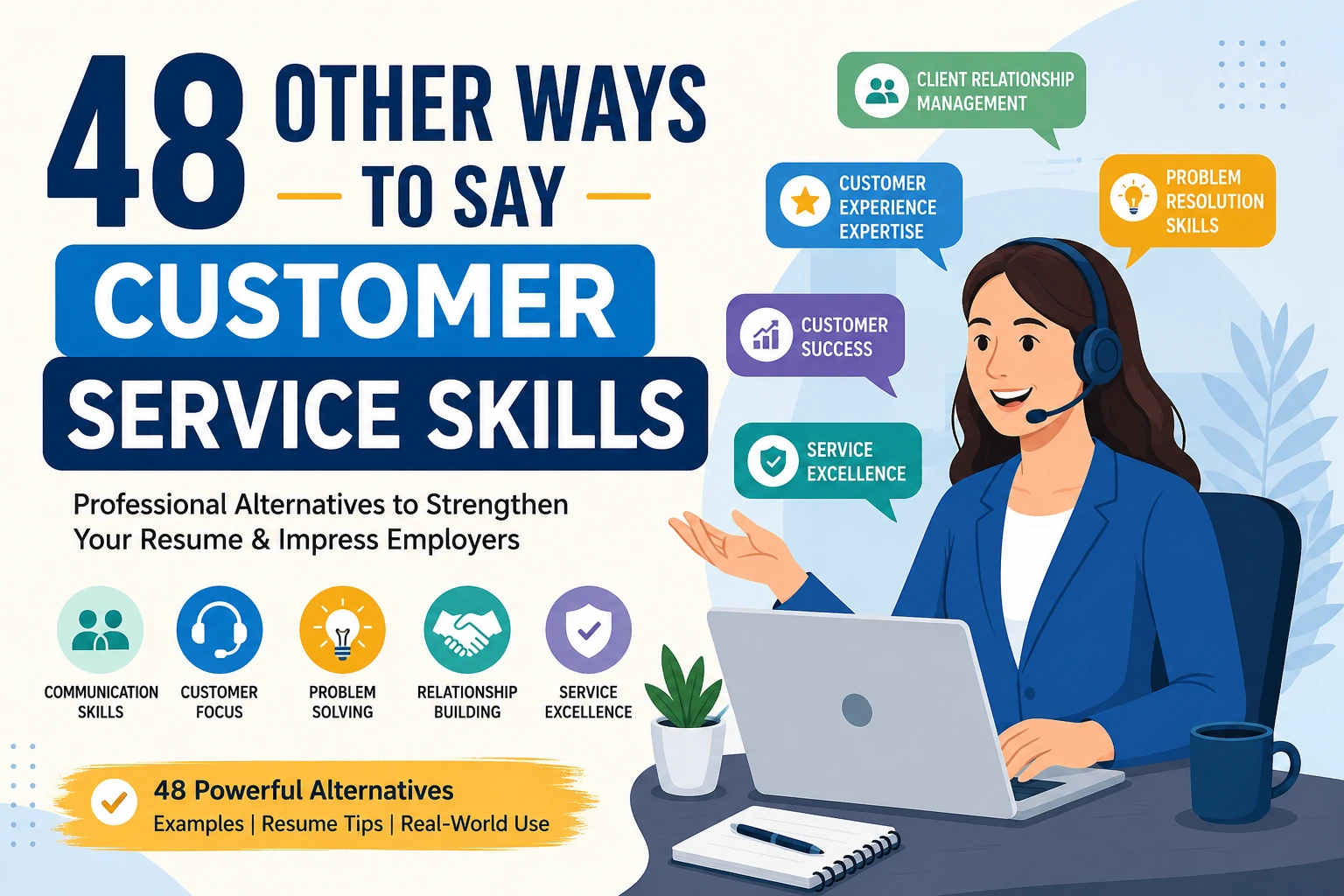
Whether you’re updating your resume, polishing your LinkedIn profile, preparing for a job interview, or writing a cover letter, you’ve probably used the phrase “customer service skills.” While it’s an important skill to highlight, repeating the same words can make your application sound generic. Employers appreciate candidates who communicate their abilities clearly and professionally, so using stronger, more specific alternatives can help you stand out.
That’s why many job seekers search for other ways to say customer service skills. Replacing this common phrase with more descriptive language demonstrates confidence and showcases the unique value you bring to a role. From communication and problem-solving to relationship building and client support, there are many ways to describe excellent customer service. In this guide, you’ll discover 48 professional alternatives, complete with meanings, examples, and tips on when to use each one.
What Does “Other Ways to Say Customer Service Skills” Mean?
The phrase “customer service skills” refers to the abilities that help you communicate effectively, solve customer problems, build positive relationships, and provide a great customer experience.
Instead of simply writing “customer service skills” on your resume or profile, you can use more specific terms that better describe your strengths. For example, if you’re great at handling complaints, “conflict resolution” may be a stronger choice. If you’re known for helping clients feel valued, “client relationship management” might be more appropriate.
Using varied language also helps your resume avoid repetition while matching the keywords employers often look for during the hiring process.
Communication & Relationship Skills
1. Client Relationship Management
Meaning: Building and maintaining strong relationships with customers.
Example:
“Managed long-term client relationships by providing personalized support and timely follow-ups.”
Why Use It:
This phrase highlights your ability to earn customer trust and encourage loyalty.
2. Customer Support Expertise
Meaning: Experience helping customers solve problems efficiently.
Example:
“Demonstrated customer support expertise by resolving inquiries with a high satisfaction rate.”
Why Use It:
A strong alternative for resumes, LinkedIn profiles, and job applications.
3. Exceptional Communication Skills
Meaning: Communicating clearly and professionally with customers.
Example:
“Used exceptional communication skills to explain products and resolve customer concerns.”
Why Use It:
Employers consistently value strong communicators across every industry.
4. Customer Relationship Building
Meaning: Creating positive connections that encourage repeat business.
Example:
“Focused on customer relationship building through personalized service and follow-up communication.”
Why Use It:
Shows that you value long-term customer satisfaction.
5. Client-Focused Communication
Meaning: Tailoring communication to meet customer needs.
Example:
“Provided client-focused communication to ensure every customer received clear and helpful information.”
Why Use It:
Demonstrates empathy and professionalism.
6. Customer Engagement Skills
Meaning: Keeping customers interested, informed, and satisfied.
Example:
“Used customer engagement skills to improve satisfaction and increase repeat purchases.”
Why Use It:
A great phrase for sales, retail, hospitality, and service positions.
7. Active Listening Skills
Meaning: Carefully understanding customer concerns before responding.
Example:
“Applied active listening skills to identify customer needs and recommend appropriate solutions.”
Why Use It:
Shows patience and excellent interpersonal abilities.
8. Professional Client Interaction
Meaning: Handling customer conversations respectfully and confidently.
Example:
“Maintained professional client interaction across phone, email, and face-to-face communication.”
Why Use It:
Suitable for corporate and customer-facing roles.
9. Customer-Centered Approach
Meaning: Putting customer needs first when making decisions.
Example:
“Adopted a customer-centered approach to improve service quality and customer satisfaction.”
Why Use It:
Highlights your commitment to excellent service.
10. Relationship Management
Meaning: Developing productive relationships with customers and clients.
Example:
“Strengthened relationship management through regular communication and personalized support.”
Why Use It:
Works well for management, sales, and account executive positions.
Problem-Solving & Service Excellence
11. Problem Resolution Skills
Meaning: Identifying and solving customer issues quickly.
Example:
“Used strong problem resolution skills to handle customer complaints effectively.”
Why Use It:
Employers value candidates who can remain calm and find practical solutions.
12. Conflict Resolution
Meaning: Managing disagreements professionally while maintaining positive customer relationships.
Example:
“Applied conflict resolution techniques to de-escalate challenging situations and achieve positive outcomes.”
Why Use It:
An excellent alternative that emphasizes professionalism, emotional intelligence, and the ability to handle difficult customer interactions.
Service & Support Excellence
13. Customer Care Expertise
Meaning: The ability to provide thoughtful, attentive, and reliable support to customers.
Example:
“Demonstrated customer care expertise by ensuring every customer received prompt and personalized assistance.”
Why Use It:
This phrase emphasizes compassion and dedication to customer satisfaction.
14. Service-Oriented Mindset
Meaning: A strong commitment to helping customers and meeting their needs.
Example:
“Maintained a service-oriented mindset while assisting customers with product recommendations.”
Why Use It:
Employers value candidates who naturally focus on serving others.
15. Customer Satisfaction Management
Meaning: Ensuring customers leave with a positive experience.
Example:
“Focused on customer satisfaction management by following up on feedback and resolving concerns.”
Why Use It:
Highlights your ability to improve the overall customer experience.
16. Client Support Skills
Meaning: Providing assistance, guidance, and solutions to clients.
Example:
“Used strong client support skills to answer inquiries and troubleshoot service issues.”
Why Use It:
A versatile alternative suitable for many industries.
17. Customer Experience Management
Meaning: Creating positive experiences throughout the customer’s journey.
Example:
“Improved customer experience management by streamlining the support process.”
Why Use It:
Perfect for resumes in retail, hospitality, SaaS, and customer success roles.
18. Customer Success Skills
Meaning: Helping customers achieve their goals while using a product or service.
Example:
“Applied customer success skills to improve product adoption and long-term client satisfaction.”
Why Use It:
A modern phrase commonly used in technology and software companies.
19. Service Excellence
Meaning: Delivering consistently outstanding customer support.
Example:
“Recognized for service excellence through consistently positive customer feedback.”
Why Use It:
Shows commitment to maintaining high service standards.
20. Customer Advocacy
Meaning: Representing customer interests and ensuring their concerns are addressed.
Example:
“Acted as a customer advocate by communicating client feedback to management.”
Why Use It:
Demonstrates empathy and a customer-first attitude.
21. Responsive Customer Support
Meaning: Providing quick and efficient assistance.
Example:
“Delivered responsive customer support by answering inquiries within company response targets.”
Why Use It:
Shows reliability and efficiency.
22. Solution-Oriented Service
Meaning: Focusing on solving customer problems rather than simply answering questions.
Example:
“Provided solution-oriented service by identifying practical answers to customer concerns.”
Why Use It:
Employers appreciate candidates who take initiative to solve problems.
23. Client Satisfaction Expertise
Meaning: Experience in keeping clients happy through quality service.
Example:
“Built client satisfaction expertise by consistently exceeding customer expectations.”
Why Use It:
Works especially well for consulting, finance, and account management positions.
24. Customer Retention Skills
Meaning: Encouraging customers to continue using a company’s products or services.
Example:
“Used customer retention skills to strengthen loyalty and increase repeat business.”
Why Use It:
Highlights your contribution to long-term business growth and customer loyalty.
Interpersonal & Professional Strengths
25. Interpersonal Communication Skills
Meaning: The ability to communicate clearly and build positive relationships with customers and colleagues.
Example:
“Used strong interpersonal communication skills to create a welcoming experience for every customer.”
Why Use It:
Highlights your ability to connect with people in a professional setting.
26. People Skills
Meaning: The natural ability to interact well with others.
Example:
“Excellent people skills helped me build trust with customers and encourage repeat business.”
Why Use It:
Simple yet effective, especially for retail, hospitality, and sales positions.
27. Client Relations Expertise
Meaning: Experience in maintaining professional and productive client relationships.
Example:
“Developed client relations expertise by managing key accounts and resolving concerns promptly.”
Why Use It:
Ideal for resumes targeting account management or business development roles.
28. Customer Interaction Skills
Meaning: The ability to communicate confidently with customers across different channels.
Example:
“Demonstrated customer interaction skills through phone, email, and in-person support.”
Why Use It:
Shows versatility in handling different communication methods.
29. Professional Relationship Building
Meaning: Creating long-term, positive relationships with customers.
Example:
“Focused on professional relationship building to increase customer loyalty.”
Why Use It:
Employers value candidates who strengthen customer retention.
30. Empathetic Communication
Meaning: Understanding customers’ feelings while responding with care and respect.
Example:
“Used empathetic communication to reassure frustrated customers and provide practical solutions.”
Why Use It:
Demonstrates emotional intelligence—one of the most valuable customer service traits.
31. Strong Listening Abilities
Meaning: Carefully listening before responding or solving problems.
Example:
“Applied strong listening abilities to understand customer concerns and recommend the best solutions.”
Why Use It:
Shows patience, attention to detail, and customer focus.
32. Relationship-Focused Service
Meaning: Prioritizing meaningful customer relationships over one-time transactions.
Example:
“Delivered relationship-focused service that encouraged repeat customers and referrals.”
Why Use It:
Perfect for businesses that value long-term client relationships.
33. Customer Communication Excellence
Meaning: Consistently communicating clearly and professionally.
Example:
“Maintained customer communication excellence by responding promptly and respectfully.”
Why Use It:
Makes your resume sound more polished and achievement-oriented.
34. Service Communication Skills
Meaning: Communicating effectively while providing customer assistance.
Example:
“Applied service communication skills to explain policies and answer customer questions clearly.”
Why Use It:
A professional alternative that fits many customer-facing roles.
35. Customer Relations Management
Meaning: Managing customer interactions to build satisfaction and loyalty.
Example:
“Handled customer relations management responsibilities while maintaining high service standards.”
Why Use It:
A strong keyword for resumes in customer service, hospitality, healthcare, and retail.
36. Customer Satisfaction Expertise
Meaning: Consistently delivering experiences that meet or exceed customer expectations.
Example:
“Recognized for customer satisfaction expertise after maintaining excellent feedback ratings.”
Why Use It:
Shows measurable value to employers and reinforces your commitment to exceptional service.
Leadership, Adaptability & Business Skills
37. Client Experience Management
Meaning: Managing every stage of the customer’s journey to ensure satisfaction.
Example:
“Improved client experience management by reducing response times and following up with customers after service.”
Why Use It:
A modern alternative that’s perfect for customer success, hospitality, and corporate roles.
38. Customer Care Excellence
Meaning: Consistently providing high-quality customer support.
Example:
“Recognized for customer care excellence after maintaining outstanding customer feedback scores.”
Why Use It:
Shows dedication to delivering exceptional service every day.
39. Service Recovery Skills
Meaning: Turning unhappy customers into satisfied ones by resolving problems effectively.
Example:
“Used service recovery skills to resolve complaints quickly and retain valuable customers.”
Why Use It:
Employers highly value professionals who can handle difficult situations calmly.
40. Complaint Resolution Expertise
Meaning: Effectively addressing customer concerns and finding fair solutions.
Example:
“Applied complaint resolution expertise to resolve issues while maintaining positive customer relationships.”
Why Use It:
Ideal for resumes in retail, hospitality, banking, and call centers.
41. Cross-Functional Communication
Meaning: Working effectively with multiple teams to solve customer issues.
Example:
“Used cross-functional communication to coordinate with sales and technical teams for faster resolutions.”
Why Use It:
Demonstrates teamwork and collaboration.
42. Customer-Centric Mindset
Meaning: Always putting the customer’s needs at the center of your decisions.
Example:
“Maintained a customer-centric mindset when recommending products and resolving concerns.”
Why Use It:
One of the most desirable qualities employers look for.
43. Relationship Development Skills
Meaning: Building trust and long-lasting customer connections.
Example:
“Used relationship development skills to strengthen client loyalty and encourage repeat business.”
Why Use It:
Excellent for sales, consulting, and account management positions.
44. Professional Service Delivery
Meaning: Providing reliable, efficient, and courteous customer service.
Example:
“Maintained professional service delivery across phone, email, and in-person interactions.”
Why Use It:
A polished phrase suitable for resumes and LinkedIn profiles.
45. Customer Engagement Expertise
Meaning: Keeping customers actively involved and satisfied throughout their experience.
Example:
“Applied customer engagement expertise to increase customer retention and positive reviews.”
Why Use It:
Highlights both communication and relationship-building abilities.
46. Client Communication Excellence
Meaning: Delivering clear, respectful, and effective communication with clients.
Example:
“Demonstrated client communication excellence by handling inquiries professionally and efficiently.”
Why Use It:
Shows professionalism and strong communication skills.
47. Customer-Focused Problem Solving
Meaning: Solving issues while keeping the customer’s needs as the priority.
Example:
“Used customer-focused problem solving to resolve billing issues and improve satisfaction.”
Why Use It:
Combines two highly valued skills into one powerful resume phrase.
48. Exceptional Client Service
Meaning: Delivering outstanding support that consistently exceeds expectations.
Example:
“Provided exceptional client service that resulted in repeat business and positive referrals.”
Why Use It:
A strong closing alternative that sounds professional and achievement-oriented.
Real-Life Situations: When to Use These Alternatives
1. Updating Your Resume
Instead of writing:
Customer service skills
Use:
Client Relationship Management
Customer Experience Management
Exceptional Client Service
2. Writing a Cover Letter
Instead of saying:
“I have excellent customer service skills.”
Try:
“My experience in client communication excellence and problem resolution has allowed me to build strong customer relationships.”
3. Updating Your LinkedIn Profile
Instead of listing:
- Customer Service Skills
Write:
- Customer-Centric Mindset
- Client Relations Expertise
- Conflict Resolution
- Customer Success Skills
4. During a Job Interview
Interviewer: “What are your greatest strengths?”
Best Reply:
“One of my strongest qualities is customer-focused problem solving. I enjoy understanding customer needs and finding practical solutions that create positive experiences.”
5. Performance Reviews
Instead of saying:
“I’m good with customers.”
Try:
“I’ve focused on strengthening customer engagement expertise and improving client satisfaction through proactive communication.”
What to Avoid
Avoid these common mistakes when describing your customer service abilities:
- Using “customer service skills” repeatedly throughout your resume.
- Choosing buzzwords without explaining how you’ve applied them.
- Listing too many similar skills without evidence or examples.
- Ignoring measurable achievements, such as customer satisfaction scores or retention rates.
- Using vague phrases that don’t demonstrate your strengths.
Pro Tips
Be specific. Choose alternatives that genuinely reflect your responsibilities and achievements.
Match the job description. If an employer emphasizes customer experience, use phrases like Customer Experience Management or Customer-Centric Mindset.
Support your skills with results. Pair each skill with measurable accomplishments whenever possible to make a stronger impression.
Conclusion
Using stronger alternatives to “customer service skills” can make your resume, LinkedIn profile, and job applications stand out. Instead of relying on a generic phrase, choose words that accurately describe your strengths in communication, problem-solving, relationship building, and customer satisfaction. The more specific your language, the easier it is for employers to understand the value you bring. Select the alternatives that best match your experience, support them with real examples, and you’ll present yourself as a more confident and capable professional.
Discover more
other ways to say first come first serve