
There are moments in life that only happen once. Your first job interview, your first solo trip, your first public speech, or even the first time you meet someone special can all become unforgettable memories. When writing or speaking about these experiences, repeating the phrase “for the first time” over and over can make your language sound repetitive. That’s why many writers, students, professionals, and English learners search for better alternatives.
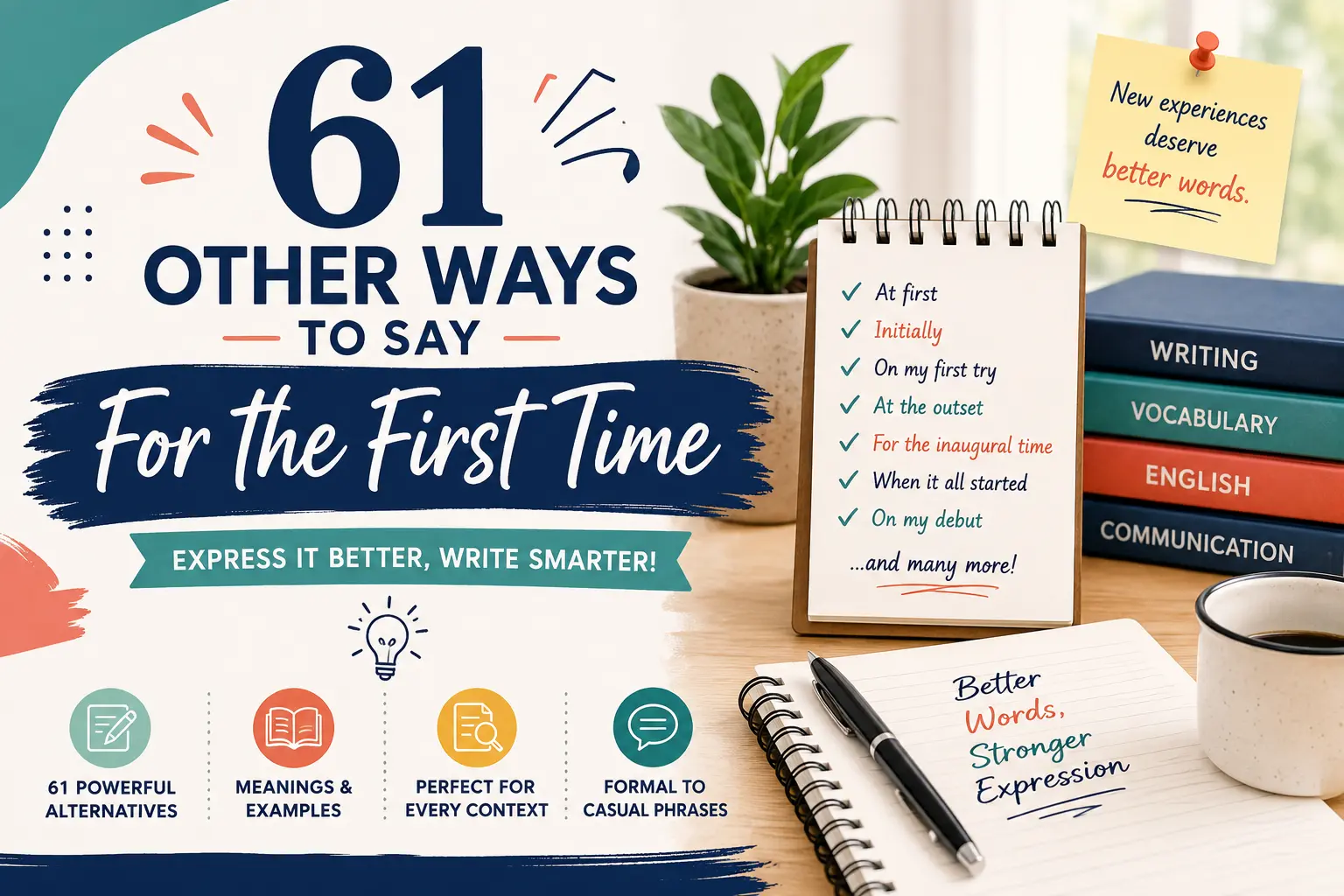
Using different expressions not only improves your vocabulary but also makes your communication more engaging and natural. Depending on the situation, you may want something formal for academic writing, conversational for everyday speech, or creative for storytelling. In this guide, you’ll discover 61 other ways to say “for the first time,” complete with meanings, tones, examples, and practical tips to help you choose the perfect expression for any situation.
What Does “For the First Time” Mean?
The phrase “for the first time” refers to something happening on its initial occasion. It describes an event, experience, or action that has never happened before.
People use this expression in everyday conversations, essays, business writing, speeches, news articles, and storytelling. It highlights new beginnings, milestones, achievements, or unique experiences.
For example, someone might say, “I traveled abroad for the first time last summer,” or “The company reported record profits for the first time in its history.” In both cases, the phrase emphasizes that the event is happening for the very first occasion.
Although it’s a common expression, using alternatives can make your writing sound more polished, varied, and expressive.
When to Use “For the First Time”
You can use “for the first time” whenever you want to emphasize that something has never happened before.
Everyday Conversations
Example: “I tried sushi for the first time yesterday.”
Academic Writing
Example: “Researchers observed the phenomenon for the first time.”
Business Communication
Example: “The company expanded internationally for the first time.”
Storytelling
Example: “She felt truly confident for the first time in years.”
News Reports
Example: “The nation qualified for the finals for the first time.”
Is “For the First Time” Formal or Professional?
Yes. “For the first time” is appropriate in both formal and informal communication.
It’s widely accepted in professional emails, reports, academic papers, presentations, and official announcements. However, when you want your writing to sound more sophisticated or avoid repetition, choosing a suitable alternative can improve clarity and style.
For instance, phrases like “initially,” “upon first experiencing,” or “on its debut” may fit certain contexts better than repeating “for the first time.”
Formal and Professional Alternatives
1. Initially
Meaning: At the beginning.
Tone: Formal.
Example: “Initially, the proposal received mixed feedback.”
Why Use It: Ideal for reports, research papers, and business writing.
2. At the Outset
Meaning: At the very beginning.
Tone: Professional.
Example: “At the outset of the project, everyone agreed on the goals.”
Why Use It: Common in presentations and formal documents.
3. At the Beginning
Meaning: During the earliest stage.
Tone: Neutral.
Example: “At the beginning of her career, she worked as an intern.”
Why Use It: Suitable for almost any context.
4. Upon First Encounter
Meaning: When someone first experienced or saw something.
Tone: Formal.
Example: “Upon first encounter, the software appeared simple to use.”
Why Use It: Excellent for academic and descriptive writing.
5. Upon Initial Observation
Meaning: During the earliest examination.
Tone: Academic.
Example: “Upon initial observation, no major issues were detected.”
Why Use It: Frequently used in scientific writing.
6. On the Initial Occasion
Meaning: During the very first event.
Tone: Formal.
Example: “On the initial occasion, attendance exceeded expectations.”
Why Use It: Appropriate for reports and official summaries.
7. During the Initial Stage
Meaning: At the earliest phase.
Tone: Professional.
Example: “The team faced several challenges during the initial stage.”
Why Use It: Great for project documentation.
8. In the Early Phase
Meaning: At the beginning of a process.
Tone: Formal.
Example: “In the early phase of development, testing was limited.”
Why Use It: Useful in technical and business writing.
9. At Its Debut
Meaning: When something first appeared publicly.
Tone: Professional.
Example: “The product sold out at its debut.”
Why Use It: Perfect for product launches and entertainment.
10. During Its Debut
Meaning: While first being introduced.
Tone: Formal.
Example: “The film received positive reviews during its debut.”
Why Use It: Common in media writing.
11. At Its Inception
Meaning: At the beginning of existence.
Tone: Academic.
Example: “At its inception, the company employed only five people.”
Why Use It: Ideal for discussing organizations or projects.
12. Since Its Beginning
Meaning: From the very start.
Tone: Formal.
Example: “The organization has grown steadily since its beginning.”
Why Use It: Good for historical discussions.
Casual and Everyday Alternatives
13. The First Time Around
Meaning: During the first attempt.
Tone: Casual.
Example: “I didn’t pass the exam the first time around.”
Why Use It: Great for everyday conversations.
14. On My First Try
Meaning: During the first attempt.
Tone: Friendly.
Example: “I solved the puzzle on my first try.”
Why Use It: Perfect for casual speech.
15. Right From the Start
Meaning: From the very beginning.
Tone: Conversational.
Example: “I liked the movie right from the start.”
Why Use It: Adds warmth to storytelling.
16. From Day One
Meaning: Since the beginning.
Tone: Casual.
Example: “We’ve been friends from day one.”
Why Use It: Popular in conversations and speeches.
17. At First
Meaning: In the beginning.
Tone: Neutral.
Example: “At first, I wasn’t sure about moving abroad.”
Why Use It: Simple and widely used.
18. In the Beginning
Meaning: During the earliest stage.
Tone: Neutral.
Example: “In the beginning, everything felt unfamiliar.”
Why Use It: Suitable for narratives.
19. When It All Started
Meaning: At the moment everything began.
Tone: Friendly.
Example: “When it all started, we had no idea how successful we’d become.”
Why Use It: Great for storytelling.
20. The Very First Time
Meaning: The earliest occurrence.
Tone: Conversational.
Example: “The very first time I visited Paris, I fell in love with the city.”
Why Use It: Adds emphasis and emotion.
Creative and Expressive Alternatives
21. On My Maiden Voyage
Meaning: During the very first journey or experience.
Tone: Creative and literary.
Example: “On my maiden voyage as a solo traveler, I learned to trust myself.”
Why Use It: Perfect for travel writing and storytelling.
22. Breaking New Ground
Meaning: Doing something never done before.
Tone: Inspirational.
Example: “The researchers were breaking new ground with their discovery.”
Why Use It: Great for innovation and achievements.
23. Making My Debut
Meaning: Appearing or performing for the first time.
Tone: Professional.
Example: “She made her debut as a television host this year.”
Why Use It: Common in entertainment, sports, and business.
24. Taking My First Step
Meaning: Beginning a new journey.
Tone: Motivational.
Example: “Starting my own business was taking my first step toward independence.”
Why Use It: Ideal for personal growth stories.
25. Entering New Territory
Meaning: Trying something unfamiliar.
Tone: Thoughtful.
Example: “Learning Japanese felt like entering new territory.”
Why Use It: Suitable for new skills or experiences.
26. Embarking on Something New
Meaning: Starting a fresh experience.
Tone: Warm and positive.
Example: “After graduation, she was embarking on something new.”
Why Use It: Excellent for life milestones.
27. Beginning a New Chapter
Meaning: Starting a different stage of life.
Tone: Emotional.
Example: “Moving abroad marked the beginning of a new chapter.”
Why Use It: Popular for graduation, marriage, and career changes.
28. Stepping Into the Unknown
Meaning: Facing an unfamiliar experience.
Tone: Reflective.
Example: “Accepting the new job meant stepping into the unknown.”
Why Use It: Creates vivid imagery.
29. On My Opening Attempt
Meaning: During the first effort.
Tone: Neutral.
Example: “I solved the puzzle on my opening attempt.”
Why Use It: Works well for competitions and games.
30. Experiencing It Fresh
Meaning: Seeing or doing something without prior experience.
Tone: Conversational.
Example: “Watching the movie for the first time was like experiencing it fresh.”
Why Use It: Ideal for reviews and personal stories.
31. At My Earliest Opportunity
Meaning: At the first available chance.
Tone: Professional.
Example: “I visited the museum at my earliest opportunity.”
Why Use It: Appropriate for business writing and formal communication.
32. At the First Opportunity
Meaning: As soon as possible after something became available.
Tone: Neutral.
Example: “She applied for the scholarship at the first opportunity.”
Why Use It: Common in professional contexts.
Academic and Business Alternatives
33. For the Initial Occasion
Meaning: During the earliest occurrence.
Tone: Formal.
Example: “The software was tested for the initial occasion last month.”
Why Use It: Excellent for reports and documentation.
34. On the First Instance
Meaning: During the first occurrence.
Tone: Academic.
Example: “On the first instance, no errors were detected.”
Why Use It: Suitable for research writing.
35. At the Initial Point
Meaning: At the beginning.
Tone: Professional.
Example: “At the initial point, customer demand was uncertain.”
Why Use It: Works well in reports.
36. At the Commencement
Meaning: At the start.
Tone: Formal.
Example: “At the commencement of the project, funding was limited.”
Why Use It: Ideal for official documents.
37. At the Launch
Meaning: When something was first introduced.
Tone: Business.
Example: “Sales exceeded expectations at the launch.”
Why Use It: Common in marketing.
38. On the Debut Release
Meaning: During the first release.
Tone: Professional.
Example: “The game sold one million copies on the debut release.”
Why Use It: Great for products and entertainment.
39. At the Start of the Journey
Meaning: At the beginning of a process.
Tone: Inspirational.
Example: “At the start of the journey, success seemed far away.”
Why Use It: Motivational and engaging.
40. At the Dawn Of
Meaning: At the beginning of something significant.
Tone: Literary.
Example: “At the dawn of the digital era, everything changed.”
Why Use It: Perfect for essays and speeches.
41. At the Birth Of
Meaning: At the creation or beginning.
Tone: Formal.
Example: “At the birth of the company, only three employees worked there.”
Why Use It: Suitable for historical writing.
42. At the Origin
Meaning: At the starting point.
Tone: Academic.
Example: “At the origin of the project, sustainability was the main goal.”
Why Use It: Useful in analytical writing.
Literary and Elegant Alternatives
43. For the Inaugural Time
Meaning: On the first occasion.
Tone: Formal and elegant.
Example: “The event welcomed international guests for the inaugural time.”
Why Use It: Excellent for ceremonial writing.
44. On the Inaugural Occasion
Meaning: During the first official event.
Tone: Formal.
Example: “On the inaugural occasion, attendance reached record numbers.”
Why Use It: Great for conferences and ceremonies.
45. On My Initial Adventure
Meaning: During the first exciting experience.
Tone: Creative.
Example: “On my initial adventure abroad, I discovered a new culture.”
Why Use It: Ideal for travel blogs.
46. At the First Glimpse
Meaning: Upon seeing something initially.
Tone: Descriptive.
Example: “At the first glimpse, the mountain looked breathtaking.”
Why Use It: Beautiful for storytelling.
47. At the Very Beginning
Meaning: At the earliest possible stage.
Tone: Neutral.
Example: “At the very beginning, nobody believed the idea would succeed.”
Why Use It: Clear and versatile.
48. Upon My Introduction
Meaning: When first introduced.
Tone: Professional.
Example: “Upon my introduction to the team, everyone was welcoming.”
Why Use It: Suitable for workplace writing.
49. On My Initial Visit
Meaning: During the first visit.
Tone: Neutral.
Example: “On my initial visit to Rome, I explored the Colosseum.”
Why Use It: Great for travel writing.
50. At My First Encounter
Meaning: During the first meeting.
Tone: Thoughtful.
Example: “At my first encounter with the author, I was inspired.”
Why Use It: Perfect for biographies and personal stories.
51. At the First Meeting
Meaning: During the first interaction.
Tone: Professional.
Example: “At the first meeting, the client approved the proposal.”
Why Use It: Common in workplace communication.
52. Upon First Experience
Meaning: During the earliest experience.
Tone: Formal.
Example: “Upon first experience, the application felt user friendly.”
Why Use It: Excellent for reviews.
53. At the Start
Meaning: At the beginning.
Tone: Neutral.
Example: “At the start, everything seemed overwhelming.”
Why Use It: Short and natural.
54. On Day One
Meaning: From the very first day.
Tone: Casual.
Example: “On day one of college, I made lifelong friends.”
Why Use It: Great for personal stories.
55. Fresh Out of the Gate
Meaning: Right at the beginning.
Tone: Informal.
Example: “The startup gained customers fresh out of the gate.”
Why Use It: Adds energy to conversational writing.
56. Straight From the Beginning
Meaning: Since the start.
Tone: Conversational.
Example: “She supported me straight from the beginning.”
Why Use It: Friendly and natural.
57. At the Earliest Stage
Meaning: During the beginning phase.
Tone: Academic.
Example: “At the earliest stage, the symptoms were mild.”
Why Use It: Useful for scientific writing.
58. Upon Its Arrival
Meaning: When something first appeared.
Tone: Formal.
Example: “The technology impressed users upon its arrival.”
Why Use It: Appropriate for products and innovations.
59. At the Moment It Began
Meaning: Exactly when something started.
Tone: Reflective.
Example: “At the moment it began, nobody expected history to be made.”
Why Use It: Strong for storytelling.
60. As a Beginner
Meaning: During your earliest learning stage.
Tone: Casual.
Example: “As a beginner, I made plenty of mistakes.”
Why Use It: Helpful when discussing learning experiences.
61. As It All Began
Meaning: At the beginning of the story or journey.
Tone: Literary.
Example: “As it all began, we had nothing but determination.”
Why Use It: Creates an engaging narrative.
Common Mistakes to Avoid
- Repeating “for the first time” too often in the same paragraph.
- Choosing overly formal alternatives in casual conversations.
- Using creative phrases in technical or academic writing where clarity matters.
- Replacing the phrase when the original wording is actually the clearest option.
- Forgetting to match the tone to your audience and purpose.
Pro Tips for Choosing the Right Alternative
- Match the alternative to your audience. Formal writing benefits from phrases like Initially or At its inception, while conversations sound more natural with The first time around or On my first try.
- Use creative expressions sparingly. They make stories more engaging without overwhelming the reader.
- Read your sentence aloud. If the alternative sounds natural in context, you’ve likely chosen the right one.
Conclusion
Finding other ways to say “for the first time” is a simple way to make your writing more engaging, polished, and expressive. Whether you’re writing an essay, preparing a business report, telling a personal story, or simply improving your English, these alternatives help you avoid repetition while keeping your message clear. The best choice is always the one that fits your audience, tone, and purpose. Expand your vocabulary thoughtfully, and your writing will feel more natural, confident, and memorable.
Discover more